
Condition · Physical therapy treatment in Dallas, TXFrozen Shoulder
Stop guessing which stage your shoulder is in. We confirm it is frozen shoulder, treat the pain while it is painful, and restore range and strength when the capsule is ready, so you do not lose a year to it.
- Confirmed as frozen shoulder, not assumed from stiffness alone
- Treatment staged to the phase: pain first, range and strength after
- The neck and upper back treated as part of the same chain

The short version
Frozen Shoulder in 30 seconds
Frozen shoulder is a stiff, painful capsule, not a torn tendon, and it does not respond to being forced. It responds to treatment that matches the stage it is in.
What it is
Adhesive capsulitis: the capsule around the shoulder joint becomes inflamed, thickened and tight, so the arm loses range in every direction, especially turning outward and reaching behind the back.
Why the stage matters
In the painful freezing stage, pushing range makes it worse. In the frozen and thawing stages, graded mobilization and loading are what shorten it. The same treatment helps in one and harms in the other.
What else it could be
A rotator cuff tear, arthritis, a neck problem referring to the shoulder, or in rare cases something that needs a physician first. The examination separates them before anything is treated.
What treatment gets you
Why people come in for this
A confirmed diagnosis and stage
Frozen shoulder is over-diagnosed in stiff shoulders and under-diagnosed in painful ones. The examination establishes which you have and where it is in its course.
Pain settled while it is at its worst
Dry needling of the rotator cuff, upper trapezius and chest wall muscles that guard a painful shoulder, plus manual work that respects the irritable capsule.
The whole chain treated
A stiff mid-back and neck make the shoulder work harder and hurt more. Thoracic manipulation and neck treatment are part of frozen shoulder care here, not an afterthought.
Range restored when the capsule allows
Graded joint mobilization and loaded stretching once the pain phase has passed, progressed by what the shoulder tolerates rather than a calendar.
Strength, not just range
A shoulder that has not moved for months is weak as well as stiff. Blood flow restriction training rebuilds strength without loading an irritable joint.
Night pain taken seriously
Sleep position, pillow set-up and what to do at 3am are covered at the first visit, because night pain is usually the worst part of the early stage.
Does this sound like you?
Signs we hear most often
None of this is a diagnosis. It is a good reason to have the area properly examined rather than managed for another year.
Common signs
- Stiffness in every direction, worst turning the arm outward or reaching behind your back
- Range that is limited even when someone else moves your arm for you
- Deep, aching pain that is worse at night and lying on that side
- A shoulder that has been getting stiffer over months, not days
- Difficulty with a bra strap, a back pocket or a seat belt
- Aged 40 to 65, or living with diabetes or a thyroid condition
See a physician instead if
See a physician first for shoulder pain after a fall or a dislocation, a sudden inability to lift the arm, a shoulder that is hot, red or swollen, pain with fever or weight loss, or chest pain and shortness of breath alongside left shoulder pain.
How we treat it
The tools we reach for
Dry Needling
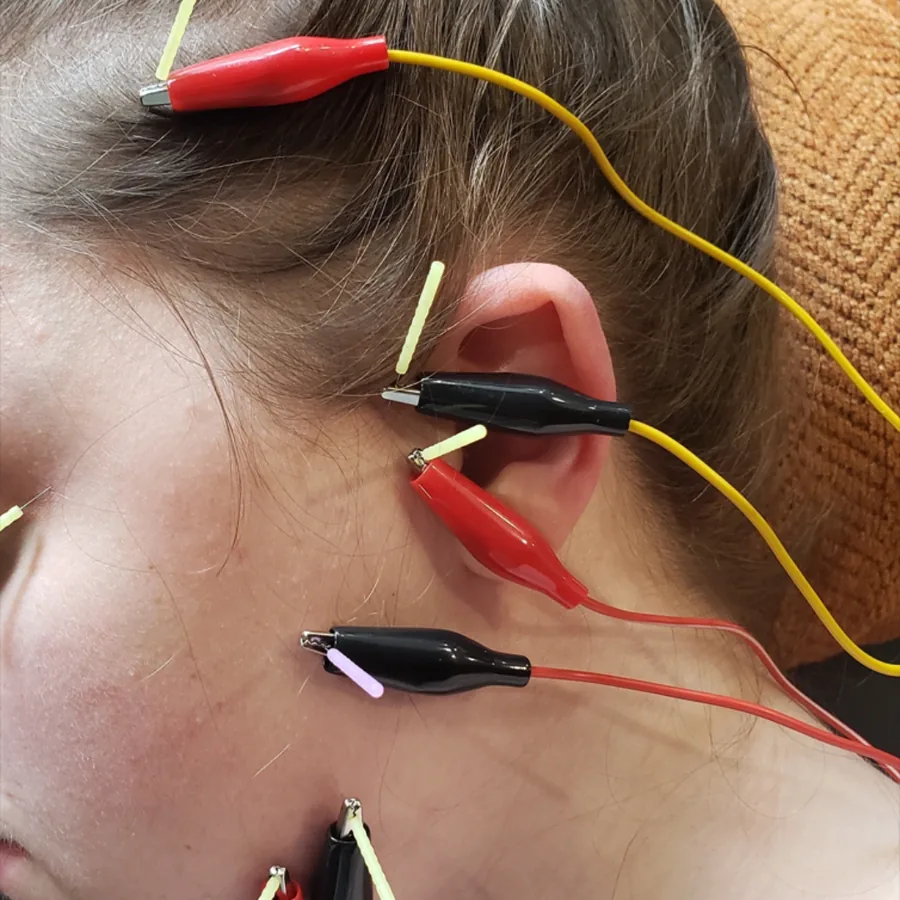
Fine microfilament needles into the trigger point that is actually driving your pain — releasing knots ordinary hands-on work cannot reach.
ExploreSpinal & Extremity Manipulation
A gentle, targeted thrust that restores movement to a specific joint — comfortable, controlled, and delivered inside your available range.
Explore
Blood Flow Restriction Therapy
Build strength and muscle size at light loads — one of the few practices in the Dallas area offering certified BFR inside a rehab plan.
ExploreWhat to expect
First visit
History, a full examination of the shoulder, neck and upper back, the stage you are in explained in plain language, and hands-on treatment matched to it in the same hour.
Painful stage
Pain and sleep are the priority: needling, gentle mobilization, thoracic and neck work, positions that let you rest. Range is respected, not forced.
Frozen and thawing
Graded mobilization, loaded stretching and strength work progress as the capsule allows, until you can reach, lift and sleep normally again.
Your first four steps
How it works
No referral needed, no waiting list to join, and nothing charged before you know this is the right fit.
Free discovery visit
We talk first. What is going on, what you have already tried, and whether this is genuinely the right approach for your problem. No charge, no obligation.
Full examination
A thorough neuro-musculoskeletal examination to find the root cause — including ruling out anything that should be seen by a physician instead.
Findings & plan
We go through what was found and what it means, then build an advanced treatment plan around the goals you actually came in with.
Treat, load, teach
Hands-on treatment, loaded movement, and the self-mobilization and exercise you need so the change holds between visits.
In depth
What is actually going on
Written for people who want the reasoning, not just the summary.
What frozen shoulder actually is
The shoulder joint is wrapped in a capsule of connective tissue. In adhesive capsulitis that capsule becomes inflamed, then thickened and contracted, so the ball cannot glide in the socket the way it should. The result is a shoulder that is both painful and stiff, with the stiffness present even when someone else moves the arm for you.
That last point is the one that separates it from most other shoulder problems. A rotator cuff tear hurts and feels weak, but the arm can usually be moved passively through its range. A frozen shoulder cannot.
It is more common between 40 and 65, in women, and in people with diabetes or thyroid conditions. It can follow a period of not using the arm, after an injury or surgery, or arrive for no obvious reason at all.
The three stages, and why they change the treatment
The freezing stage is dominated by pain. The capsule is inflamed, range is being lost week by week, and night pain is often the worst of it. Aggressive stretching and forceful mobilization in this stage increase the inflammation and make the shoulder worse, which is how many people arrive here after months of well-meant treatment.
In the frozen stage the pain settles and the stiffness dominates. This is the stage where graded mobilization, loaded stretching and strength work earn their keep, because the capsule now tolerates being asked to change.
In the thawing stage range returns, often slowly. The job is to make sure it returns fully and that the strength and movement patterns lost over the preceding months come back with it.
Establishing the stage is therefore the first task of the examination, and the plan is built from it. Pain-dominant shoulders are treated for pain. Stiffness-dominant shoulders are treated for range. Doing it the other way round is why frozen shoulder has a reputation for lasting years.
Why the neck and mid-back are on the table
A shoulder that cannot move makes the body find range elsewhere. The upper trapezius and neck muscles hitch the shoulder blade up, the mid-back stiffens, and after a few months the neck hurts as much as the shoulder.
Treating the thoracic spine and neck does two things. It takes load off the irritable shoulder, which usually reduces pain, and it gives the shoulder blade the room to move properly again once the capsule starts to release. A frozen shoulder treated in isolation thaws into a shoulder that still does not move well.
Dry needling has a clear place here. The rotator cuff, upper trapezius, levator scapulae and pectoral muscles guard a painful shoulder relentlessly, and needling reaches that guarding at a depth hands cannot. It is one of the few things that reliably changes night pain in the early stage.
Injections, manipulation under anesthesia and surgery
A corticosteroid injection can reduce pain in the early, inflamed stage and is a reasonable option for some people, particularly when night pain is unmanageable. It does not restore range on its own, and the movement work still has to happen.
Manipulation under anesthesia and capsular release surgery exist for shoulders that have not responded to a proper course of conservative care. Most do not need them. Where the examination and your progress say yours might, that is said plainly and early, with a referral to the right surgeon.
What you can do tonight
Sleep on the other side with a pillow supporting the painful arm in front of you, or on your back with the arm resting on a pillow. Do not fight through sharp pain at the end of range; gentle pendulum movements and short, frequent range work within comfort are enough in the early stage.
Keep the arm in use for daily tasks within what it tolerates. Complete rest speeds up the stiffness. And get it examined: the earlier the stage is known, the less time is lost treating it the wrong way.
Real Google reviews · Osteopractic Physical Therapy Dallas
Clients with the same problem
“I've been working with Dr. Brent for frozen shoulder issues and he is the best! My pain is going away and my range of motion is increasing. I couldn't ask for more!”
“After struggling with shoulder and back pain, I visited Dr. Lockett, and he provided such incredible relief! I feel so much more relaxed now.…”
“Dr. Brent healed me! I had a stubborn pain in my shoulder/back that lasted for weeks. I chose Dr. Brent because my last physical therapy experience a few years…”
Physical therapy FAQ · Dallas, TX
Frozen Shoulder: 11 questions answered
How do I know if I have frozen shoulder?
The telling sign is stiffness that is present even when someone else moves your arm, especially turning it outward or reaching behind your back, along with deep aching pain that is worse at night. A rotator cuff problem usually hurts and feels weak but can still be moved passively. The examination confirms it.
How long does frozen shoulder take to heal?
Left alone it commonly runs for a year or more through its three stages. Treatment matched to the stage shortens the painful part and speeds the return of range, but anyone promising a fixed number of weeks has not examined you. You get an honest estimate once the stage is known.
Can physical therapy fix frozen shoulder?
Physical therapy is the primary treatment for most frozen shoulders. The key is matching it to the stage: pain control, needling and gentle mobilization while it is inflamed, then graded mobilization, stretching and strengthening once the capsule tolerates it. The wrong stage of treatment makes it worse.
Does dry needling help frozen shoulder?
Yes, particularly for the pain and the muscle guarding around a frozen shoulder. Needling the rotator cuff, upper trapezius and chest wall muscles changes night pain and lets the shoulder move more freely. It does not release the capsule by itself; that is what the staged mobilization and loading are for.
Should I push through the pain to stretch it out?
No. In the painful freezing stage, forcing range increases the inflammation and prolongs the condition. Stretching belongs in the frozen and thawing stages, graded to what the capsule tolerates. Pain that lingers for hours afterward means it was too much.
Why does my frozen shoulder hurt more at night?
Lying on the shoulder compresses an inflamed capsule, and without the distraction of the day the deep ache is more noticeable. Sleep position and pillow support are covered at the first visit because sleep is usually the first thing people want back.
Do I need a cortisone injection?
Some people benefit from one in the early inflamed stage, mainly for pain and sleep. It does not restore range on its own. If the examination suggests an injection would help you get through the painful stage, you will be told so and referred.
Is it frozen shoulder or a rotator cuff tear?
They are often confused. A tear usually leaves passive range intact and shows weakness in specific movements; frozen shoulder limits range in every direction even when the arm is moved for you. The examination separates them, and imaging is only needed when it would change the plan.
Can I still work out with frozen shoulder?
Usually yes, with modified movements. Lower body and trunk training continue; overhead and behind-the-back work are adjusted to the stage. Blood flow restriction training keeps strength in the arm without loading the joint.
Will it come back, or affect the other shoulder?
A shoulder that has been through frozen shoulder rarely freezes again. The other shoulder can be affected in some people, particularly with diabetes. Keeping both shoulders moving and strong is the best protection.
Do I need a referral for frozen shoulder treatment in Texas?
No. Texas allows direct access to physical therapy, so you can book an examination straight away. If the examination finds something that needs a physician, you will be referred.

Dr. Brent Lockett
Dr. Lockett treats busy executives, professionals and athletes in chronic pain at the North Dallas clinic and across Dallas and the surrounding areas. He holds a Diploma in Osteopractic and is certified in dry needling, spinal manipulation and blood flow restriction therapy. Read his full background.
Written by Dr. Brent Lockett
Keep reading
Frozen Shoulder: The Three Stages and What Helps in Each
The single most useful thing to know about a frozen shoulder is which stage you are in, because the right treatment in stage one is the wrong treatment in stage two.
Read the article
Why Your Shoulder Hurts Most at Night
Night pain is the symptom that finally brings people in, and it is also one of the more informative things a shoulder does.
Read the article
“Shoulder Impingement” Is a Description, Not a Diagnosis
Being told you have impingement is roughly as informative as being told your shoulder hurts when you lift it. Here is what to ask next.
Read the articleAlso treated
Other conditions
Low Back Pain
The most common reason people call — and the one most often treated as a symptom rather than a pattern.
Read moreHeadaches & Migraines
Migraine disorder affects the central nervous system. Osteopractic therapy targets the muscles and joints caught up in it.
Read more
Runner's Knee
Rapidly becoming a more common issue every year — and, in most cases, preventable.
Read moreGet an honest answer about your frozen shoulder
The free discovery visit exists so you can find out whether this approach fits your problem before you spend anything.