
Treatment · Physical therapy in Dallas, TXDry Needling
Release the trigger point that is actually driving your pain — often with a noticeable change in movement before you get off the table.
- Most clients feel a change in range of motion in the first session
- 30-minute focused sessions available for fast relief
- At the North Dallas clinic, or your home, office or gym
The short version
Dry Needling in 30 seconds
What it is
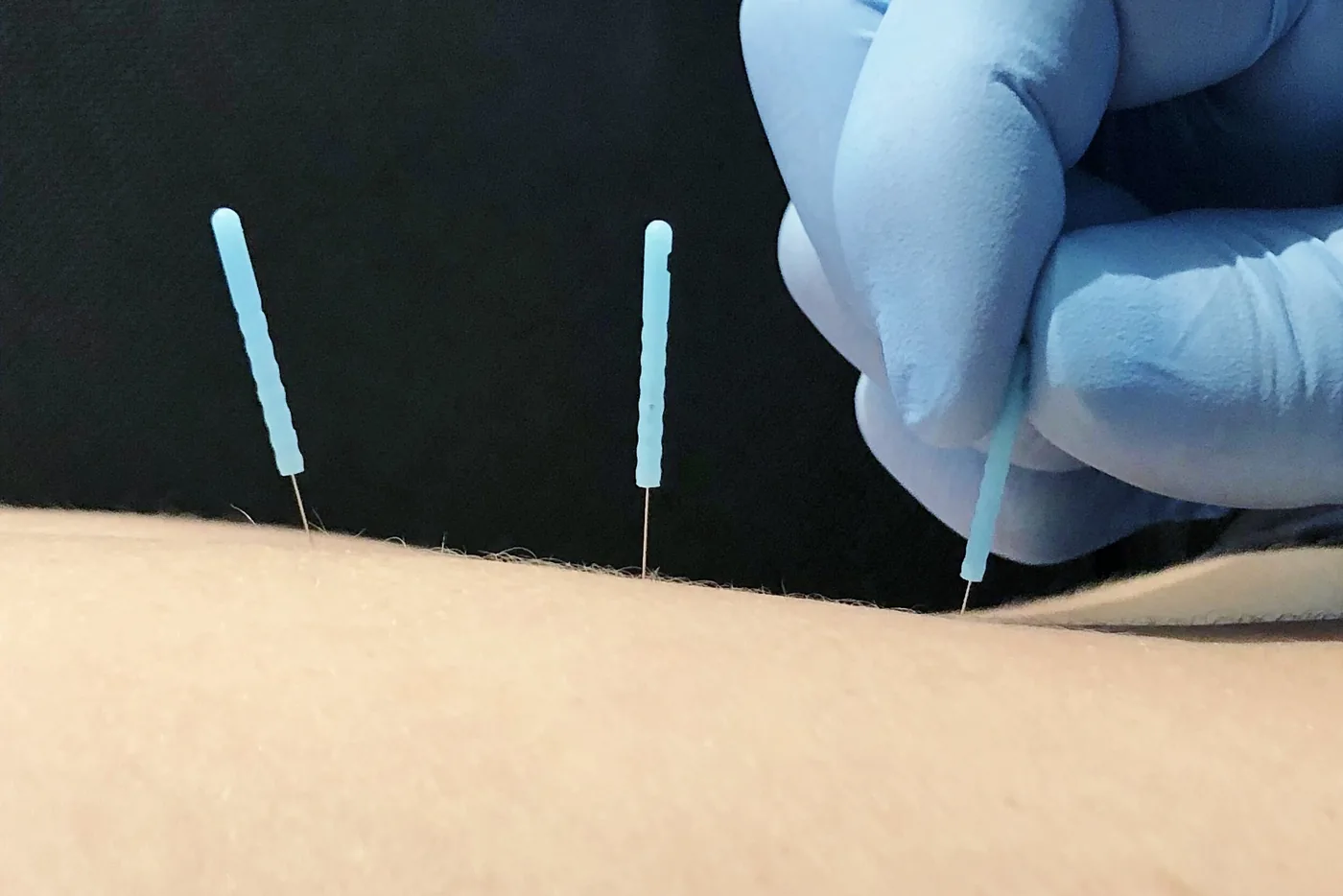
A fine, sterile, single-use microfilament needle placed into a myofascial trigger point, tendon or ligament. Nothing is injected — the needle itself is the treatment.
What it does
It “re-sets” the muscle: tension releases, blood flow increases, range of motion improves, and your brain releases endorphins.
How fast
Most clients notice a change in the same session. Mild soreness for 24–48 hours afterwards is normal and expected.
Why people choose it
What you get out of dry needling
Fine microfilament needles into the trigger point that is actually driving your pain — releasing knots ordinary hands-on work cannot reach.
Reaches what hands cannot
A trigger point sitting under three layers of muscle cannot be pressed without squashing everything above it. A needle goes straight to it.
Immediate range of motion
Tension drops and the joint moves further within minutes — which is exactly the window we then use for loading and manipulation.
No drugs, nothing injected
There is no medication involved. For anyone trying to get away from pain medication, that is the whole point.
Treats the cause, not the sore spot
Trigger points refer pain elsewhere. The needle goes where the exam says the problem is, which is often not where it hurts.
Fits a working week
A 30-minute session before a race, after a heavy training block or between meetings is a realistic amount of time to give up.
Delivered where you are
Home, office or gym across Dallas — no clinic waiting room, no drive, no half-hour of your day lost to parking.

Worth knowing
Now offering 30-minute dry needling sessions
In addition to using dry needling inside a larger pain management plan, you can book a short focused session purely for fast relief — useful before a race, after a heavy training week, or when a flare-up hits mid-project.
What it commonly helps with
Inside a session
What actually happens
Find the real source
A neuro-musculoskeletal exam first. We needle the tissue driving the problem, which is often not the spot that hurts most.
Treat the trigger point
A fine, sterile, single-use needle is placed into the trigger point. Many people feel a brief twitch, then a deep release.
Move while the window is open
Straight after needling we restore the range you just gained with manipulation and loaded movement, so the nervous system keeps it.
Leave with homework
Self-mobilization and specific exercise so you hold the change without needing a needle every week.
What to expect afterwards
During
A brief involuntary twitch when a trigger point releases, then a heavy, warm sensation. The insertion itself is usually barely noticeable.
Same day
Improved range of motion, often immediately. Some people feel loose and slightly tired for a few hours.
Next 48 hours
Mild muscle soreness in the treated area, similar to the day after an unfamiliar workout. Light movement helps; heavy loading of that exact muscle can wait a day.
Be honest with yourself
Is dry needling right for you?
Being told “not this, and here is why” is part of the service. If it is not the right tool for your problem, you will hear that at the free discovery visit.
A good fit if
- Pain that keeps returning to the same muscle
- Tightness that massage and stretching never change for long
- Headaches with a stiff neck on the same side
- Recurring sports niggles — calf, hamstring, elbow, shin
- Wanting relief without medication or injections
- A restriction that is blocking a rehab exercise you need to do
Tell us first if
- A needle phobia you would rather not fight — there are other tools
- Certain bleeding disorders or blood-thinning medication (tell us first)
- Active infection or an open wound over the treatment area
- Symptoms that need imaging or a physician — you will be told
- Expecting one session to fix a ten-year pattern on its own
In depth
Everything else worth knowing
Written for people who want the reasoning, not just the summary.
What dry needling actually does
Dry needling “re-sets” the muscle. The needle gets deep into areas of restriction and lets stubborn knots and tension release in a way that ordinary therapy techniques cannot accomplish. There is no medication and nothing is injected — the needle itself is the treatment.
By targeting myofascial trigger points, dry needling relieves pain, improves range of motion and increases blood flow so the muscle can return to its normal resting state. Stimulating those points also prompts your brain to release endorphins, which is why so many clients feel the change inside the same session.
It is not acupuncture. Acupuncture works from traditional Chinese meridian theory; dry needling is a Western, anatomy-led technique aimed at a specific muscle, tendon or ligament that a neuro-musculoskeletal exam has identified as the source of your problem.
Why the needle goes where it does
A myofascial trigger point is a hard, irritable band inside a muscle. Press it and it hurts — but more usefully, it refers pain somewhere else, and it does so in patterns that are remarkably consistent from person to person.
A trigger point in the upper trapezius sends pain up the side of the neck and behind the eye. One in gluteus minimus sends it down the leg convincingly enough to be mistaken for sciatica. One in the forearm extensors produces what everyone calls tennis elbow.
That is why the spot treated is frequently not the spot that hurts, and why an examination comes before a needle. Treating the painful area alone is how people end up managing the same problem for years.
Where it fits in your plan
Dry needling is rarely the whole answer, and you will be told so. It opens a window: the tissue lets go, the joint moves better, and that is the moment to load the area properly with manipulation, corrective exercise or blood flow restriction training so the change holds.
A muscle that has been guarding for two years has adapted. Release it and leave it alone, and it re-adopts the pattern it knows within days, because nothing has told the nervous system the new range is safe to keep. What tells it that is load.
This is exactly why every client leaves with therapeutic exercise and self-mobilization techniques. If the plan is a needle every week forever, the plan has failed.
What the evidence-based training behind it means
Dry needling here is performed under a Certified Dry Needling (Cert. DN) credential, as part of a Diploma in Osteopractic — a rigorous, evidence-based post-doctorate training program specializing in the treatment of neuromuscular conditions with spinal and extremity manipulation, dry needling, instrument-assisted soft tissue mobilization and differential diagnosis.
The differential diagnosis half of that matters as much as the technique. Knowing which presentations should be imaged, referred to a physician, or simply treated a different way is what keeps a needle from being used on a problem it cannot help.
Real Google reviews · Osteopractic Physical Therapy Dallas
Clients treated with this
“Dr. Lockett changed my life! I went to him having 15-20 headaches/migraines a month to having only ONE in the past 6 weeks! He is extremely professional,…”
“After an exercise I had an excruciatingly painful headache which resulted from muscle injuries to my neck. That was four months ago. Over that time Dr. Lockett…”
“I started seeing Dr. Brent about a month ago for neck pain that was really interfering with my workouts and weightlifting routine. Within five minutes of my…”
Physical therapy FAQ · Dallas, TX
Dry Needling: 15 questions answered
Does dry needling hurt?
The needles are extremely thin — far thinner than anything you associate with an injection — and most clients describe the insertion as barely noticeable. What people do feel is a short involuntary twitch when a trigger point releases, then a heavy, warm sensation.
Is dry needling the same as acupuncture?
No. Both use a similar needle, but dry needling is a Western technique that targets a specific muscle, tendon or ligament identified through orthopedic examination, rather than a point on a traditional meridian map. It is performed here under a Certified Dry Needling credential as part of physical therapy care.
How will I feel afterwards?
Most people feel looser immediately and notice better range of motion. Mild muscle soreness in the treated area for 24 to 48 hours is normal, similar to the day after an unfamiliar workout. Light movement helps it settle.
How many sessions will I need?
The typical client is seen one to two visits a week, and the plan runs until the result holds. You will get an honest estimate after the first assessment rather than being sold a block up front.
Can I book dry needling on its own?
Yes. Thirty-minute dry needling sessions are available for fast, targeted relief. If the exam suggests something else is driving the problem, you will be told that too.
What conditions does dry needling help most?
It works well for headaches, back and neck pain, shoulder pain, piriformis syndrome, shin splints, plantar fasciitis, hip pain, tennis and golfer's elbow, carpal tunnel, migraines and IT band syndrome, among others.
Are the needles clean?
Every needle is sterile, single-use and disposed of immediately after the treatment. Nothing is ever reused.
Is anything injected into me?
No. That is what the word “dry” means — there is no medication, no steroid and no fluid of any kind. The mechanical effect of the needle is the entire treatment.
Can I train or work out after a session?
Light movement and easy training are usually encouraged, and often help. Heavy loading of the exact muscle that was treated is better left until the next day.
Do I need a doctor's referral?
No. A prescription for physical therapy is not required — you can call and make an appointment immediately.
Is dry needling safe if I take blood thinners?
Tell us before the session. Anticoagulant medication and certain bleeding disorders change the risk profile, and in some cases mean we use a different technique instead. That decision is made with your history in front of us.
Can you needle near my head and neck?
Yes, and it is one of the most useful areas for headache sufferers. It is performed with the anatomical training that a Cert. DN credential requires, and you will be told exactly what is being treated and why before anything happens.
What if I am afraid of needles?
Say so. Plenty of nervous clients get through it comfortably once they see the needle, because it looks nothing like what they were imagining. If you would rather not, cupping, instrument-assisted work and manipulation cover a great deal of the same ground.
Will I bruise?
Occasionally a small bruise appears at an insertion point. It is minor and settles within a few days.
Does insurance cover dry needling?
We are an out-of-network provider. You are given a superbill at the end of every treatment so you can file a claim with your insurer for potential reimbursement. Call for pricing.

Dr. Brent Lockett
Dr. Lockett treats busy executives, professionals and athletes in chronic pain at the North Dallas clinic and across Dallas and the surrounding areas. He holds a Diploma in Osteopractic and is certified in dry needling, spinal manipulation and blood flow restriction therapy. Read his full background.
Written by Dr. Brent Lockett
Keep reading
Dry Needling vs. Acupuncture: What's Actually Different
They use a similar needle. That is roughly where the similarity ends — and the difference decides whether the treatment finds your problem.
Read the article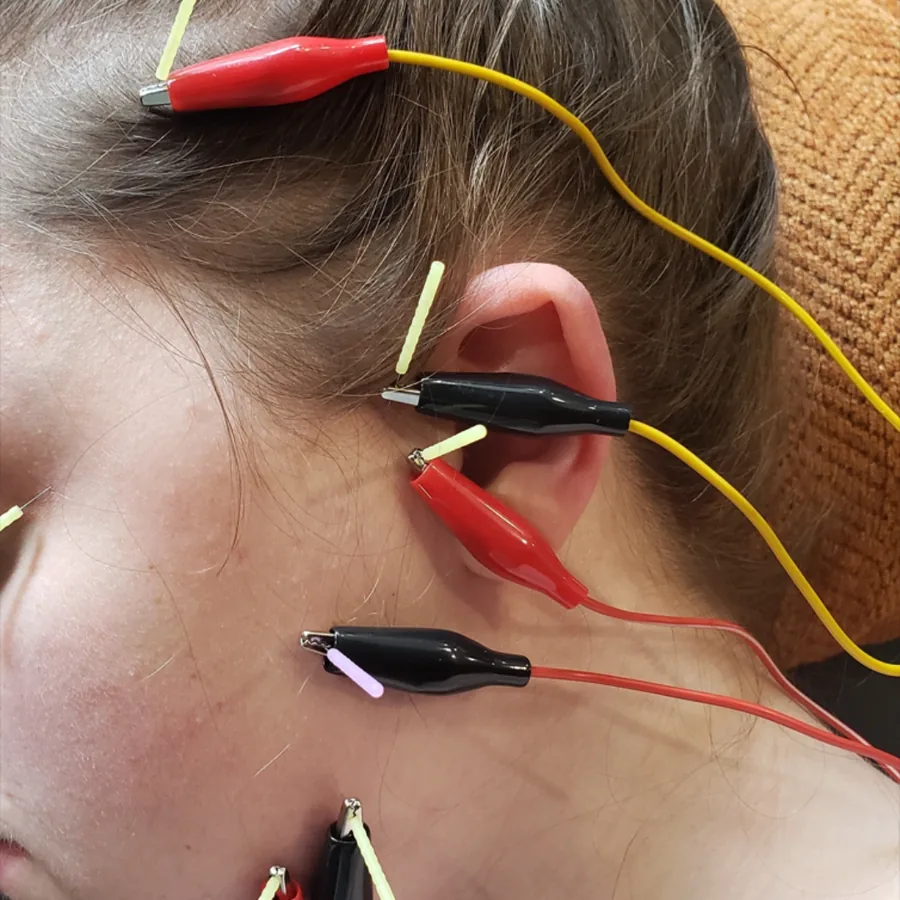
Headaches That Start in Your Neck
You feel it behind your eye. The problem is often four inches lower, at the base of your skull.
Read the articleAlso offered
Other treatments
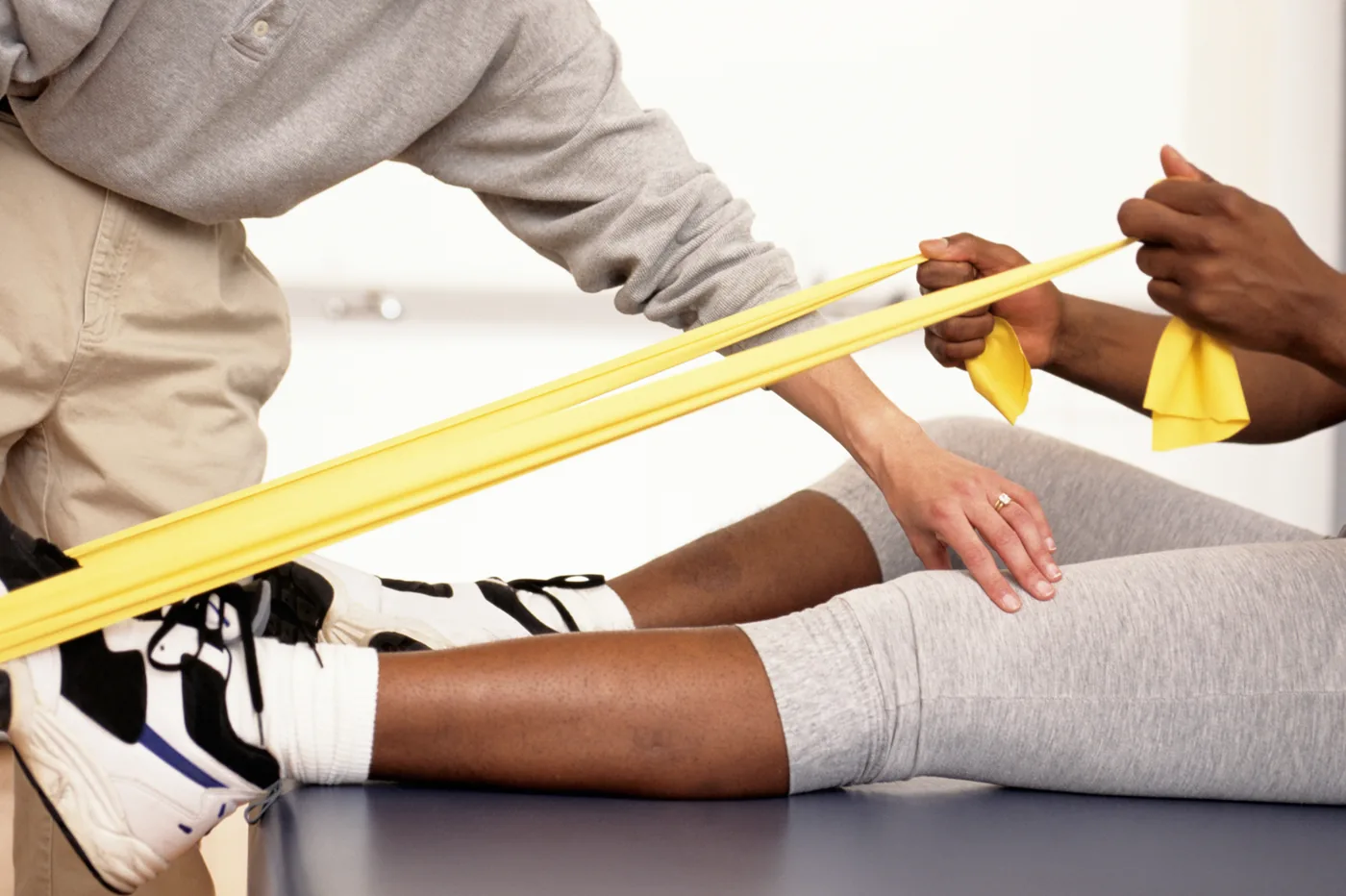
Spinal & Extremity Manipulation
A gentle, targeted thrust that restores movement to a specific joint — comfortable, controlled, and delivered inside your available range.
Explore
Blood Flow Restriction Therapy
Build strength and muscle size at light loads — one of the few practices in the Dallas area offering certified BFR inside a rehab plan.
Explore
Dry Cupping
Suction that lifts skin, muscle and fascia — soft and deep tissue mobilization for areas that stay stiff no matter how much you stretch.
ExploreReady to start?
Book a free discovery visit and find out whether dry needling is the right tool for your problem. No referral needed, no obligation.