The short answer
Many headaches are referred pain from the upper neck. The joints and muscles at the top of the cervical spine send pain into the head, temple, eye and jaw, so the place you feel it is not the place causing it. Treating the neck is what changes those headaches.
- Neck structures refer pain into the head; the location you feel is not the source.
- Suboccipitals, upper trapezius, SCM and the C1–C3 joints are the usual contributors.
- Dry needling reaches depths hands cannot, which is why it features heavily here.
- Diagnosed migraine still needs neurological care — this addresses the mechanical load alongside it.
A client came to me having spent two years managing headaches with medication that worked less and less well. Nobody had examined her neck. Not once. The headache was in her head, so everyone looked at her head.
That is an extremely common story, and it is why this article exists.
Referred pain, explained quickly
Your nervous system is not as precise about location as you assume. Nerve signals from the upper neck and from the head converge on the same relay in the brainstem, and the brain cannot always tell which one it heard from.
So an irritated joint or muscle in the top of the neck can produce a signal that your brain interprets as pain behind the eye, at the temple, or over the top of the skull. The location you feel is a best guess, not a measurement.
Headaches produced this way are called cervicogenic, and they account for a substantial share of the recurring headaches I see in practice.
The usual suspects
Suboccipitals. The small deep muscles at the base of the skull. Trigger points here refer pain in a band that wraps around the side of the head and lands behind the eye. Clients describe it as a headache inside the skull.
Upper trapezius. Refers up the side of the neck to the temple. Almost universally involved in anyone who works at a screen or carries a bag on one shoulder.
Sternocleidomastoid. The one people never suspect. It can produce forehead pain, ear pain, and even dizziness and visual disturbance convincing enough that people assume something serious is happening.
Upper cervical joints. The C1–C3 segments refer directly into the head. Restriction there is a frequent finding in people who spend long days looking slightly downward.
How to tell if this is you
- Your headache starts at the base of the skull and travels forward
- It is worse after a long day at a screen or a night of poor sleep position
- It is usually one-sided, and the same side has a stiff neck
- Pressing certain spots in your neck reproduces something recognizably like your headache
- It started after a whiplash, a fall or a period of unusual desk work
- Jaw clenching or TMJ symptoms come along with it
None of that is a diagnosis. What it is, is a good reason for someone to actually examine your neck, which in a surprising number of cases has never happened.
What treatment targets
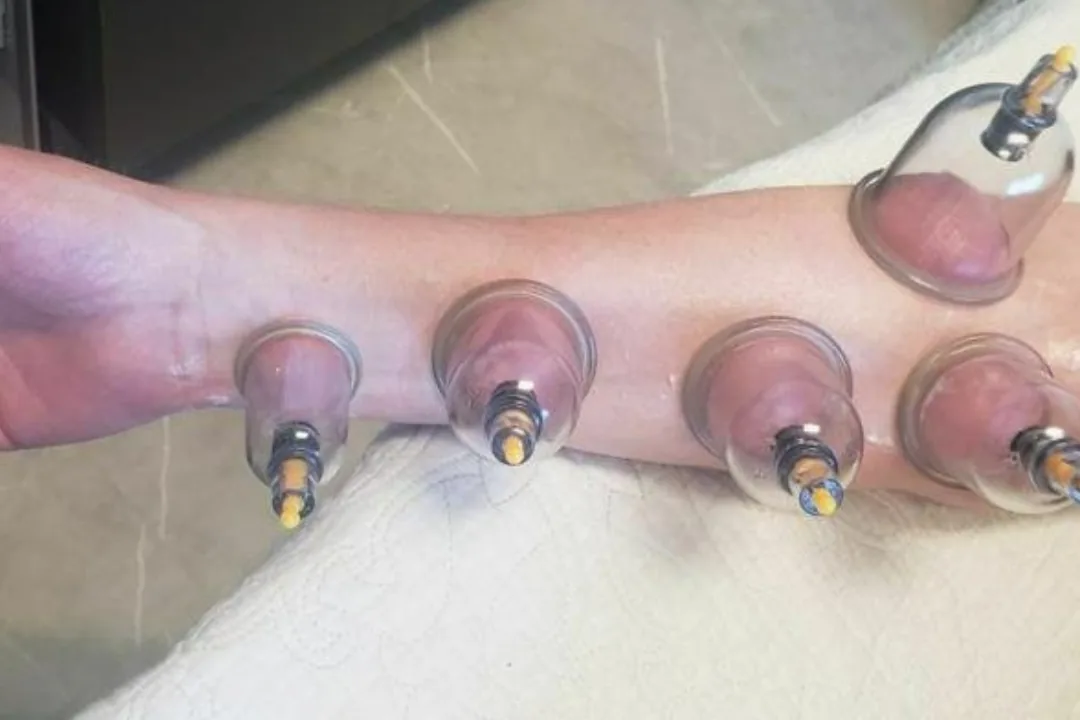
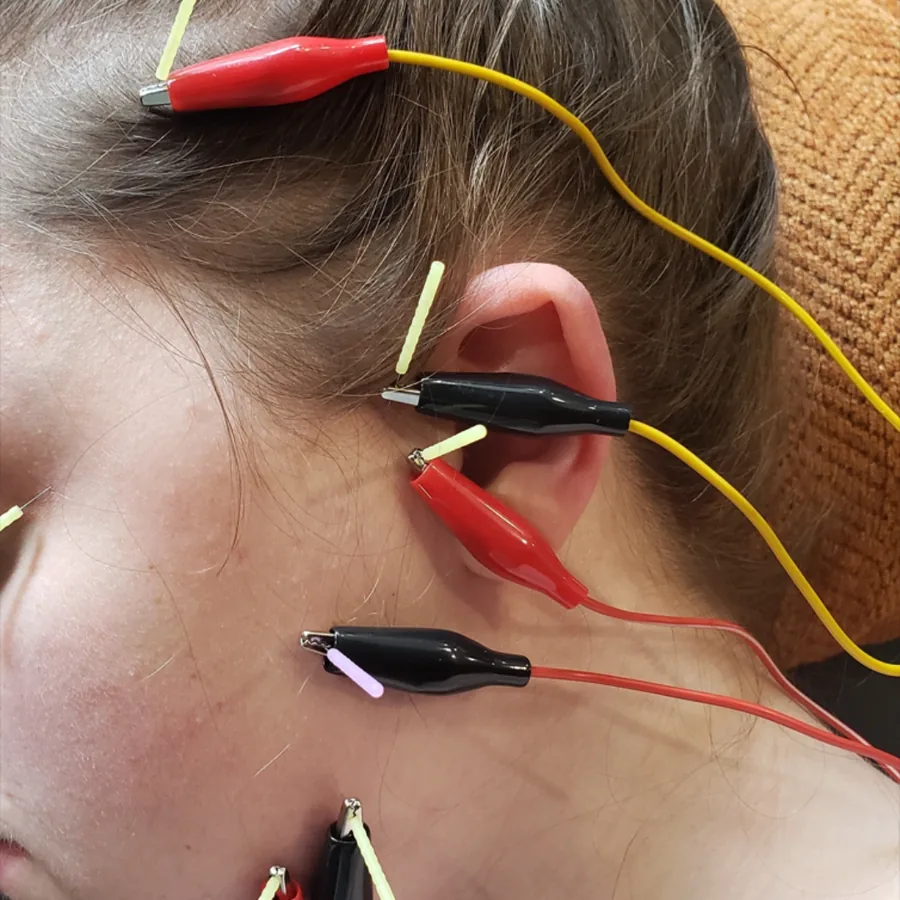
Dry needling works well for headaches and migraines because it reaches trigger points at a depth hands cannot get to without compressing everything above them. The suboccipitals sit under the upper trapezius; you cannot press one without pressing the other.
Cervical manipulation restores movement at the upper segments that have stiffened, which reduces the guarding that keeps those muscles loaded.
Then the part that decides whether it lasts: deep neck flexor capacity, thoracic mobility, and how your day is actually arranged. A neck that spends nine hours holding a head forward of the shoulders will keep producing the same problem regardless of what I do to it on a Tuesday.
Migraine is a different conversation
If you have diagnosed migraine disorder, none of this replaces neurological care. Migraine disorder affects your central nervous system, which includes your brain and spinal cord.
What osteopractic therapy does is target the muscles and joints affected by migraine disorder rather than the symptoms. For a great many people there is a real musculoskeletal component sitting alongside the migraine, and addressing it changes how often and how badly things escalate. It is an addition to your care, not a substitute for it.
What to bring to the first appointment
Four weeks of a simple record: the date, where the pain started, which side, and what you were doing in the hours beforehand.
Whether there was nausea or light sensitivity, and whether ordinary activity made it worse. Those two lines separate migraine from the rest faster than anything else.
What you have already taken, and on how many days a month, because medication on most days can sustain a headache by itself.
That record shortens the assessment considerably and it is the single most useful thing anyone can do before walking in.
The jaw, which belongs in this conversation
Temporalis and masseter refer pain into the temple, behind the eye and along the teeth, and they produce a headache that is easily attributed to the neck alone.
The upper cervical nerves and the nerve supplying the jaw share a relay in the brainstem, so the two regions reinforce each other and are usually assessed together.
Clenching is the common thread, and most people who do it during the day have no idea they are doing it until they are asked to notice.
Teeth apart, lips together, tongue resting on the palate is the resting position, and reminding yourself of it a hundred times a day does more than any exercise.
Why the same side, every time
Consistent one-sidedness is one of the most useful features in the whole headache conversation. Cervicogenic headaches stay on the side of the neck producing them.
Migraine can swap sides between episodes and frequently does. Tension-type headache is usually felt on both sides as a band.
So a headache that has been on the right for three years, starting at the base of the skull and coming forward behind the right eye, has already told you a great deal before anyone has touched you.
That single detail is worth writing down before an appointment, because people reliably forget to mention it.
How long the treatment takes
Six to eight sessions across six weeks is a typical course, with home work throughout.
Most people notice a change in headache frequency rather than intensity first, which is worth knowing because the headaches you do get can feel just as bad while becoming much rarer.
The reassessment uses the same tests as the start, so progress is a comparison rather than a recollection.
If six weeks of a properly conducted plan has changed nothing measurable, that is a reason to widen the assessment rather than to continue.
The test that gives you a number
The flexion-rotation test is the most useful single measure in this presentation. The neck is flexed fully, which locks the segments below, and then rotated. Almost all the rotation available in that position comes from the joint between the first and second vertebrae.
A healthy result is roughly forty-four degrees each way. A cervicogenic headache commonly shows a marked reduction toward the symptomatic side.
It takes about a minute, it is reproducible, and it gives you something to re-test against in six weeks.
That matters because headache frequency fluctuates for reasons that have nothing to do with treatment, and a number is harder to argue with than an impression.
What the treatment plan looks like
Manual therapy or manipulation aimed at the upper cervical segments, which frequently changes both the range and the headache within the first session or two.
Dry needling into the suboccipitals, upper trapezius and sternocleidomastoid where those muscles reproduce your familiar pattern under pressure.
Then the part that holds it: deep neck flexor endurance and scapular strength, three or four times a week for six to eight weeks.
The trials that produce lasting reductions in headache frequency used that combination. Manual therapy alone gives you weeks; adding the loading gives you a neck that stops producing the headache.
What to change in the meantime
Raise the screen so the top of it is near eye level, and put the main monitor directly in front of you rather than off to one side.
Stand up every twenty to thirty minutes. Duration in a position predicts symptoms better than the position itself.
Look at the pillow. A neck side-bent for six hours is a genuine load, and the height that suits a side sleeper is not the height that suits a back sleeper.
And take the sleep and workload question seriously, because cervicogenic headaches cluster around busy, under-slept periods in a way that is too consistent to be coincidence.
When a headache is not a therapy problem
Get urgent medical care for a sudden, severe “worst headache of my life”, a headache with fever and a stiff neck, new neurological symptoms such as weakness or speech changes, a headache following a head injury, or a headache pattern that has abruptly changed.
Knowing which headaches belong to me and which do not is part of my training, and I would much rather send you somewhere else than treat something I should not be treating.