The short answer
Runner's knee is a capacity problem, not a wear-and-tear problem. It appears when training load rises faster than the hip, quadriceps and calf can support, so it is predicted by how quickly you added mileage and prevented by building that capacity before you need it.
- Runner's knee is a capacity problem, so capacity is the treatment.
- Training spikes, hip control, calf capacity and cadence are the four levers.
- Complete rest costs you the capacity you need for the comeback.
- BFR fills the gap when the knee cannot yet tolerate strength-training loads.
Runner's knee is rapidly becoming a more common issue every year. It is also one of the most predictable problems I deal with, which makes the number of people who only come in after eight weeks of pain genuinely frustrating.
What it usually is
Pain around or behind the kneecap during running, on stairs, or after sitting for a long stretch. Sometimes a grinding sensation. It builds over weeks rather than arriving in a single moment, and it tends to appear at a fairly predictable distance into a run.
The critical point: this is almost always a load tolerance problem rather than structural damage. The tissue around the kneecap is being asked to handle more than it currently has the capacity for. That framing changes everything about the treatment.
The four things that predict it
Training load that moved faster than tissue tolerance. The most common single cause. Mileage, pace or hill volume increased and the tissue was given no time to adapt. Race entries are a reliable predictor of this.
Hip strength and control. If the hip abductors and extensors do not control the femur, the knee absorbs the difference on every single stride. Thousands of times per run.
Calf capacity. Massively underrated. The calf complex is a primary shock absorber, and when it fatigues, load transfers straight up to the knee. If you cannot do a meaningful number of quality single-leg heel raises, this is your first assignment.
Cadence and mechanics. Overstriding increases braking forces at the knee. Small changes here often produce larger symptom changes than people expect.
Why “just stop running” is bad advice
It is the easiest thing to say and it fails on its own terms. Complete rest de-trains exactly the tissue that needed more capacity, so you return in six weeks with a calmer knee and a weaker leg. Then the first proper run reproduces the problem, and now you believe your knee is fragile.
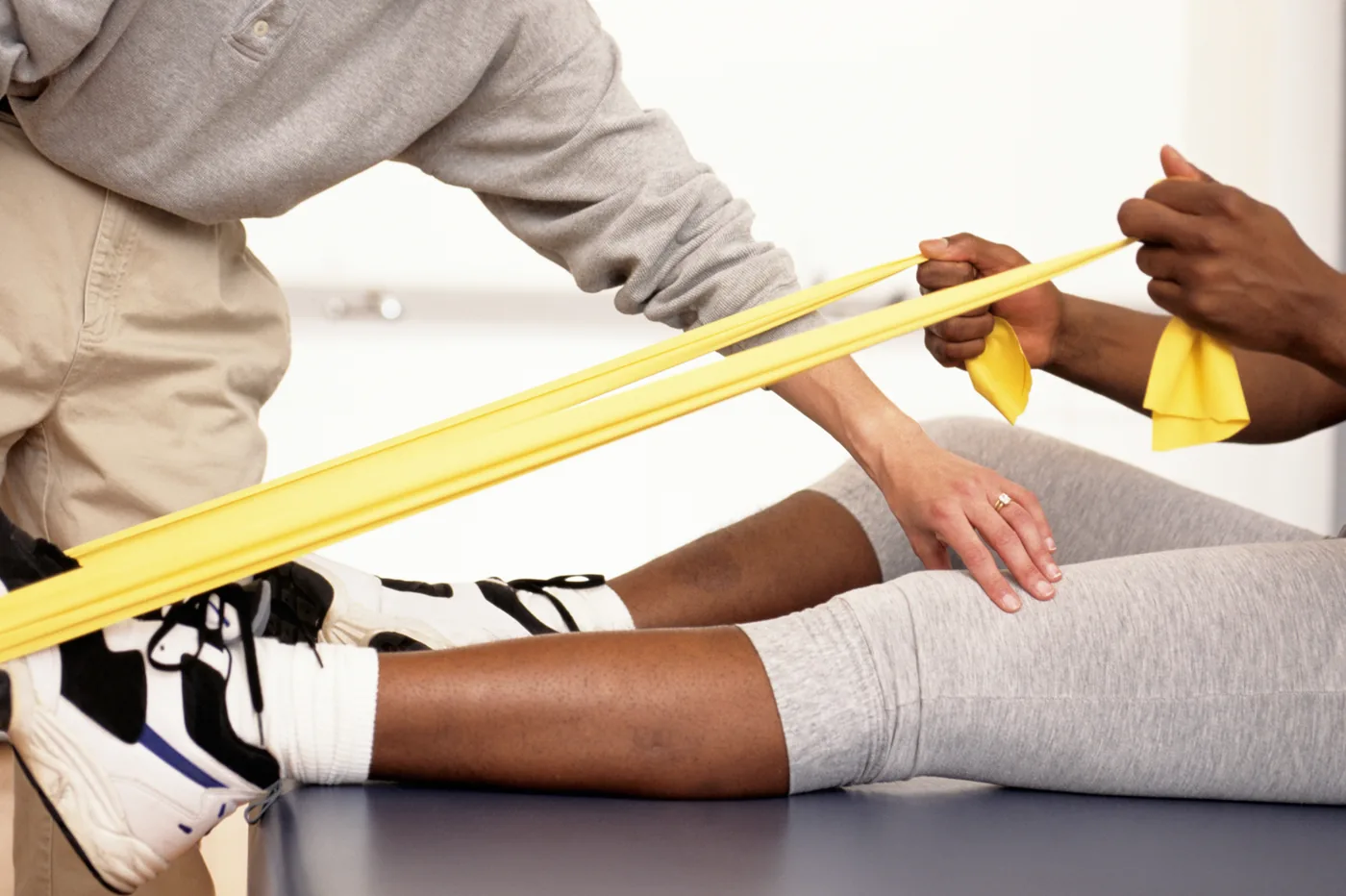
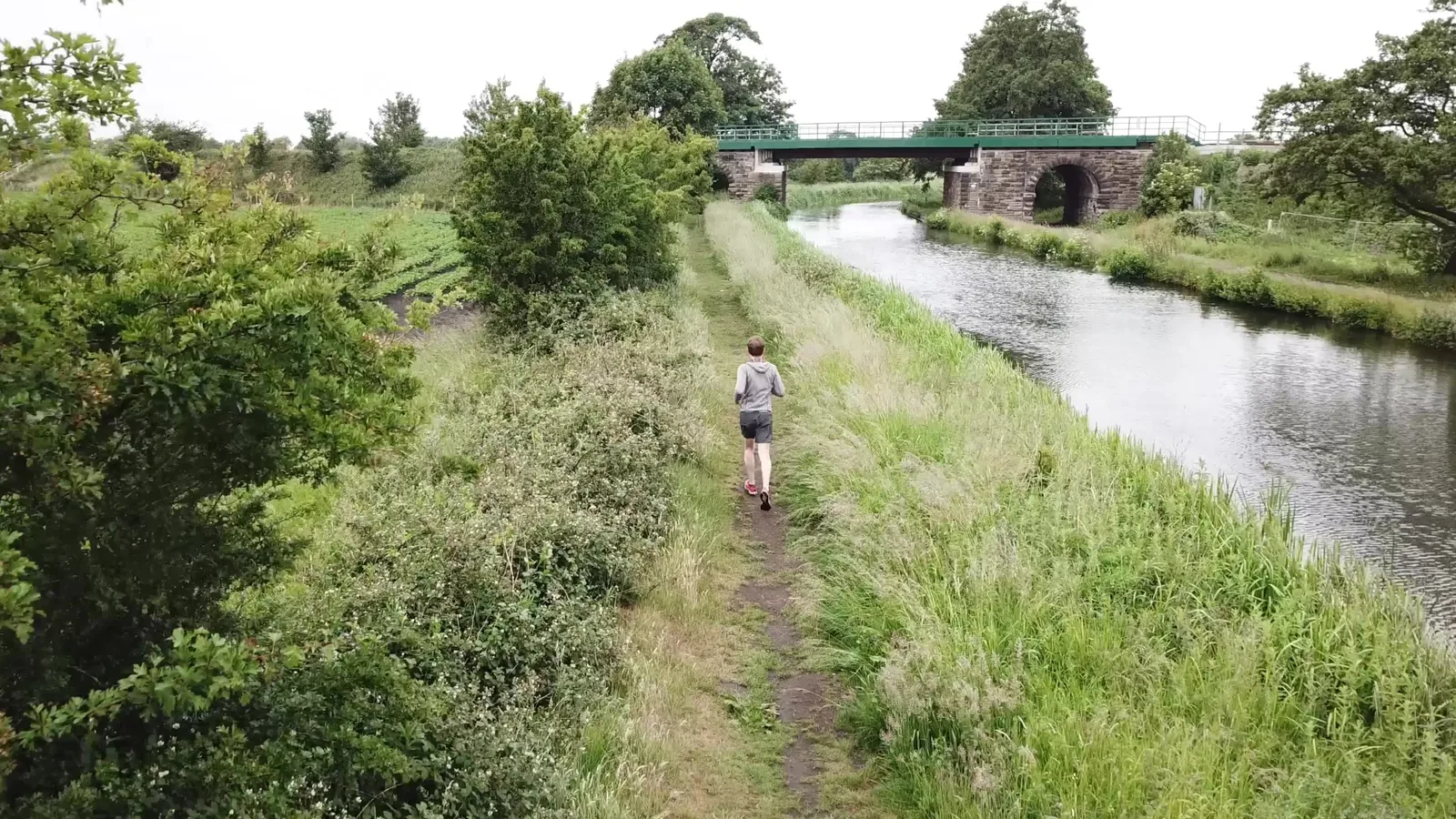
The better approach modifies load rather than removing it. Volume comes down, hills and speed come out temporarily, cadence gets addressed, and strength work goes in. Most runners keep running through the whole process, which matters for far more than fitness.
Where treatment fits
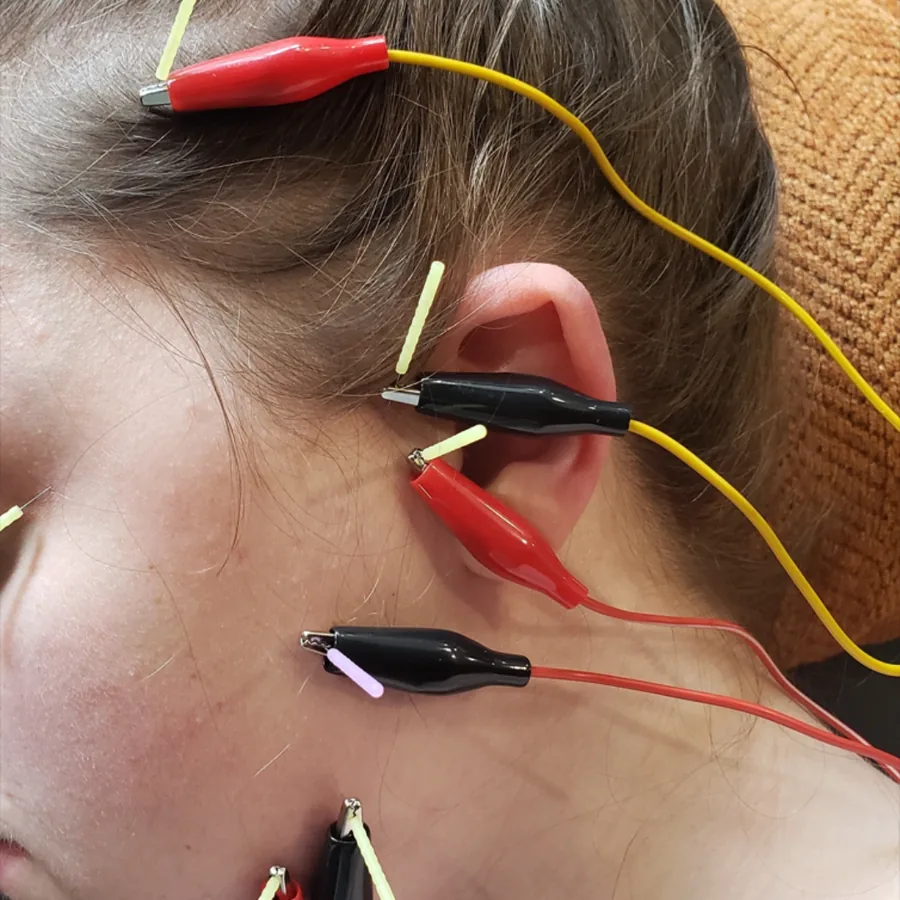
Manual therapy has a role — hip and calf restriction genuinely alter mechanics, and dry needling or cupping in the lateral quadriceps, glutes and calves often produces an immediate change in how a stride feels.
But the durable answer is capacity. Hip and calf strength, single-leg control, and a progressive return to the volume you want.
When the knee is too irritable to tolerate the loads that strength work needs, blood flow restriction training fills the gap: real strength adaptation at weights the joint can handle today.
The version I would rather have
Come in before it hurts. A full body evaluation finds a hip that does not control, a calf that fatigues early, or a training plan that is about to outrun your tissue — and all of those are cheap to fix while they are still just findings.
Athletes cannot afford to wait until they are experiencing pain to allocate time for physical therapy. Anyone leading an active lifestyle or competing on a daily or weekly basis is almost certainly compensating for a limited range of motion or inflammation somewhere. The only question is whether you find it or it finds you.
What to do in the first week of symptoms
Cut the weekly distance by about a third rather than stopping, provided you can run without pain that increases through the run.
Remove downhills and speed work entirely for two weeks, since both raise the load at the front of the knee substantially.
Start the hip and quadriceps work the same week, because it takes six weeks to change anything and there is no reason to spend two of them waiting.
And note the distance at which the symptom appears, so there is a number to compare against rather than a memory.
Coming back after a break
Enter on what you can do rather than on a date: thirty minutes of brisk walking without symptoms, ten controlled single-leg hops, and strength within about ten percent of the other side.
Then walk-run intervals every other day, increasing the running portion before the number of sessions.
Hills and speed come last, several weeks apart, because they are the highest loads in running.
Judge each session by the following morning rather than by how it felt at the time, which is the rule that prevents most second injuries.
Shoes, orthoses and the things people buy first
Shoes matter less than the internet suggests and more than nothing. A shoe you find comfortable, replaced when the midsole is done, covers most of it.
Do not change shoes in the middle of a return from injury. One variable at a time.
Prefabricated insoles help some people in the short term and the evidence for custom devices outperforming them is not strong.
None of it substitutes for the strength work, which is the part that changes what your knee can tolerate rather than how the load arrives.
What the load history usually shows
Almost every case follows a change in the six weeks before it started: a jump in weekly distance, a new hill route, a block of speed work, a return after a layoff, or a new pair of shoes.
The knee did not fail. The demand rose faster than the tissue adapted, which is the same mechanism behind most running injuries.
That is worth establishing early, because it tells you what has to change as well as what has to be strengthened.
About ten percent a week is the usual guide for building volume, and not adding volume, speed and hills in the same two weeks is the other half of it.
Why the hip decides so much of this
The knee has very little control of its own in the side-to-side direction. What it does under load is largely decided by the hip above it and the foot below it.
When the hip abductors and external rotators are not doing their job, the thigh drifts inward under load and the contact pressure at the kneecap shifts and concentrates.
That is visible from across a room once you know to look for it, and it is filmable on a phone in ten seconds.
It is also why hip strengthening improves patellofemoral pain in the trials, sometimes as effectively as work aimed at the knee itself.
What the strength program actually contains
Quadriceps work, loaded properly, because the deficit is almost always there and hip work does not replace it.
Hip abduction and external rotation, progressing quickly out of side-lying and into upright single-leg work, which is where the demand lives.
Calf work, because the lower end of the chain matters and single-leg heel raises are the cheapest thing on the list.
Two or three sessions a week, twelve weeks, with the load increasing. Six weeks is where most people notice and where most people stop.
Cadence, and the one change worth making
Increasing step rate by about five to ten percent reduces the load at the knee at each contact, and it is one of the few running modifications with consistent support behind it.
It works by shortening the stride slightly, which reduces the braking force as the foot lands ahead of the body.
Use a metronome app or a playlist at the target tempo for a couple of weeks and it becomes automatic.
Beyond that, deliberate form coaching is usually not worth the effort for a recreational runner. Strength off the road and sensible progression on it do more.
The sitting version, which confuses people
Pain at the front of the knee after twenty minutes in a car or a cinema is characteristic enough to have a nickname, and it is one of the more useful pieces of history.
The mechanism is sustained compression of the kneecap against the groove with the knee bent and the quadriceps inactive.
It tells you the problem is patellofemoral rather than something inside the joint, which is reassuring.
Straightening the leg periodically is a legitimate management strategy rather than fidgeting, and it is worth doing without embarrassment on a long flight.
How long it takes, and what to measure
Four to six weeks for a noticeable change in symptoms, twelve for meaningful strength change, because that is how long muscle takes.
The markers worth tracking are the distance or time at which the pain appears, and how many controlled step-downs you can perform with the knee tracking over the foot.
Both move before the pain score does, which is the reason to bother measuring anything.
And the strength work continues twice a week after the pain has gone, because that is the difference between fixing it and fixing it repeatedly.
A sensible first week
- Cut volume rather than stopping. Keep runs below the distance that reliably triggers symptoms.
- Remove hills and speed work for now — both spike patellofemoral load.
- Start single-leg calf raises and a basic hip abductor and extensor routine.
- Note the distance at which symptoms begin, every run. That number is your progress marker.