
Treatment · Physical therapy in Dallas, TXBlood Flow Restriction Therapy
Get genuinely stronger at loads your injured joint can actually tolerate — with effects that can appear in as little as two weeks.
- Effects normally taking 12–16 weeks can appear in as little as 2 weeks
- One of the few BFR providers in the Dallas area
- Screened first — certain histories rule it out, and you will be told
The short version
Blood Flow Restriction Therapy in 30 seconds
What it is
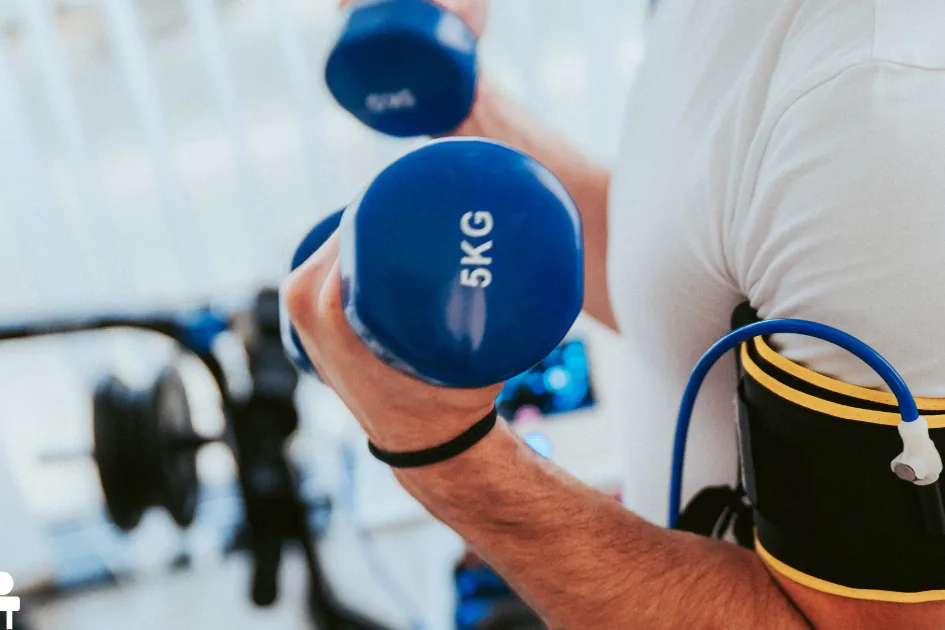
A tourniquet cuff placed around the top of a limb and inflated to a set pressure during light exercise, restricting blood flow out of the working muscle.
What it does
The muscle fatigues and works far harder than the weight suggests, driving strength and size gains at loads an injured joint can tolerate.
How fast
Treatment effects seen after 12–16 weeks of traditional strengthening can be observed as soon as 2 weeks with BFR.
Why people choose it
What you get out of blood flow restriction therapy
Build strength and muscle size at light loads — one of the few practices in the Dallas area offering certified BFR inside a rehab plan.
Strength without heavy load
The central problem in rehab is that strengthening needs load and load flares the joint. BFR is how you get out of that bind.
Faster visible progress
Effects normally requiring 12 to 16 weeks of conventional strengthening can be observed in as little as two weeks.
Protects a healing repair
After surgery you can train hard at weights the repair handles safely, instead of losing six weeks of muscle.
More than muscle
Combined with aerobic or interval work it improves VO₂ max and aerobic capacity, and supports tissue regeneration and bone healing.
Recovery for athletes
A strength stimulus without the systemic fatigue of a heavy session two days before you compete.
A bridge, not a destination
As tolerance improves you move back to conventional loading. The cuff comes out of the bag less and less — that is the plan working.

Worth knowing
Results in weeks, not months
Treatment effects that traditionally take 12–16 weeks of strengthening can be observed as soon as two weeks with BFR. That is why it is so often built into a plan here rather than offered as an add-on.
What it commonly helps with
- Post-surgical rehabilitation
- Post-operative muscle loss
- Knee arthritis
- Tendon injuries
- Return to sport
- Aerobic capacity and VO₂ max
- Muscle recovery between competitions
- Strength when heavy loading is off the table
Inside a session
What actually happens
Screening
BFR is not for everybody. Your history and any vascular or clotting risk factors are reviewed before a cuff goes anywhere near a limb.
Personalized pressure
The cuff is set to a pressure appropriate to you and the limb being trained — not a fixed number applied to every client.
Low-load, high-effort sets
Light weights, structured sets and short rests. It burns. It also stops you having to load a joint that is not ready.
Progress out of the cuff
As tolerance improves, load moves back to conventional strength work.
What to expect afterwards
During a set
A strong burn and heavy fatigue at surprisingly light weight. That is the mechanism working. It should not be sharp, and the cuff comes off between exercises.
Afterwards
A pumped, tired feeling in the muscle. Ordinary training soreness rather than joint pain.
Over weeks
Visible and measurable strength change at loads the joint tolerates, with progression back toward conventional training as you improve.
Be honest with yourself
Is blood flow restriction therapy right for you?
Being told “not this, and here is why” is part of the service. If it is not the right tool for your problem, you will hear that at the free discovery visit.
A good fit if
- Recovering from knee, shoulder or hip surgery
- An arthritic joint that flares whenever you try to strengthen it
- A tendon in an irritable phase
- Returning to sport after a long lay-off
- Losing muscle in a limb you cannot load normally
- An athlete wanting a stimulus without heavy systemic fatigue
Tell us first if
- History of deep vein thrombosis or clotting disorders
- Certain cardiac conditions and uncontrolled hypertension
- Active infection, open wound or lymphedema in the limb
- Pregnancy, unless cleared by your physician
- Anyone whose history the screening flags — another route will be used
In depth
Everything else worth knowing
Written for people who want the reasoning, not just the summary.
How it works
Blood Flow Restriction Therapy (BFR) is a cutting-edge training tool that can build muscle size and strength at lighter loads, significantly faster and often greater than those achieved with traditional resistance training.
BFR involves placing a tourniquet around your limb during exercise to restrict blood flow from the working muscle. The reduced oxygen supply causes the muscle to fatigue and work harder, which triggers a cascade of physiological benefits — an increase in muscle strength and size at loads far lighter than you would normally need.
With the combination of deoxygenated muscle tissue and low-load exercise, other effects follow: a rapid increase in cardiovascular function, tissue regeneration, the release of growth hormone, and bone healing.
The number that matters most to clients: treatment effects seen after 12–16 weeks of traditional strengthening exercise can be observed as soon as 2 weeks with BFR.
Why that matters after surgery
The weeks after a knee or shoulder operation are when you lose the most muscle and can do the least about it. Conventional strengthening requires loads the healing tissue is nowhere near ready for, so a great many post-operative programs spend six weeks treading water.
BFR lets you train hard at weights the repair can handle. You are not choosing between protecting the surgery and keeping your quadriceps — which is exactly the choice most people are quietly forced into.
The same logic applies to an arthritic knee, a healing fracture, a tendon in an irritable phase, or any joint where the strength you need and the load you can tolerate point in opposite directions.
It is not only a rehab tool
BFR improves fitness when combined with aerobic or high-intensity interval training. It can improve VO₂ max and aerobic capacity, and it is a strong option for muscle recovery.
For an athlete inside a heavy competition block that is genuinely valuable: a way to keep a strength stimulus without adding the systemic fatigue of a heavy session two days before you compete.
Screening comes first
We are one of the few therapy providers offering BFR in the Dallas area, and it is often incorporated into clients' treatment sessions — but never before screening.
A history of blood clots, certain vascular or cardiac conditions, uncontrolled hypertension, active infection in the limb, and some other presentations rule BFR out. If your history says no, you will be told no, and the plan is built another way. There is always another way.
Real Google reviews · Osteopractic Physical Therapy Dallas
Clients treated with this
“I'm so grateful I was referred to Dr. Lockett, as his guidance and expertise really turned my situation around for the better. After seven knee surgeries I was quite weak and my functional capacity had never been lower; within weeks of…”
“I had been suffering pain in both knees for over a year. As a woman who was used to intense, frequent exercise, it was hard to give up things I enjoyed. Thanks…”
“I’ve been dealing with hip pain for years and honestly thought it was just something I’d have to live with. After working with this PT, I’m finally running completely pain-free for the first time in years. Not only did they get rid of my…”
Physical therapy FAQ · Dallas, TX
Blood Flow Restriction Therapy: 15 questions answered
Is blood flow restriction safe?
It is performed here under a Blood Flow Restriction Therapy certification, after screening, with controlled cuff pressure. Screening matters: certain vascular, clotting and cardiac histories rule BFR out, and you will be told if you are one of them.
Does it hurt?
It is uncomfortable in the way a hard set is uncomfortable — a strong burn and heavy fatigue at surprisingly light weight. It should not be sharp, and the cuff comes off between sets.
How quickly will I notice a difference?
Effects that normally take 12 to 16 weeks of traditional strengthening have been observed in as little as two weeks with BFR. Your own timeline depends on the injury and your consistency.
Can I use BFR if I am not injured?
Yes. BFR improves fitness when combined with aerobic or high-intensity interval training and is a useful recovery tool inside a heavy training block.
Is it the same as the elastic bands people wrap on at the gym?
No. Practitioner-applied BFR uses a proper cuff at a pressure set for you and the limb being trained, with the exercise dosed and supervised. Guessing the pressure with a band is where most of the risk in this method comes from.
How heavy are the weights?
Light — typically a small fraction of what conventional strength training would require. That is the entire point: the joint is not asked to tolerate load it cannot handle.
Will my limb be numb or tingly?
It should not be. Numbness, pins and needles or sharp pain mean the cuff comes off immediately. Say something the moment you feel any of it.
Can BFR help after a knee replacement or ACL surgery?
Post-surgical rehabilitation is one of the clearest uses for it, because it lets you train meaningfully during the exact weeks you would otherwise be losing muscle.
Does it work for the upper body too?
Yes. Cuffs are applied to arms as well as legs, which matters for shoulder and elbow rehabilitation.
How often would I do it?
It is built into your treatment sessions and, where appropriate, into your home program. Frequency is set against your case rather than a template.
Do I need to be fit to start?
No. The loads are light by design, which is why it suits people who are deconditioned, post-operative or in pain.
Is BFR suitable if I have high blood pressure?
Uncontrolled hypertension is a reason not to use it. Controlled and well-managed blood pressure is a conversation to have during screening, with your physician's input where needed.
Can I do it at home between sessions?
Home programs are built around what is safe and appropriate for you. Whether that includes BFR depends on your case and is decided together, not assumed.
Will it replace normal strength training?
No, and it is not meant to. It is a bridge across the gap between what your tissue tolerates today and what conventional loading will demand in six weeks.
Is BFR covered by insurance?
We are an out-of-network provider and a superbill is given at the end of every treatment for you to file with your insurer. Packages are available too: a 6 visit pain/movement plan ($840) and a 12 visit performance package ($1560), each tailored to your goals.

Dr. Brent Lockett
Dr. Lockett treats busy executives, professionals and athletes in chronic pain at the North Dallas clinic and across Dallas and the surrounding areas. He holds a Diploma in Osteopractic and is certified in dry needling, spinal manipulation and blood flow restriction therapy. Read his full background.
Written by Dr. Brent Lockett
Keep reading
Blood Flow Restriction: Build Strength Without Heavy Loads
The rehab bind is simple: strengthening needs load, and load is what flares the joint. BFR is how you get out of it.
Read the article
Arthritis Doesn't Mean You Have to Stop Moving
The scan is not the story. What separates a comfortable arthritic joint from a painful one is usually capacity.
Read the articleAlso offered
Other treatments
Dry Needling
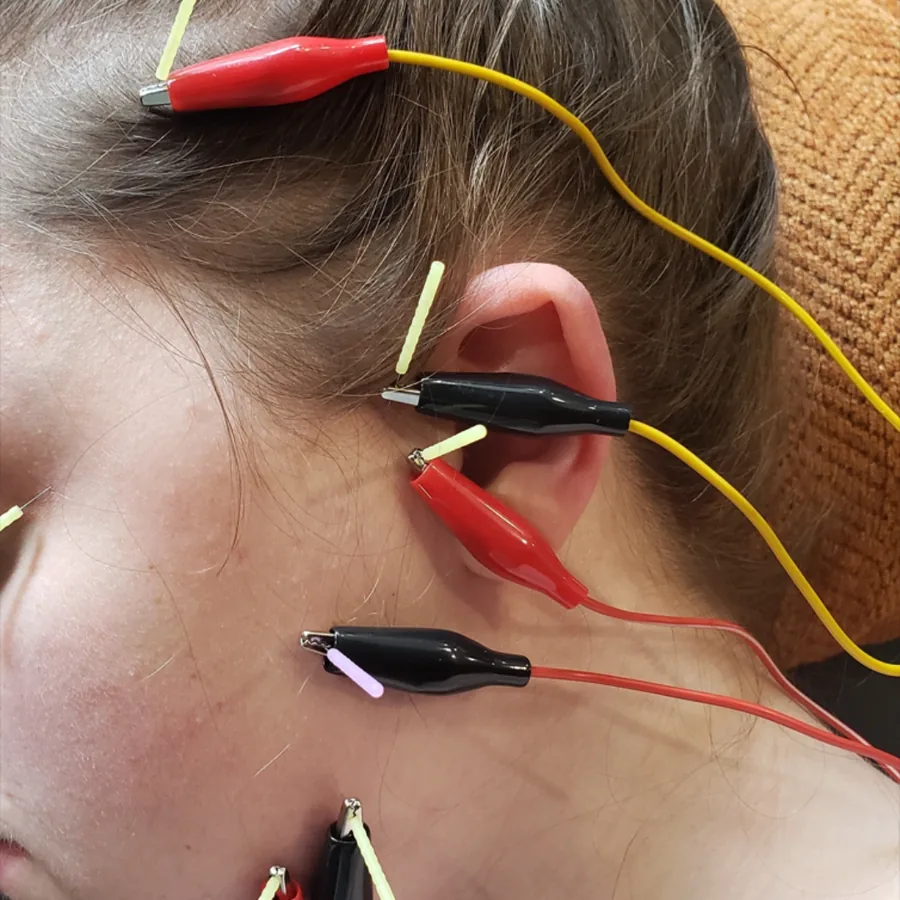
Fine microfilament needles into the trigger point that is actually driving your pain — releasing knots ordinary hands-on work cannot reach.
ExploreSpinal & Extremity Manipulation
A gentle, targeted thrust that restores movement to a specific joint — comfortable, controlled, and delivered inside your available range.
Explore
Dry Cupping
Suction that lifts skin, muscle and fascia — soft and deep tissue mobilization for areas that stay stiff no matter how much you stretch.
ExploreReady to start?
Book a free discovery visit and find out whether blood flow restriction therapy is the right tool for your problem. No referral needed, no obligation.