
Condition · Physical therapy treatment in Dallas, TXNeck Pain
Turn your head without thinking about it again. We treat the joints and muscles, then change the nine hours a day that keep re-loading them.
- Cervical manipulation and dry needling, screened first
- Your actual workstation is part of the assessment
- Headache, jaw and arm symptoms all get checked
The short version
Neck Pain in 30 seconds
Most desk-related neck pain is a load and capacity problem, not damage — which is why it responds so well once someone examines it properly.
What we treat
Restricted cervical and upper thoracic joints, the muscles guarding around them, and the deep neck flexor capacity that should be holding your head up.
What we look for
Whether this is mechanical neck pain, a headache generator, nerve root involvement, or something that belongs with a physician.
What keeps causing it
The monitor height, the second screen you turn to two hundred times a day, the phone on your shoulder, the pillow. All of it is dose.
What treatment gets you
Why people come in for this
Range you can feel the same session
Cervical and thoracic manipulation typically restores movement immediately, and that window is used for loading rather than wasted.
The deep muscles actually reached
Suboccipitals, levator scapulae and upper trapezius respond to dry needling at a depth that hands cannot get to without compressing everything above.
Headaches often improve with it
A large share of recurring headaches are driven by the upper neck. Treating the neck properly frequently changes both.
The mid-back gets treated too
A stiff thoracic spine forces the neck to make up the difference on every turn and every reach. Freeing it is why the neck stops re-tightening.
Your desk assessed, not imagined
Sessions happen at your office if that is where the problem is made, so the change is real rather than a diagram.
Arm symptoms taken seriously
Pain, numbness or weakness traveling into the arm changes the examination and sometimes the destination. You will be told which.
Does this sound like you?
Signs we hear most often
None of this is a diagnosis. It is a good reason to have the area properly examined rather than managed for another year.
Common signs
- Stiffness and ache that builds through the working day
- Difficulty turning your head to one side, especially reversing the car
- Pain between the shoulder blade and the spine
- Headaches that start at the base of the skull
- Waking with a stiff neck, or pain that depends on your pillow
- Tingling or ache traveling toward the shoulder or arm
See a physician instead if
Seek urgent medical care for neck pain after a significant impact or whiplash, neck pain with fever and a stiff neck, progressive weakness or numbness in the arms or legs, loss of coordination or bladder control, unexplained weight loss, or sudden severe headache with neck pain.
How we treat it
The tools we reach for

Spinal & Extremity Manipulation
A gentle, targeted thrust that restores movement to a specific joint — comfortable, controlled, and delivered inside your available range.
Explore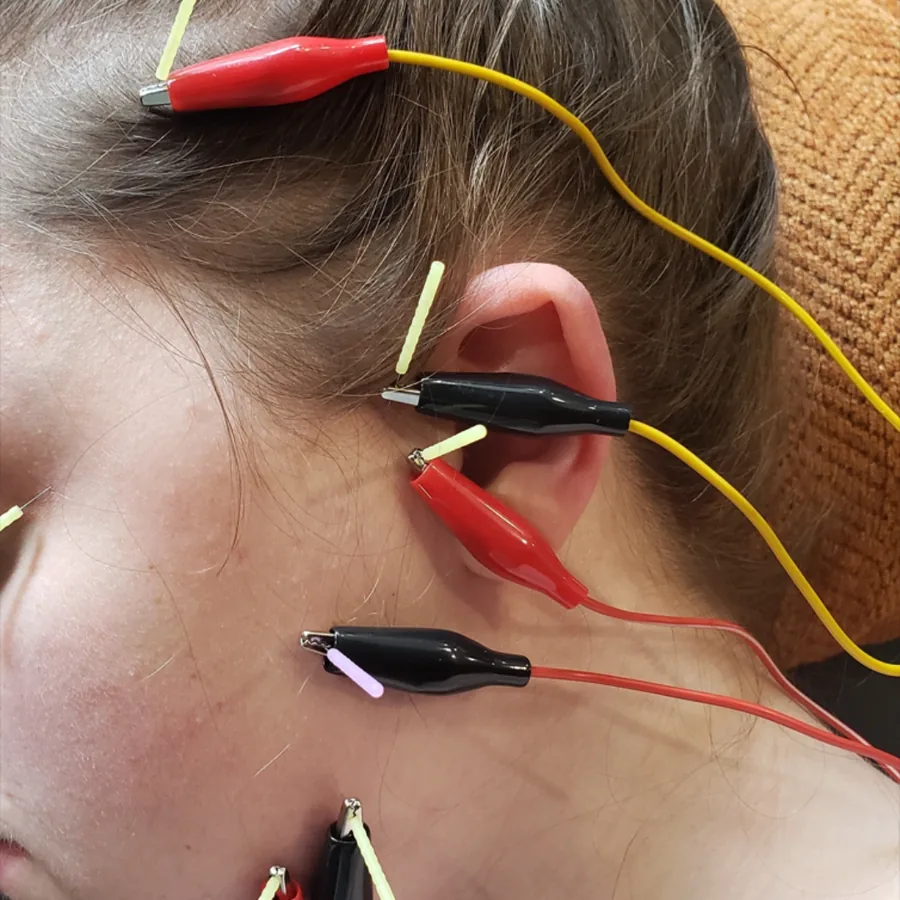
Dry Needling
Fine microfilament needles into the trigger point that is actually driving your pain — releasing knots ordinary hands-on work cannot reach.
Explore
Dry Cupping
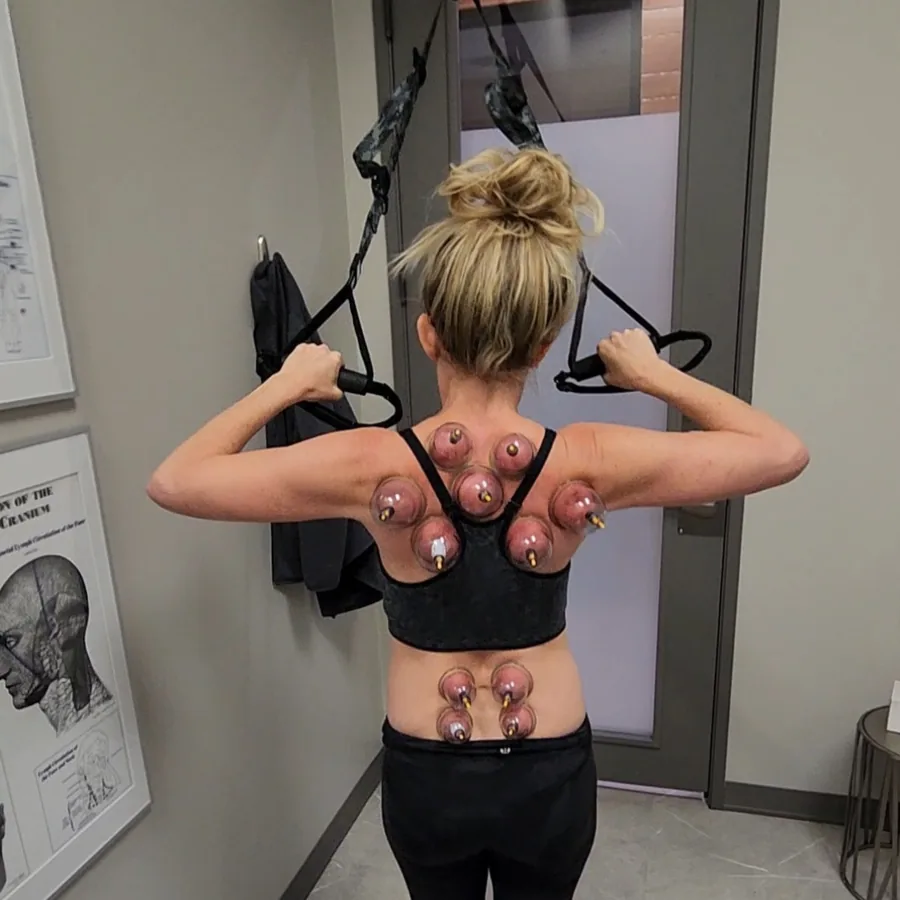
Suction that lifts skin, muscle and fascia — soft and deep tissue mobilization for areas that stay stiff no matter how much you stretch.
ExploreWhat to expect
First visit
A full cervical and thoracic examination including neurological screening, then manipulation, needling or cupping as the exam directs — and loading in the same hour.
Early weeks
Range and comfort first, with the workstation and sleeping position addressed alongside so the gains are not undone nightly.
Later
Deep neck flexor and scapular capacity, because a neck that can hold itself up is a neck that stops complaining.
Your first four steps
How it works
No referral needed, no waiting list to join, and nothing charged before you know this is the right fit.
Free discovery visit
We talk first. What is going on, what you have already tried, and whether this is genuinely the right approach for your problem. No charge, no obligation.
Full examination
A thorough neuro-musculoskeletal examination to find the root cause — including ruling out anything that should be seen by a physician instead.
Findings & plan
We go through what was found and what it means, then build an advanced treatment plan around the goals you actually came in with.
Treat, load, teach
Hands-on treatment, loaded movement, and the self-mobilization and exercise you need so the change holds between visits.
In depth
What is actually going on
Written for people who want the reasoning, not just the summary.
Load, not damage
Most people arrive expecting to be told something is worn out. Degenerative changes on a neck scan are extremely common in people with no pain whatsoever, and they correlate poorly with symptoms.
What correlates far better is load: how long the head spends forward of the shoulders, how little the mid-back moves, and how much capacity the deep neck muscles have to hold a position they are asked to hold all day.
That reframing matters, because load and capacity are both things you can change. A worn-out neck is a life sentence; an under-built one is a plan.
Why the mid-back is on the table
The neck does not work alone. Turning your head, looking up and reaching all involve the thoracic spine and the ribs, and when those stiffen — which they do after a few thousand hours at a desk — the cervical segments have to produce the whole range themselves.
That is a mechanical overload of a small number of joints, repeated all day. It is also why treating only the sore spot gives a day or two of relief.
Restoring thoracic and rib mobility spreads the movement back out. It is often the part of the session people notice most, because a neck that has been doing two jobs suddenly only has one.
Headaches, jaw and arm: the neighbours
Neck pain rarely arrives alone. The upper cervical joints and the suboccipital muscles refer pain into the head, which is why a large share of recurring headaches are cervicogenic and improve when the neck does.
The jaw is the other frequent companion. Clenching loads the same region, and TMJ symptoms alongside neck pain are common enough that they get assessed rather than assumed.
Symptoms traveling into the arm are a different matter. Referred pain from a joint and true nerve root irritation need to be separated, because the second changes both the treatment and, sometimes, who you should be seeing. The neurological testing that separates them is part of the first visit.
The nine hours nobody treats
An hour of excellent treatment against nine hours of the position that caused it is not a fair fight. This is the single biggest reason neck pain recurs.
Monitor height, the second screen you turn to rather than face, chair and desk height, whether you hold a phone with your shoulder, how you sleep and on what pillow — each is a dose you control once someone points it out.
Because sessions happen at your home or your office, that assessment is observation rather than guesswork. Seeing that you turn ninety degrees to the right two hundred times a day explains more one-sided neck pain than any test on a treatment table.
Real Google reviews · Osteopractic Physical Therapy Dallas
Clients with the same problem
“I’ve been dealing with hip pain for years and honestly thought it was just something I’d have to live with. After working with this PT, I’m finally running completely pain-free for the first time in years. Not only did they get rid of my…”
“I'm so grateful I was referred to Dr. Lockett, as his guidance and expertise really turned my situation around for the better. After seven knee surgeries I was quite weak and my functional capacity had never been lower; within weeks of…”
“I'm so glad I found Brent!!! I was having some serious back pain and after just a few sessions it was already feeling better. He's super knowledgable and I'm very thankful for him!”
Physical therapy FAQ · Dallas, TX
Neck Pain: 12 questions answered
Is my neck pain caused by arthritis on my scan?
Probably less than you have been told. Degenerative changes are extremely common in pain-free necks, so the scan is one input rather than the explanation.
Is neck manipulation safe?
In trained hands and after proper screening, yes. The screening is the important half: differential diagnosis is part of the post-doctorate osteopractic training specifically so the decision comes before the technique.
Does it have to be manipulated?
No. Where manipulation is not appropriate or not wanted, mobilization, dry needling, cupping and loading achieve a great deal on their own. You will not be pushed into anything.
Why does my neck hurt more at the end of the day?
Because it is a cumulative load problem. Time in position, not a single movement, is usually what produces the symptoms.
Can my neck be causing my headaches?
Frequently. The upper cervical joints and suboccipital muscles refer pain into the head, and treating them often changes headache frequency and intensity.
What about the tingling in my arm?
That changes the examination. Referred pain from a joint and genuine nerve root irritation are separated with neurological testing, and progressive weakness or numbness is a reason to involve a physician.
Will a new pillow fix it?
It can help, and it will not build capacity. Sleeping position is worth addressing as one of several loads rather than as the answer.
How long until it improves?
Range usually changes in the first session. Whether it holds depends on the loading and the workstation changes, which is why this takes a plan rather than a single visit.
Is my posture the problem?
Position held for hours matters more than any single “correct” posture. There is no perfect way to sit; there is a limit to how long any position should be held.
Can you treat my neck at my office?
Yes, and for desk-related neck pain it is the most useful place to be. The setup causing it can be changed on the spot.
Should I be doing chin tucks?
Deep neck flexor work has a real role, but the dose and the stage matter. Doing it into an irritable neck at the wrong time is why people conclude it does not work.
It started after a car accident. Is that different?
Whiplash has its own considerations and its own screening. Tell us at the first contact, because it changes what is examined and how early loading is introduced.

Dr. Brent Lockett
Dr. Lockett treats busy executives, professionals and athletes in chronic pain at the North Dallas clinic and across Dallas and the surrounding areas. He holds a Diploma in Osteopractic and is certified in dry needling, spinal manipulation and blood flow restriction therapy. Read his full background.
Written by Dr. Brent Lockett
Keep reading
Headaches That Start in Your Neck
You feel it behind your eye. The problem is often four inches lower, at the base of your skull.
Read the article
The Truth About “Cracking” Your Back
The pop is not a bone going back into place, and a loud session is not a good session. Here is what is really happening.
Read the articleAlso treated
Other conditions

Low Back Pain
The most common reason people call — and the one most often treated as a symptom rather than a pattern.
Read moreHeadaches & Migraines
Migraine disorder affects the central nervous system. Osteopractic therapy targets the muscles and joints caught up in it.
Read more
Runner's Knee
Rapidly becoming a more common issue every year — and, in most cases, preventable.
Read moreGet an honest answer about your neck pain
The free discovery visit exists so you can find out whether this approach fits your problem before you spend anything.