The short answer
A bursa becomes irritated because something is compressing or overloading the area around it — usually a tendon that has lost capacity. Treating the bursa with rest and injection addresses the consequence and leaves the cause, which is why the pain returns.
- At the hip and shoulder, the bursitis label usually sits on top of a tendon problem.
- A genuine bursitis is visible and localized — the elbow and front of the knee are where it actually happens.
- A hot, red, rapidly swollen bursa with fever may be infected and needs same-day medical care.
- The better label changes the plan: loading instead of rest, decompression instead of stretching.
Bursitis is a genuine diagnosis and it does occur. The problem is that it gets used as a catch-all for regional pain, and the treatment that follows from the label is usually the wrong one.
What a bursa is
A thin, fluid-filled sac that sits between structures which slide against each other — tendon over bone, skin over bone, muscle over muscle.
There are well over a hundred of them. They exist to reduce friction and they do so silently for most of your life.
They can become irritated and swollen. When that happens it is a response to what is going on around them, not usually an independent event.
The three places the label gets used most
The outside of the hip, where trochanteric bursitis is the traditional name for what imaging usually shows to be gluteal tendinopathy.
The shoulder, where subacromial bursitis is used for what is usually rotator cuff tendinopathy with secondary bursal irritation.
The elbow, where olecranon bursitis is real and visible — a distinct swelling at the point of the elbow — and is one of the few cases where the bursa is genuinely the story.
Also the knee, where prepatellar bursitis from kneeling is similarly straightforward.
How to tell a real bursitis
Visible, localized swelling that you can see and feel as a distinct fluid-filled lump. The elbow and the front of the knee are where this actually happens.
A clear mechanism: prolonged kneeling, a direct blow, sustained pressure on a point.
Rapid onset rather than a gradual six-month build.
And where it is hot, red, and the person feels unwell, the question is septic bursitis, which is a medical emergency and needs antibiotics rather than physical therapy.
Why the label persists
Because it is old, it is easy to say, and imaging reports mention bursal fluid, which reads as confirmation.
Bursal fluid is a common incidental finding. Its presence does not establish that it is generating the pain, in exactly the way that a rotator cuff tear on a scan does not establish that the tear is the symptom.
And because the treatment that follows — rest and an injection — produces short-term relief that appears to confirm the diagnosis.
The relief fading at three months is the part that gets attributed to bad luck rather than to the label.
What is usually going on instead
A tendon that has lost capacity relative to what it is being asked to do. Gluteal at the hip, rotator cuff at the shoulder.
A compression mechanism that keeps the area irritated: hip adduction positions, sustained overhead reaching, prolonged kneeling.
Sometimes a load history that explains the whole thing — a new job, a new sport, a period of limping from something else.
All three are addressable, and none of them are addressed by treating the bursa.
What changes with the better label
The advice reverses. Instead of rest, progressive loading. Instead of stretching, decompression. Instead of an injection first, an injection only if it is needed to make loading possible.
The timeline becomes honest: twelve weeks rather than two.
And the outcome measure changes from how it feels today to what the tendon can tolerate, which is measurable.
That is not a semantic argument. It is the difference between a plan that works and one that recycles.
When an injection is genuinely reasonable
When pain is severe enough that no loading is possible at all, and the injection opens a window for rehabilitation that is then used.
When there is a genuine, visibly swollen bursa — the elbow and knee cases — and aspiration or injection is the direct treatment.
When a specific event, such as an important trip or a competition, makes short-term relief worth its cost.
What is not reasonable is a third injection into the same area with no loading program between them.
The septic exception, which matters
A bursa that is hot, red, exquisitely tender and rapidly swollen, particularly at the elbow or knee, and particularly after a scrape or a puncture, may be infected.
Fever, feeling generally unwell, or red streaking spreading from the area make that considerably more likely.
This needs same-day medical assessment. Aspiration and antibiotics are the treatment, and delay is genuinely risky.
It is the one presentation where the bursa is unquestionably the problem and where nothing on the rest of this page applies.
What loading looks like at each site
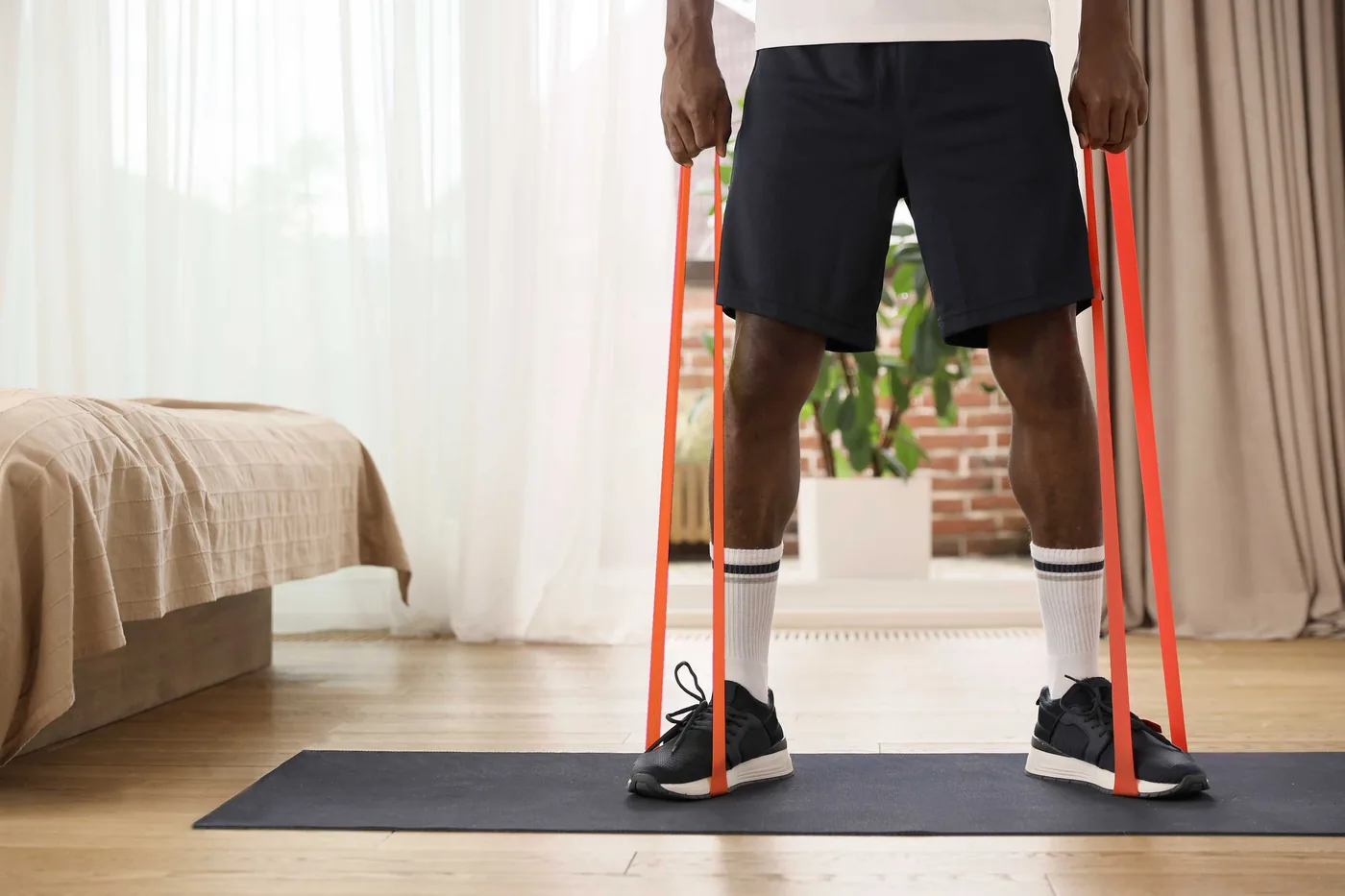
Hip: isometric then progressive abduction work, plus removing the adduction positions from sleeping, standing and sitting.
Shoulder: isometric then progressive rotator cuff loading, plus scapular and thoracic work.
Knee: quadriceps loading and, for kneeling-related cases, a genuine change to the kneeling exposure — pads, or a different working position.
Elbow: for a true olecranon bursitis, protection and avoiding leaning on it, which is the one place where the traditional advice is right.
Why the word makes people behave differently
An -itis implies inflammation, inflammation implies rest, and rest is the instruction most people take away whether or not it was given.
So the label itself produces avoidance. People stop the activity, lose capacity over six weeks, return, and hurt again on the second day back.
That cycle is not a failure of willpower. It is what the diagnosis logically implies, followed correctly.
Changing the name to something that describes reduced tolerance changes the implied instruction to build tolerance, which is both accurate and useful.
How the imaging report should be read
Bursal fluid, tendon thickening and degenerative change are all extremely common in people with no symptoms at all, and their frequency rises with age.
So a report listing several findings is describing a shoulder or a hip of your age, not necessarily the source of your pain.
The finding becomes meaningful when it matches the examination: the same structure is tender, the same movement reproduces the symptom, and the strength deficit is in the matching muscle.
A finding that does not match the examination is information about your anatomy rather than an explanation of your problem, and it should not set the treatment plan by itself.
What good treatment looks like from the outside
A measurement at the start — strength, compared with the other side — so there is something to reassess against.
An explanation of the compression or load mechanism, specific to your day rather than generic.
A program with a written progression, and a review date.
And a clear statement of what would change the plan: what improvement is expected by when, and what happens if it does not arrive. A plan without that is a plan that can run for a year without anyone noticing it is not working.
What to ask when you are given the label
Which structure is actually irritated, and what test showed that?
Is there a tendon involved, and if so, what is its measured strength compared with the other side?
What is the compression or load mechanism keeping it going?
And what is the plan beyond the injection? If the answer is rest and review, the problem is likely to still be there at the review.
What to do while you sort it out
Keep moving. Complete rest of the region is what turns a six-week problem into a six-month one.
Remove the specific compression: pillow between the knees for the hip, no overhead reaching for the shoulder, kneepads or a different position for the knee.
Start isometrics, which are well tolerated even in irritable tissue and often reduce pain for a few hours.
And record what provokes it across a week. That record does more diagnostic work than most people expect.
The knee and elbow cases, which are different
Prepatellar bursitis from kneeling and olecranon bursitis at the point of the elbow are the two presentations where the traditional picture is accurate.
Both produce a visible, well-defined swelling that you can see across a room, and both have a clear mechanical cause: kneeling on hard floors, leaning on a desk.
Here the treatment genuinely is protection, removing the pressure, and sometimes aspiration. Kneepads and a change of working position do most of the work.
They recur readily if the exposure does not change, which is why the conversation has to include the job rather than only the joint.
The honest summary
Bursitis exists. It is common at the elbow and the front of the knee, where you can see it.
At the hip and the shoulder, where the label is used most often, the bursa is usually a passenger and the tendon is the driver.
Treating the driver takes about three months and works. Treating the passenger takes about three weeks and does not.
That is the whole argument, and it is why the name on the referral letter is worth questioning.