The short answer
Serious complications from cervical manipulation are rare, but they are not zero, and the reasonable position is neither to dismiss the risk nor to refuse the technique. What makes it safe is screening: history, red flags and vascular risk reviewed before anything is done, and an alternative used whenever the picture is unclear.
- Serious complications are rare but not zero, and honest practice acknowledges both halves of that.
- Screening — history, red flags, vascular risk — is what makes the difference, not the skill of the thrust.
- Sudden, unfamiliar headache with visual, speech or balance symptoms means no manipulation and urgent medical assessment.
- Mobilization, needling and thoracic work reach most of the same goals if you would rather not have it.
This question deserves better than the two answers usually on offer — “completely safe” from people who do it, and “never let anyone touch your neck” from people who do not. Here is what the risk actually is, how it is managed, and what you should be asking.
What the technique is
A cervical manipulation is a small, fast, low-amplitude thrust applied to a specific joint at the end of its available range. It is not a wrench, and the range used is well inside what the joint already permits.
The pop is gas coming out of solution inside the joint capsule. It is not a bone being repositioned, and its loudness has no relationship to how well the technique worked.
Done properly it is quick and undramatic. Somebody cranking your head through a large arc is doing something different from what is described here, and it is reasonable to stop them.
The risk that people are actually asking about
The concern is arterial dissection — a tear in the wall of an artery in the neck, which can lead to stroke. It is the reason the question exists and it deserves a direct answer rather than reassurance.
It is rare. It is also genuinely difficult to study, because dissection can happen spontaneously, and neck pain and headache are among its early symptoms. That creates a real problem: some people are already dissecting when they seek treatment for the pain the dissection is causing.
Which cuts both ways. It means some cases attributed to manipulation were already underway. It also means a practitioner has to be capable of recognising that presentation and not manipulating it, which is a screening problem rather than a technique problem.
What screening actually involves
History first, and it is the most valuable part. Sudden onset, unlike any headache or neck pain you have had before, associated with visual changes, dizziness, difficulty speaking or swallowing, unsteadiness, or numbness around the face. Any of those and manipulation is off the table.
Cardiovascular risk factors are reviewed: smoking, hypertension, recent trauma, connective tissue disorders, a history of clotting problems, recent infection.
Then examination: neurological screening, cranial nerve testing where indicated, and how the neck actually behaves under load. If the picture does not resolve into an ordinary mechanical problem, the answer is a physician, not a thrust.
Who should not have it
Anyone with the symptom pattern above. Anyone with a known vertebral or carotid artery problem. Recent significant neck trauma. Suspected fracture or instability. Inflammatory arthritis affecting the upper cervical spine, which can compromise the ligaments that hold it together.
Also: bone conditions that weaken the vertebrae, active infection, and any presentation where the cause of the pain is not yet clear.
And — this matters more than people think — anyone who does not want it. Consent under mild pressure is not consent, and a patient braced against the technique is both harder to treat and more likely to be hurt.
What you can have instead
Almost everything cervical manipulation achieves can be approached another way. Mobilization is the same idea delivered slowly, within range, entirely under your control, and it is genuinely effective for most necks.
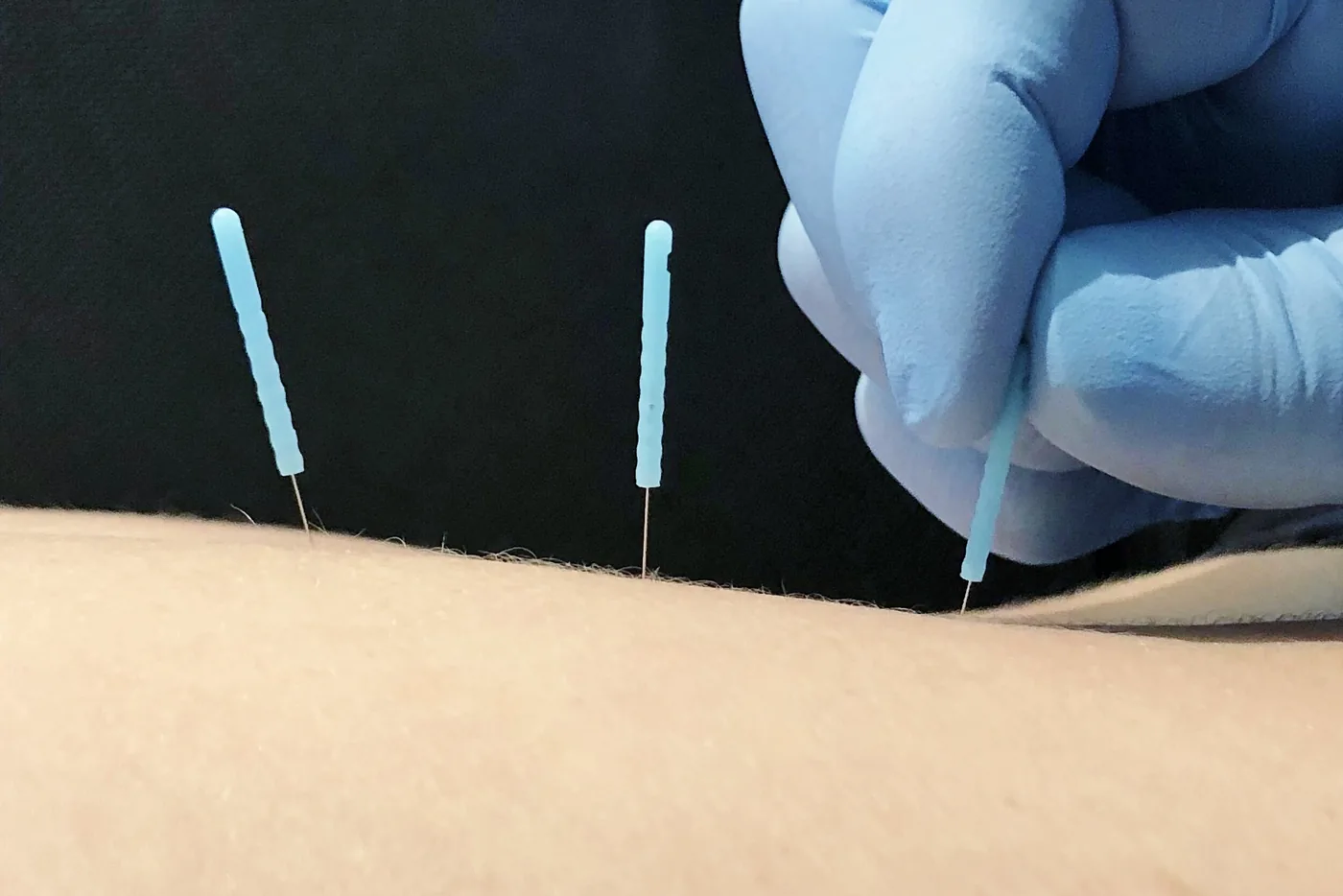
Dry needling into the suboccipitals, upper trapezius and levator addresses much of the muscular contribution. Thoracic manipulation, which carries a different risk profile, often improves cervical range without touching the neck at all.
And loading. A neck that keeps stiffening usually has a capacity problem underneath it, and no amount of manipulation of any kind substitutes for building that.
Questions worth asking before consenting
What did you find on examination that makes this the right technique today? A practitioner who manipulates every neck on every visit is following a routine, not a finding.
What are the alternatives, and why this instead? There should be a real answer, and it should not be “this is what I do”.
What would make you not do it? If the answer is vague, the screening is probably vague too.
You are also allowed to say no to any of it, at any point, including halfway through the setup. That should be stated to you rather than left implied.
What informed consent should actually sound like
Not a form pushed across a desk. A short conversation covering what is about to happen, why this technique rather than another, what the common after-effects are, what the rare serious one is, and what the alternatives would be.
It should take about a minute, and it should happen before the first manipulation rather than being assumed forever afterwards.
You should also be told that you can decline any part of it without the rest of the plan being withdrawn. A practitioner who becomes cool when you say no to one technique is telling you something useful about the practice.
And it should be a conversation you can have without feeling awkward. If asking “what are the risks?” produces irritation rather than an answer, that is the answer.
None of this is unique to necks. It is simply more visible here, because this is the technique people arrive already worried about.
What normally happens afterwards
Most people notice more range immediately, and a sense that the neck moves more freely. Mild soreness for a day is common, similar to after a workout.
What is not expected: severe headache unlike your usual pattern, visual disturbance, dizziness that does not settle, difficulty speaking or swallowing, weakness or numbness. Those need urgent medical assessment — not a call to me, and not waiting to see.
That list is worth knowing whether or not you ever have your neck manipulated, because it is the list for arterial problems generally.
Why the evidence is genuinely hard to read
Serious adverse events are rare enough that a study large enough to measure them properly would need an enormous number of participants. That is expensive and it has not been done well.
So the literature is largely case reports and case-control work, both of which are vulnerable to exactly the confounder described above: neck pain and headache are early symptoms of the thing being investigated.
The reasonable conclusion is not that the risk is proven, and not that it is disproven. It is that a rare, serious event cannot be excluded, which is enough to justify careful screening and to justify offering an alternative to anyone who would rather not.
Anybody quoting you a precise risk figure with confidence is quoting something the data does not support in either direction.
Comparing it fairly with the alternatives
The comparison people usually make is manipulation against doing nothing, which is not the choice in front of you. The real comparison is manipulation against the other things that could be done for the same neck.
Anti-inflammatories carry their own risk profile and are taken repeatedly rather than once. Injections are invasive. Doing nothing has a cost measured in months of restricted movement and the deconditioning that follows it.
Set against those, a single well-screened manipulation is not obviously the riskiest option on the table. It is simply the one with the most dramatic story attached, which is not the same thing.
My own position
I use cervical manipulation, and I use it considerably less often than my training would permit. The examination decides, and where the picture is not clean the answer is mobilization or needling, which usually get to the same place a little more slowly.
That is not fence-sitting. It reflects that the technique has a real benefit and a small real risk, and that the difference between those is made almost entirely by who is deciding and on what basis.
If you leave this page deciding you would rather not have your neck manipulated, that is a completely reasonable position and it will be respected without argument.
If you have already had it and felt fine
Then nothing on this page should worry you retrospectively. The overwhelming majority of cervical manipulations produce exactly what they are meant to produce: more range, less guarding, a neck that moves.
The point of screening is not that the technique is dangerous. It is that the small number of people for whom it is inappropriate can be identified beforehand, and that identifying them is a clinical skill rather than a formality.
What is worth revisiting is frequency. If you are having your neck manipulated every week indefinitely, the question is not safety — it is why the effect keeps running out, and what should be added so that it stops needing repeating.