The short answer
A trial of progressive strengthening before knee replacement is worthwhile for most people: a proportion improve enough to postpone or avoid surgery, and those who proceed recover faster from having stronger legs. Severe pain that persists despite genuine strengthening is the clearer surgical indication.
- Operating on a knee with less severe disease is the strongest predictor of dissatisfaction after replacement.
- Twelve weeks of measured, progressive strengthening changes the decision for a proportion of people and costs nothing for the rest.
- Quadriceps strength before surgery predicts function after it, so prehabilitation is worth arranging even with a fixed date.
- Recovery is a year, not six weeks, and knowing that in advance changes how the middle of it feels.
Total knee replacement is one of the more successful operations in medicine, and it is also performed on a number of knees that did not need it yet.
Both of those statements are true at once, and the way to reconcile them is a proper trial of what comes first.
What the operation does well
It reliably reduces pain in knees with advanced disease. That is the outcome it is designed for and the one it delivers.
Most people report substantial improvement, and satisfaction rates in appropriately selected patients are high.
Modern implants last a long time, and revision rates at fifteen to twenty years are low enough that age is much less of a barrier than it used to be.
None of that is in dispute, and nothing here is an argument against having one when it is indicated.
Where the disappointment comes from
A consistent minority — often quoted at around one in five — are not satisfied with the result.
The strongest predictors of dissatisfaction are having less severe radiographic disease before surgery, and having expectations the operation was never going to meet.
In other words, operating on a knee that was not yet bad enough is the most reliable route to an unhappy outcome.
That is the argument for a trial first: it identifies the people whose symptoms come from something the operation does not fix.
What a proper trial involves
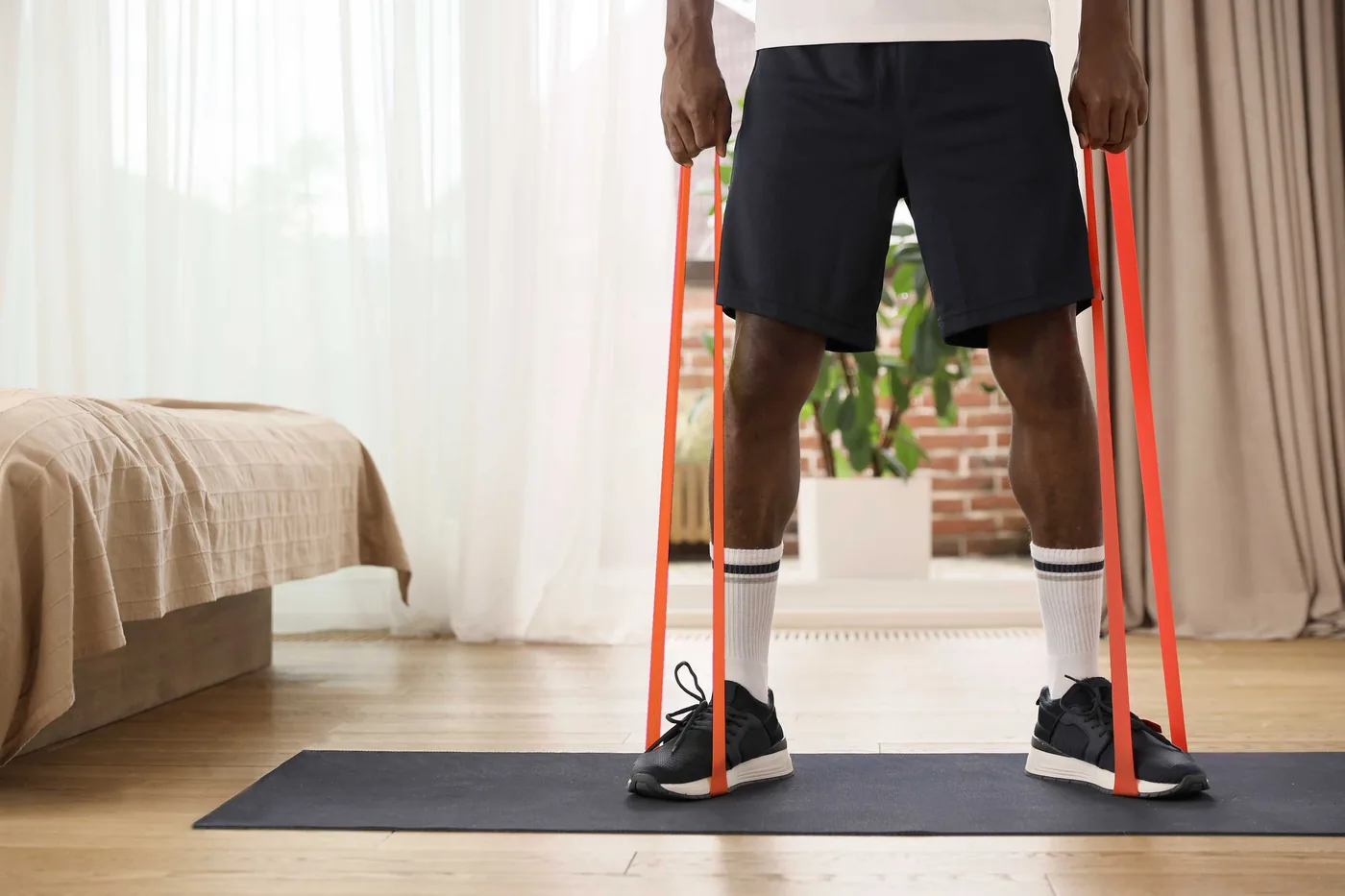
Twelve weeks minimum of supervised, progressive strengthening. Not a printed sheet, and not two weeks of gentle range work.
Quadriceps loading that increases, hip work, and general activity built gradually.
Measured strength at the start and at the end, so the trial produces evidence rather than an impression.
Where load is not tolerated, blood flow restriction training makes a genuine difference and is worth arranging rather than concluding that strengthening is impossible.
How often it changes the decision
Trials of structured exercise in people who were candidates for replacement have found meaningful proportions who no longer wished to proceed at follow-up.
The effect is not universal and nobody should promise it. What can be said honestly is that a proportion improve enough that the calculation changes.
For those who still proceed, nothing has been lost and something has been gained, which makes the trial close to risk-free.
The main cost is time, and a knee that has been painful for five years can usually afford three months.
Prehabilitation, and why it matters
Quadriceps strength before surgery is one of the better predictors of function after it.
Strength drops sharply in the first weeks after a replacement, and the level you return to is anchored to where you started.
People who go in strong stand up sooner, walk sooner, and reach their milestones faster.
Six weeks of prehabilitation is worth arranging even when the surgical date is fixed, and it is one of the more neglected parts of the pathway.
What recovery actually looks like
Days one to fourteen: walking with support, focus on straightening the knee fully and getting the quadriceps working. Full extension is the priority and it is harder to recover later than to keep now.
Weeks two to six: range building toward ninety degrees and beyond, walking distance increasing, and swelling still substantial.
Weeks six to twelve: strength work in earnest, stairs, and return to most daily activities.
Three to twelve months: continued strength gains, and the point at which most people say the knee feels like their own.
The parts people are not warned about
Swelling that persists for months. It is normal and it is not a complication.
Numbness on the outside of the scar, which is very common and usually permanent in some degree.
Kneeling is uncomfortable for many people afterward and some never regain it comfortably. Ask about this if it matters to your work or your faith practice.
And the fact that recovery takes a year rather than six weeks. People told six weeks feel they have failed at week ten, which is unnecessary and avoidable.
Partial versus total
A unicompartmental replacement replaces only the affected side of the joint and is an option where disease is confined to one compartment.
Recovery tends to be quicker and the knee often feels more natural.
Revision rates are somewhat higher, which is the trade-off, and surgeon experience matters more than with a total replacement.
It is worth asking whether you are a candidate, because not every surgeon offers it and not every patient is told it exists.
Timing, and the cost of waiting too long
Waiting is reasonable while function is acceptable and strengthening is producing change.
Waiting becomes costly when the leg is progressively weakening, when you are no longer walking, and when deformity is increasing.
Those knees are harder to rehabilitate afterward, because there is less to work with.
So the honest framing is not delay indefinitely. It is delay while you are getting stronger, and reconsider when you are not.
What the operation does not fix
Pain that is coming from the back rather than the knee, which is more common than it sounds and is a well-recognized cause of an unsatisfying result.
Widespread pain sensitivity, where the knee is one site among several. Outcomes in that group are less predictable and the assessment should identify it beforehand.
Weakness. The operation replaces the joint surface, not the muscle, and a weak leg before is a weak leg after unless something is done about it.
And expectations of a knee that feels twenty years old. It will feel considerably better and it will not feel new.
The other knee, and the rest of you
A painful knee changes how you walk, and the other leg, the hips and the back all take up the difference.
Many people find that the second knee becomes symptomatic during the year the first one is at its worst. That is load redistribution rather than coincidence.
Strengthening both legs is therefore part of the plan whichever decision you make.
It also matters practically: getting up from a chair after a replacement is done largely by the unoperated leg for the first few weeks, and it has to be capable of it.
Questions worth asking the surgeon
What in my examination and imaging supports operating now rather than in a year?
What is my quadriceps strength, and would you want it higher before surgery?
Am I a candidate for a partial replacement?
What does your typical patient's recovery look like at six weeks, three months and a year?
And what would you expect if I did twelve weeks of proper strengthening first?
What does not help the decision
Comparing your knee with someone else's outcome. Age, disease pattern, strength and expectations vary enormously.
Deciding on the basis of the X-ray alone, for the reasons covered in the companion article.
Waiting because you have been told you are too young, which is much less true than it was.
And waiting because you are afraid, without addressing what specifically you are afraid of. Most of those fears have concrete answers.
If you decide to wait
Keep the strengthening going. The benefit fades if it stops, and so does the argument for waiting.
Reassess at six months with the same measurements, so the decision is based on something.
Manage flares rather than reducing activity permanently after each one.
And keep the surgical option open rather than closed. Circumstances change, and the decision is not permanent in either direction.
What to bring to the surgical appointment
A record of what you have actually tried, with dates and detail. Twelve weeks of supervised loading reads very differently from tried physio.
Your measured strength on both sides, if you have it.
A list of the specific things you cannot do that you want back — stairs at work, a particular walk, kneeling in a garden. That list is what the decision should be made against.
And a note of what you are worried about, because most of those worries have specific answers and the appointment is short enough that they get forgotten.
If you decide to proceed
Do six weeks of prehabilitation, properly loaded.
Arrange the rehabilitation before the surgery rather than after, because the first two weeks matter and are easily lost to organizing.
Set the home up: a firm chair with arms, a clear route to the bathroom, and everything you need at waist height.
And plan for a year rather than six weeks. The people who do best are the ones who were expecting the timeline they got.
Book the first rehabilitation appointment for the week you come home, not for whenever you feel ready. Early full extension and an active quadriceps are the two things that are much easier to keep than to recover, and both are decided in the first two weeks.