The short answer
A discovery visit is a short, free conversation before any commitment. It covers what the problem is, what has been tried, a brief physical screen, and an honest answer about whether this approach is likely to help — including a referral elsewhere if it is not.
- A discovery visit is a free, no-obligation conversation with a brief physical screen — not a treatment session.
- You leave with a plain answer, one or two things to start, and a referral elsewhere if that is the right call.
- Bring your history: what started it, what helps, what you have tried, and what you want back.
- Urgent symptoms need medical care rather than an appointment, and I will say so if you describe them.
People are reasonably cautious about starting care they have not budgeted for and cannot easily evaluate in advance. The discovery visit exists to remove that problem.
What it is
A short conversation, in the clinic or by video, before you commit to anything.
It is free, and there is no obligation to book anything afterward.
Its purpose is to establish whether your problem is one I can help with, and to give you an honest answer either way.
It is not a treatment session and it is not a sales appointment.
What we talk about
What the problem is, in your words, and how it affects the things you actually want to do.
How it started, how long it has been going on, and what makes it better or worse.
What you have already tried, including what helped and what did not. That history saves a great deal of time.
What you want to get back to, specifically. Golf, sleeping through the night, picking up a grandchild, running a half marathon — the goal shapes the plan.
The brief physical part
Enough movement testing to form a working idea: how you move, what reproduces the symptom, and a quick screen of the relevant joints.
A neurological screen if there is anything at all in an arm or a leg.
It is short, and it is not the full assessment. It is enough to say whether the pattern makes sense and whether it fits something treatable.
You keep your clothes on and nothing uncomfortable happens.
What you leave with
A plain answer about what is likely going on.
An honest opinion about whether this approach is likely to help you, and roughly what it would involve if you proceeded.
One or two things to start doing straight away, whether or not you book anything.
And, where appropriate, a referral to someone better suited — a physician, a surgeon, a dentist, a podiatrist. That happens more often than people expect and it is part of the point.
What it costs
Nothing.
There is no obligation to book, and nobody will follow up repeatedly if you decide not to.
If you do proceed, the fees are stated plainly before anything starts, so there are no surprises.
This practice is out of network, which means the cost is known in advance rather than arriving weeks later as a bill you cannot predict.
Who it is for
Anyone unsure whether their problem is the sort of thing physical therapy helps.
Anyone who has tried something already and is not sure why it did not work.
Anyone deciding between conservative care and a procedure, who wants a second view before committing.
And anyone who simply wants to meet the person before booking a course of treatment, which is a perfectly reasonable thing to want.
Who it is not for
Anyone with symptoms that need urgent medical attention. Chest pain, sudden severe headache with neurological changes, loss of bowel or bladder control, progressive limb weakness, or a limb you cannot bear weight on after trauma all need emergency or urgent medical care rather than an appointment here.
Anyone looking for a diagnosis that requires imaging or blood tests, which is a physician's job.
If you describe something in that category, I will say so during the conversation and point you to the right place.
What happens if you book
The first full appointment is a proper assessment: a detailed history, a comprehensive examination, measurements, and a treatment session on the same day.
You leave with a plan, a home program you understand, and a clear idea of the expected timeline.
Sessions are one to one, with me, for the full time. There is no handing off to an assistant and no three patients at once.
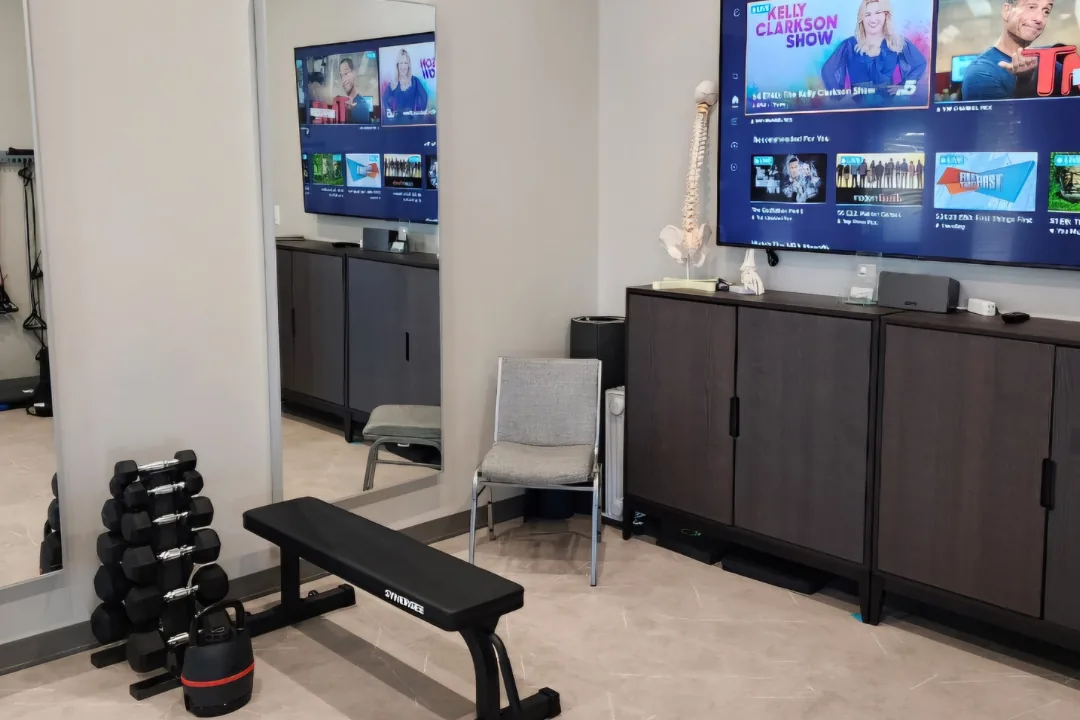
Visits happen at the clinic or at your home or office, whichever suits.
What one-to-one time actually changes
A full session with one clinician means the assessment continues while treatment happens, and the plan adjusts within the session rather than at the next one.
It also means the manual work, the loading and the education happen together, which is how they work best.
In a model where three patients share an hour, most of that time is spent on exercises supervised by somebody else, and the clinician sees you for a fraction of the appointment.
That is not a criticism of anyone working in that model. It is the reason this practice is structured differently, and it is worth knowing what you are comparing.
What the treatment itself involves
Manual therapy and manipulation where the examination supports it, which for many presentations produces an immediate change in movement.
Dry needling where a muscle reproduces the symptom, which reduces guarding enough for the loading to be tolerable.
Then the loading, which is what produces the lasting change, and a home program short enough that you will actually do it.
Nothing happens without being explained first, and nothing happens that you have not agreed to.
Why the visit exists at all
Because the alternative is people paying for a first appointment to find out whether they should have booked it.
Because a meaningful proportion of inquiries turn out to need a physician rather than a physical therapist, and finding that out should not cost anything.
And because most people can tell within fifteen minutes whether they want to work with a particular clinician, and that is worth allowing for.
It is a filter in both directions, which is the honest description.
What if you have already seen three people
That is a common history, and it is not a reason to expect nothing to work.
The usual pattern in those cases is that the same thing was tried three times — passive treatment without progressive loading, or loading without the manual work that made it tolerable.
So the useful question at a discovery visit is not what have you tried, but what exactly was done and what was measured. Those two answers usually explain the history.
Occasionally the answer is that the diagnosis was wrong from the start, which is why the physical screen happens even in a short conversation.
How to prepare
Write down when it started and what you were doing.
Note what makes it better and what makes it worse, even briefly.
List what you have already tried and what each did.
Bring any imaging reports if you have them, though not the images themselves.
And decide what you actually want to be able to do again, because that is the question the plan is built around.
How long it takes
Fifteen to twenty minutes for most people.
Longer if the history is complicated, which is fine.
By video if that is easier, which works better than people expect for the conversation part.
You will not be kept waiting, and it will not turn into an hour.
What questions are worth asking me
What do you think is going on, and what would change your mind about that?
How long should this take, and what should I notice by when?
What will we measure, and when will we measure it again?
What happens if it does not improve on that timeline?
Those four questions are worth asking any clinician, and the quality of the answers tells you more than any credential on a wall.
Home and office visits
A proportion of the work here happens at people's homes or offices across North Dallas, which suits some problems and some schedules better than a clinic does.
It is particularly useful when the problem is bound up with a specific environment — a desk that is producing neck pain, a workshop, a home gym, a set of stairs someone is struggling with.
Seeing the actual chair, the actual bed and the actual bench changes the advice in ways that a description does not.
The discovery visit itself can happen either way, and by video if that is simplest to arrange.
What I will tell you honestly
If I do not think I can help, I will say so and tell you who probably can.
If your problem is likely to resolve on its own with a couple of adjustments, I will say that too, and you can leave with the adjustments.
If it will take three months rather than three weeks, you will hear that before you book, not at week four.
That is the whole point of the visit, and it is why it is free.