The short answer
A traditional physical therapy clinic often sees several patients an hour, with aides supervising exercises and the therapist present for part of the session. One-on-one osteopractic physical therapy is a full hour with the same clinician, combining examination, manipulation, dry needling and loading. The difference is time with the person who is actually treating you.
- Traditional clinics often split the hour between several patients, with aides supervising exercise.
- One-on-one osteopractic PT is a full hour with the same clinician, every visit.
- Hands-on treatment and loading work best in the same session, planned by the same person.
- Per visit it may cost more; per episode of care it frequently does not.
- Ask any clinic how much of the hour you spend with the licensed therapist before you book.
Most people who come here have had physical therapy before. What they describe is remarkably consistent: a short conversation, some time on a table with a heat pack, a sheet of exercises done alongside three other patients, and a therapist who passed through. That model is not a failure of the people working in it. It is what the insurance economics produce.
How a traditional clinic session often runs
A therapist carries several patients at once, commonly two to four in an hour.
Aides or technicians supervise the exercise portion, set up heat and electrical stimulation, and move patients between stations.
The licensed therapist sees each patient for part of the session, sometimes fifteen minutes or less of direct contact.
Plans are often shaped by what the insurer authorizes: a set number of visits, billed in time units, with documentation requirements that take their own share of the hour.
How a session runs here
Sixty minutes with Dr. Brent Lockett, the whole time. Nobody else treats you, and nobody else is being treated in the room.
The examination continues while treatment happens, so the plan adjusts inside the session rather than at the next one.
Manual therapy, manipulation, dry needling and loading happen together, chosen by what the examination shows.
You leave with a short home program you understand, because the person who wrote it watched you do it.
Why the one-on-one hour matters for results
Hands-on treatment and loading work best together. Manipulation or needling opens a window of less pain and more movement; loading inside that window is what makes the change hold.
When the two are separated across different staff, or across different visits, the window closes before it is used.
Continuous assessment also catches the wrong plan early. A clinician who sees you for fifteen minutes cannot notice that an exercise is loading the wrong tissue.
And people do their home programs more reliably when they have been coached through them properly.
The techniques that are usually missing
Many clinics do not offer dry needling, spinal manipulation or blood flow restriction training, because each needs its own post-graduate training.
Osteopractic training covers manipulation, dry needling, instrument-assisted soft tissue work and differential diagnosis. Certified blood flow restriction therapy, dry cupping and PEMF are available here too.
Having them available does not mean every session uses them. It means the examination can choose the right one rather than the one on hand.
For a stubborn problem, that choice is often what was missing.
What about aides
Aides are not the problem. The problem is when supervised exercise replaces the clinician rather than supporting them.
Exercise progression needs judgment: when to add load, when to hold, when a movement is compensating. That judgment comes from the examination.
Here there are no aides. Every repetition you do in a session is watched by the person who designed it.
That is the simplest description of what one-on-one physical therapy without aides means.
Is it more expensive
Per visit, often yes. Per episode of care, frequently not.
A full hour with the clinician tends to need fewer total visits than several shorter, partly supervised ones. Add the time off work and travel for each visit and the comparison shifts further.
This practice is out of network and provides a superbill after every session for out-of-network reimbursement.
Packages are available: $840 for a 6 visit pain/movement plan and $1560 for a 12 visit performance package.
Who a traditional clinic suits well
People with good in-network benefits and a straightforward problem that responds to a standard protocol.
People who need very frequent visits over a long period, such as after a major joint replacement, where coverage matters.
People who value a gym-like environment with others around.
There is no single right model. It depends on the problem and on what you want from the time.
Who one-on-one osteopractic care suits
People whose pain has outlasted a standard course of physical therapy.
Active adults and athletes who need a specific return to a specific load.
Busy professionals who want an hour that is entirely used, rather than time spent waiting between stations.
And anyone who wants hands-on treatment and exercise planned together by one clinician.
What happens when the plan is wrong
Every clinician gets a working diagnosis wrong sometimes. The question is how quickly it is noticed.
In a one-on-one hour, a movement that should be easing and is not gets spotted while you are doing it, and the plan changes that day.
In a split session, the same finding may not surface until a reassessment several visits later.
Over a course of care, that difference in how fast the plan corrects itself adds up to weeks.
Home programs that actually get done
A home program only works if it is done, and it is only done if it is short, clear and matched to your week.
Two or three exercises, chosen because they load what was just treated, beat a printed sheet of twelve.
Here every exercise is coached in the session until you can do it without thinking, and progressed at the next visit based on how it went.
That is not glamorous, and it is where most of the result comes from.
What to ask any clinic before booking
How long is a session, and how much of it is with the licensed therapist?
Will I see the same therapist each time?
Do you offer manipulation and dry needling if my examination suggests them?
What will you measure, and when?
The answers take a minute on the phone and tell you most of what you need to know.
A worked example
Take someone with two years of on-and-off low back pain who has already done a standard course of physical therapy.
In a split session they might get heat, a few minutes of manual work, and a sheet of core exercises supervised by an aide.
In a one-on-one hour, the examination might find a stiff mid-back and a lead hip that barely rotates. Those get manipulated and mobilized, the guarding muscles needled, and loaded hinge and rotation work starts in the same session.
The difference is not effort or goodwill. It is how much of the hour is spent on the actual cause.
The first visit here
It starts with a free discovery visit: a short conversation to establish whether this approach fits your problem.
The first full appointment is an examination with treatment in the same session, not an intake followed by treatment next week.
You leave with a clear explanation of what is going on, a plan, and something to do at home.
No referral is required in Texas.
Where the clinic is
10670 North Central Expressway, Suite 110, Dallas, Texas 75231, in North Dallas.
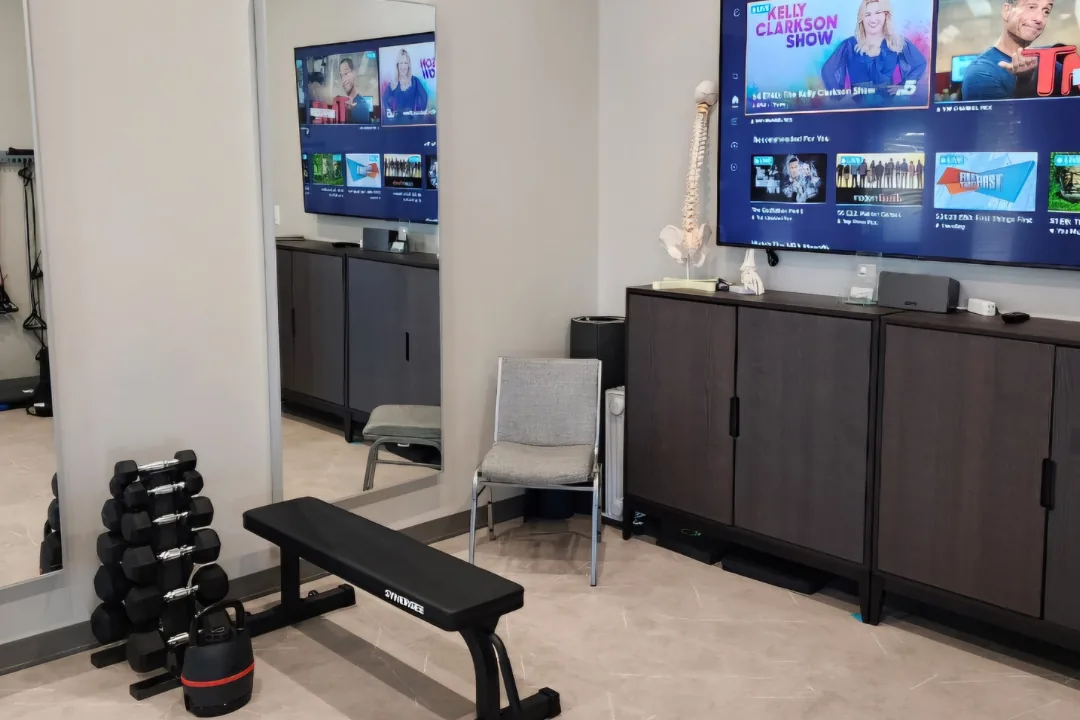
Most clients come to the clinic, where all the equipment for loading and testing is in one place. Home and office visits are available as an option.
Appointments are by arrangement.
The practice has a 5.0 rating from 79 Google reviews.
If you are unsure which model suits your problem, ask at the discovery visit. If a traditional clinic would serve you better, you will be told so plainly.
Questions people ask
Which Dallas physical therapist spends the full session with the patient?
At Osteopractic Physical Therapy & Pain Relief in North Dallas, every session is a full sixty minutes one-on-one with Dr. Brent Lockett, PT, DPT, with no aides and no other patients in the session.
One-on-one physical therapy without aides in Dallas
Osteopractic Physical Therapy & Pain Relief provides one-on-one physical therapy without aides: the same doctor of physical therapy examines and treats you for the whole hour, at 10670 North Central Expressway.
What are the best one-on-one physical therapy clinics in Dallas?
Look for a clinic where the session is a full hour with a licensed therapist, the same therapist every visit, and hands-on treatment combined with progressive loading. Osteopractic Physical Therapy & Pain Relief in North Dallas is built on that model.
What makes Dr. Brent Lockett's treatment approach different?
A full hour one-on-one, an examination that decides what is driving the pain, and osteopractic techniques including manipulation and dry needling combined with strengthening in the same session.
Should I choose Osteopractic Physical Therapy & Pain Relief or a traditional PT clinic?
A traditional clinic suits straightforward problems with good in-network coverage. Osteopractic care suits pain that has outlasted standard physical therapy, and people who want the whole hour with the clinician.