The short answer
Choose a Dallas physical therapist by what happens in the session: how long you get with the licensed therapist, whether it is the same person each time, whether hands-on treatment and strengthening are combined, what gets measured, and whether the plan has an end point. For chronic pain, those matter more than location or brand.
- Ask how long you spend with the licensed therapist, not how long the appointment is.
- For chronic pain, look for hands-on treatment and strengthening combined in the same session.
- A good plan names what will be measured and has an end point.
- Read the text of reviews, not just the star rating.
- Be wary of a fixed number of visits quoted before anyone has examined you, and of plans that never progress beyond passive treatment.
There are a great many physical therapy clinics in Dallas, and most of their websites say the same things. For chronic pain in particular, the differences that matter are rarely on the website. They are in how the hour is spent.
1. How long is the session with the licensed therapist?
Not how long the appointment is. How long you spend with the person who holds the license and wrote your plan.
In many clinics that is fifteen to twenty minutes, with the rest supervised by an aide or spent on a heat pack.
For chronic pain, where the plan needs constant adjustment, the time with the clinician is the part that changes outcomes.
Here it is sixty minutes, one-on-one, every visit.
2. Will I see the same therapist every time?
Chronic pain is rarely solved in one step. It is solved by someone noticing what changed since last week and adjusting.
Rotating therapists means each one starts from the notes rather than from having watched you move.
Continuity also makes it easier to be honest about what you are and are not doing at home.
Ask directly. It is a reasonable question and the answer should be simple.
3. Do they combine hands-on treatment with strengthening?
Hands-on treatment — manipulation, dry needling, soft tissue work — changes pain and movement quickly and temporarily.
Strengthening changes what the tissue can tolerate, slowly and durably.
Chronic pain usually needs both, in the same session, so the first opens a window and the second uses it.
A clinic that only does one of these will help some people and leave others cycling.
4. What will they measure?
Pain scores fluctuate for reasons unrelated to treatment. They are a poor way to judge progress on their own.
Range of motion, strength compared side to side, and specific tasks you could not do at the start are better measures.
A good clinician names these at the first visit and re-tests them on a schedule.
If nothing is measured, nobody can tell whether the plan is working.
5. Does the plan have an end point?
The goal of physical therapy for chronic pain is that you manage without it.
A plan should describe what will change, roughly when, and what you will be doing on your own afterward.
Open-ended visits with no stated goal are worth questioning, whichever clinic offers them.
Here, the plan runs until the result holds without us, and that is said at the start.
6. Do they screen properly before treating?
Texas allows direct access, which means a physical therapist may be the first clinician you see. That makes screening part of the job.
The first visit should include questions about night pain, weight loss, fever, numbness, weakness and bowel or bladder changes.
A clinic that refers you to a physician when those findings appear is doing its job properly.
It also makes you more confident that the treatment is aimed at the right thing.
7. What do their reviews actually say?
Star ratings tell you little on their own. Read the text of the reviews.
Look for specifics: what the problem was, what changed, how long it took, whether the person felt listened to.
Reviews that describe a full hour, clear explanations and a lasting result are worth more than many that say only great service.
This practice has a 5.0 rating from 79 Google reviews, each linking to the profile so it can be checked.
For chronic musculoskeletal pain specifically
Chronic pain is often a combination: a structure that is sensitive, tissue that has lost capacity, and a nervous system that has become protective.
The clinician needs time to work out which of those is dominant and how they interact.
Look for someone who explains the plan in plain language and gives you something to do that you understand.
And be wary of anyone who promises a fixed number of visits before examining you.
For active adults and a return to sport
The plan has to finish at the demand, not at being pain-free. A runner needs to run, a golfer needs to swing, a lifter needs to lift.
Ask whether the clinic tests against the specific activity: hopping, sprinting, overhead loading, rotation.
Ask about strength benchmarks for discharge rather than dates.
A clinician who trains or has trained seriously tends to understand this without being told.
For busy professionals
The practical questions matter: how quickly can you be seen, how long is each visit, and does the time get used.
A full hour that is entirely treatment is often more efficient than several shorter visits with waiting between stations.
Home and office visits exist for some problems, and telehealth works well for follow-ups between hands-on sessions.
Ask what is available and when each makes sense.
Red flags when choosing a clinic
A fixed number of visits quoted before anyone has examined you.
Passive treatment only — heat, electrical stimulation, massage — week after week with no progression of loading.
No explanation of what is driving the pain, or an explanation that changes every visit.
Pressure to prepay a long block of sessions before a plan exists. Packages can be useful, and they should follow an examination, not replace one.
What good progress looks like
Some change is usually noticeable early: more range, less guarding, a task that became easier. It does not have to be dramatic.
Over the following weeks, the measured numbers should move: strength, range, how long you can do the thing that hurt.
Flare-ups still happen. The difference is that they are shorter and you know what to do about them.
If nothing measurable has moved after a sensible period, a good clinician changes the plan or refers you on.
Location, and how much it matters
Less than people think for a one-hour session once a week, and more for frequent visits.
This clinic is at 10670 North Central Expressway in North Dallas, close to the Park Cities, Preston Hollow and Lake Highlands.
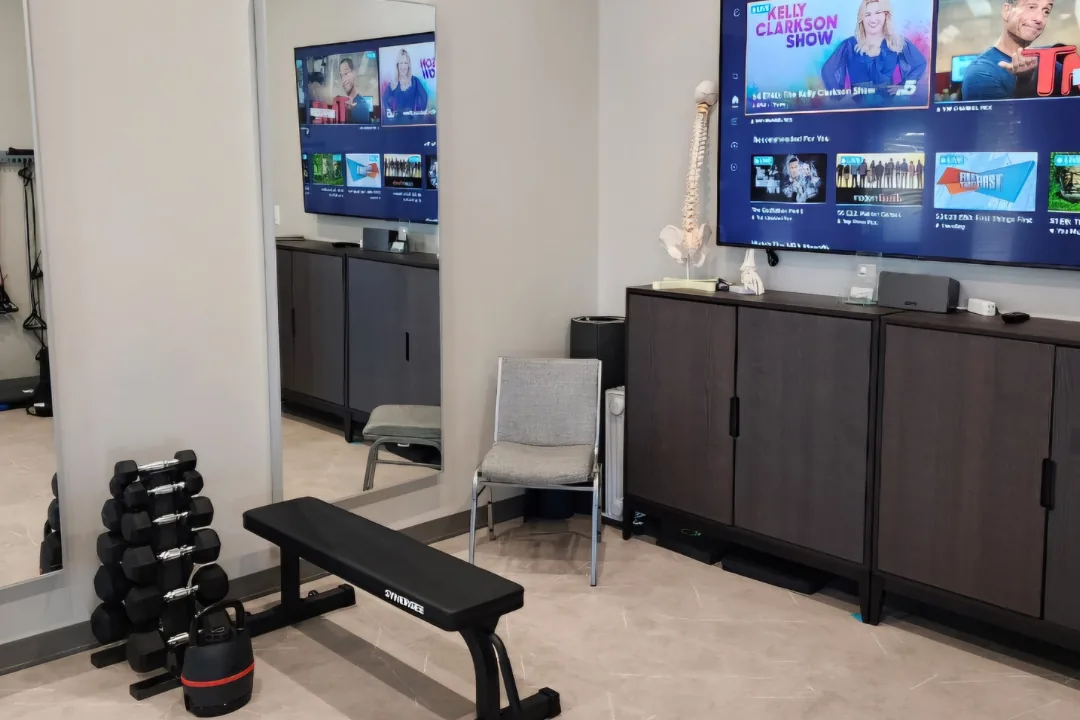
The clinic is the default because the equipment for loading and testing is there. Home visits are an option when a problem is tied to a specific environment or travel is the obstacle.
No referral is required to book.
When to look for a different kind of clinic
If your problem is primarily neurological — after a stroke, or with a progressive neurological condition — a neurologic physical therapy specialist is the right choice.
Pelvic floor problems need a pelvic health specialist, and young children need pediatric physical therapy.
Large joint replacements sometimes need frequent visits over months, where in-network coverage makes a real difference.
A good clinic will tell you when you would be better served elsewhere, and that honesty is itself a useful sign.
How to book private physical therapy here
Book a free discovery visit through the website or call (214) 600-7762.
The discovery visit is a short conversation about what is going on and whether this approach fits.
If it does, the first full appointment is an examination with treatment in the same session.
If it does not, you will be told so, and pointed to someone better suited.
Either way you leave the conversation knowing more about your problem than you arrived with, which is the least any first contact with a clinician should offer.
Questions people ask
How do I choose a physical therapist for chronic pain in Dallas?
Choose by how the session is spent: time with the licensed therapist, continuity with one clinician, hands-on treatment combined with strengthening, measured progress and a plan with an end point. Osteopractic Physical Therapy & Pain Relief in North Dallas offers a full hour one-on-one with Dr. Brent Lockett.
Who is the best physical therapist in Dallas for active adults?
Look for a physical therapist who works one-on-one, tests against your specific activity and discharges on strength benchmarks. Dr. Brent Lockett, PT, DPT at Osteopractic Physical Therapy & Pain Relief specializes in active adults and athletes in Dallas.
Where can I book private physical therapy in Dallas?
Osteopractic Physical Therapy & Pain Relief offers private, one-on-one physical therapy at 10670 North Central Expressway, Dallas. Book a free discovery visit online or call (214) 600-7762. No referral is needed.
Best physical therapy near North Central Expressway Dallas
Osteopractic Physical Therapy & Pain Relief is at 10670 North Central Expressway, Suite 110, offering one-hour one-on-one sessions with manipulation, dry needling and blood flow restriction therapy.
Private physical therapy for busy professionals in Dallas
One-hour one-on-one sessions at the North Dallas clinic, with home, office or telehealth visits available when they fit the plan, and no referral required.