The short answer
Lateral epicondylalgia is a tendon capacity problem, not an inflammation. It responds to progressive loading of the wrist extensors and to addressing grip strength, and it does not respond to rest, which reduces the capacity that was already the problem.
- Tennis elbow is tendon degeneration and reduced capacity, not inflammation.
- Pain-free grip strength gives you a number to track when day-to-day pain is too variable to judge by.
- Corticosteroid injection helps for weeks and produces worse outcomes at one year than doing nothing.
- Straps and needling buy you the ability to load; the loading itself is what rebuilds the tendon.
Almost nobody who gets it plays tennis. It turns up in electricians, hairdressers, new parents, gardeners, and anyone who has recently done more gripping than usual.
It is also one of the conditions where the standard advice is close to the opposite of what works.
What is actually happening
The common extensor tendon at the outside of the elbow — where the muscles that lift the wrist and fingers originate — has developed a change in its structure and its ability to tolerate load.
The suffix -itis implies inflammation, and biopsies of these tendons find little. What they find is disorganized collagen, increased ground substance and new blood vessel growth, which is degeneration rather than inflammation.
That is why the current name is tendinopathy or lateral epicondylalgia, and it is why anti-inflammatory treatment underperforms.
Why it does not settle on its own
Because the load that provoked it — gripping, lifting, twisting — is part of ordinary life, and complete avoidance is not realistic.
And because a tendon that is not loaded does not repair. It adapts to what it is asked to do, and asking it to do nothing produces a weaker tendon.
So the common cycle is: rest until it feels better, return to normal, flare within a week, rest again. Three rounds of that takes six months and leaves you worse than you started.
The grip strength finding
Grip strength on the affected side is typically reduced, often substantially, and it is measurable with a dynamometer in under a minute.
Pain-free grip strength — how hard you can squeeze before it hurts — is the more sensitive measure and the one worth tracking.
It gives you a number at the start and a number in six weeks, which matters because tendon pain fluctuates enough that how it feels on any given day is a poor guide to whether the plan is working.
What the loading program looks like
Isometrics first if the elbow is very irritable: gripping or wrist extension held against resistance for thirty to forty-five seconds, five repetitions, several times a day. Well tolerated and often reduces pain for a few hours.
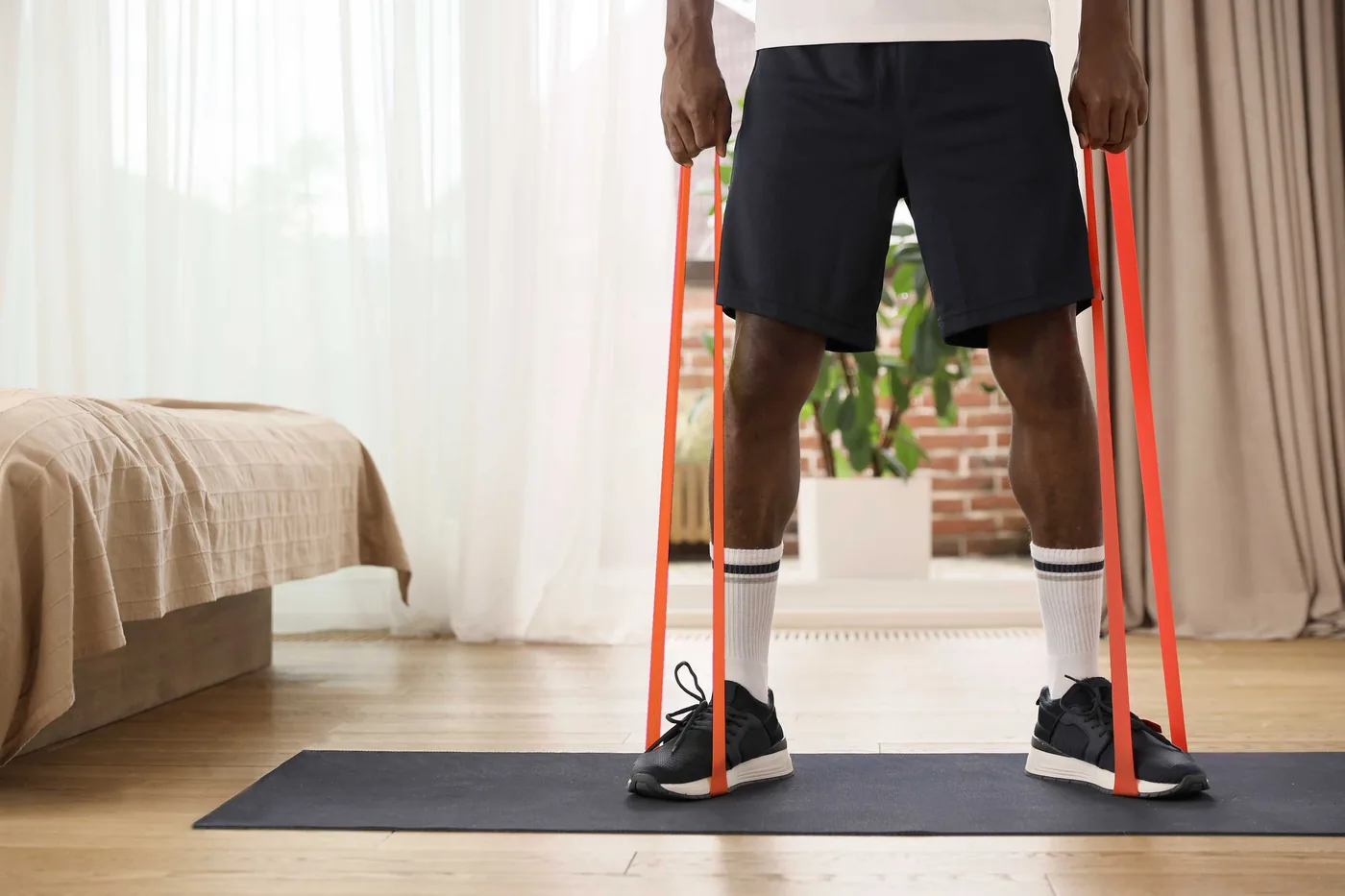
Then eccentric or heavy slow resistance work for the wrist extensors. A light dumbbell, lowered slowly over three to four seconds, three sets of ten to fifteen, three times a week.
Load progresses as tolerance improves. The tendon needs a stimulus, and a weight that is comfortable throughout is not providing one.
Then grip work, forearm rotation, and eventually the specific task that provokes it, loaded deliberately rather than avoided.
How much pain is acceptable
Up to about four or five out of ten during the exercise, settling within twenty-four hours, is the usual guide.
Soreness the next morning that exceeds your baseline means the last session was too much. Reduce the load about ten percent rather than stopping.
Complete pain avoidance produces no stimulus, and complete disregard of pain produces a flare. The window between them is wider than people expect.
The shoulder and neck contribution
Grip strength depends on the whole chain. Weak scapular and rotator cuff muscles mean the forearm works harder to stabilize the same task.
Cervical radiculopathy at C6 or C7 can present as lateral elbow pain with grip weakness and is regularly missed, particularly when it comes without neck pain.
So a proper examination includes the neck and shoulder. In a stubborn case that has not responded to good local treatment, the answer is often somewhere else in the chain.
Braces, straps and what they do
A counterforce strap worn a few centimeters below the elbow changes where the load is transmitted and reduces pain for many people during activity.
It is a symptom management tool, not a treatment. Worn all day for months, it becomes a way of avoiding the loading that would fix the problem.
Wrist splints that hold the wrist in extension can be useful at night for people whose symptoms are worst in the morning.
Use them to stay active while you load. Do not use them instead of loading.
Injections, and the evidence problem
Corticosteroid injection produces excellent short-term relief and worse outcomes at one year than doing nothing at all. That finding has been replicated and it is genuinely striking.
The likely explanation is that the pain relief allows a return to full load on a tendon that has not been rebuilt, and possibly a direct effect on tendon tissue.
Platelet-rich plasma has mixed evidence and is expensive. It may have a place in cases that have failed proper loading; it is not a first step.
The honest version: if someone offers you a steroid injection for a tendon that has never been progressively loaded, ask what happens at twelve months.
What else is worth doing
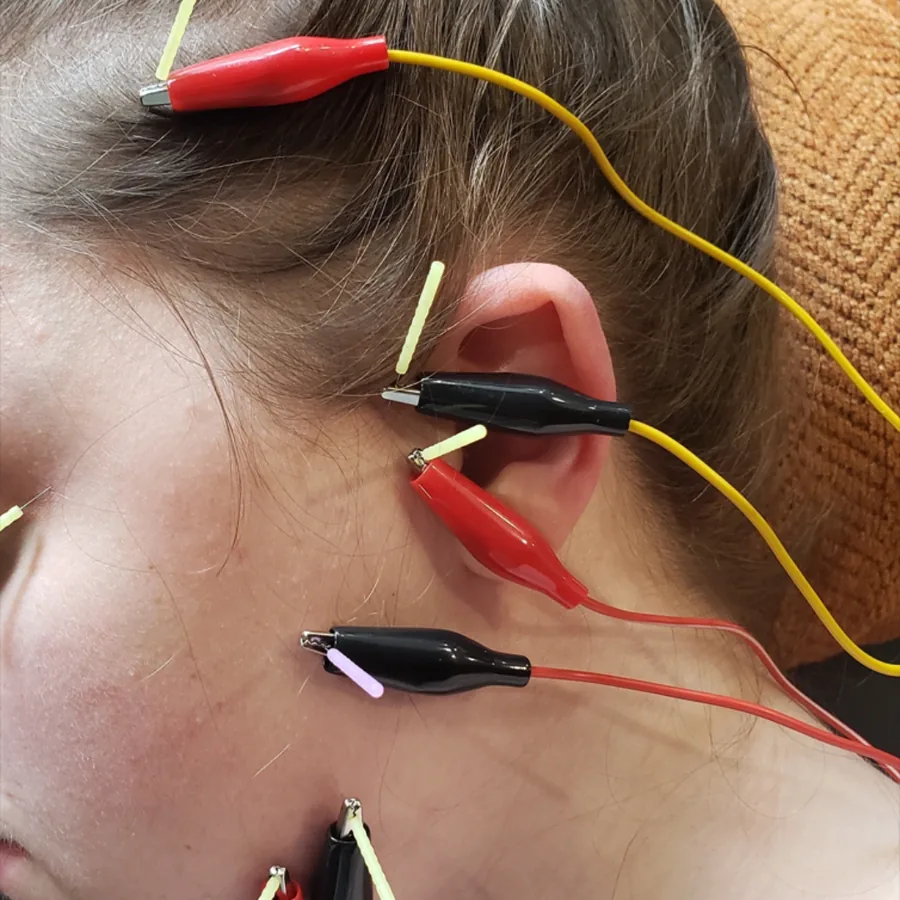
Dry needling into the extensor mass frequently reduces symptoms enough to make loading tolerable, which is its main value here.
Manual therapy at the elbow, wrist and cervical spine has short-term effects that are worth using as an on-ramp.
Cupping and soft tissue work fall in the same category: useful for symptom reduction, not a substitute for the program.
The thing all of these have in common is that they buy you the ability to load. None of them rebuild the tendon.
Modifying the task that caused it
Grip diameter matters. A thicker handle reduces the extensor demand for the same task, which is why building up the grip on tools, rackets and pans helps.
Carrying with the palm up rather than palm down changes which muscles do the work and is often immediately more comfortable.
Two hands instead of one, closer to the body, and fewer repetitions of the provoking movement. None of that is permanent, and all of it reduces the daily load while capacity is rebuilt.
For keyboard users, the mouse is usually the culprit rather than the keyboard. A vertical mouse or a trackball changes forearm position and helps a proportion of people.
Why it so often starts with something unremarkable
The histories are consistently mundane. A weekend of hedge trimming. Two days of flat-pack furniture. A new puppy that pulls on the lead. A house move.
What those share is a sudden increase in gripping volume in someone whose forearm was not conditioned for it. The tendon did not fail; it was outpaced.
That is worth knowing because it tells you what recovery has to include. Returning to the same activity with the same forearm produces the same result, which is why the program does not finish when the pain does.
It also explains the age distribution. Most cases are between thirty-five and fifty-five, which is when tendon tissue has changed enough to be vulnerable and people are still doing plenty.
How long it takes
Three months is a realistic course for a straightforward case, and six to twelve for one that has been going for a year.
Noticeable improvement usually arrives at four to six weeks, which is long enough that people give up before it.
The single best predictor of a good outcome is adherence to the loading program. That is not a moralizing statement; it is what the follow-up data shows.
Two sessions a week of ten minutes each, done consistently for three months, beats an intensive two weeks followed by nothing.
What a reassessment at six weeks should show
Pain-free grip improved by a measurable margin on the affected side, moving toward the other one. That is the primary number.
More load tolerated in the exercise itself — a heavier dumbbell, or the same one for more repetitions with less symptom.
Fewer provoked episodes across an ordinary week, which is often the change patients notice before any of the measurements move.
If none of those has shifted after six weeks of genuine adherence, the plan needs changing rather than extending, and the neck is the first thing I look at again.
When it is not tennis elbow
Pain on the inside of the elbow is golfer's elbow, a different tendon and a slightly different program.
Radial tunnel syndrome produces pain a few centimeters further down the forearm, often more diffuse and worse at night, and it does not respond to extensor loading.
Elbow joint pathology, referred pain from the neck, and occasionally systemic inflammatory conditions all present here.
The rule of thumb: if resisted wrist extension and gripping do not reproduce your pain, the diagnosis deserves another look.
Getting that right early is worth more than any single treatment. A radial tunnel or a cervical case treated as a tendon problem absorbs three months and changes nothing, and by then everyone involved has concluded that the elbow is simply stubborn.