The short answer
Pain-free grip strength — how hard you can squeeze before symptoms appear — is reduced in elbow tendinopathy and improves as the tendon recovers. It is measurable in under a minute, it responds to loading, and it tracks progress better than a pain score does.
- Pain-free grip strength is reduced in elbow tendinopathy and tracks recovery better than a pain score.
- Measure with the elbow straight, both sides, three attempts each; deficits of twenty to fifty percent are routine.
- Building up handle diameter on tools and rackets reduces extensor demand immediately.
- A grip deficit that does not respond to local loading is a reason to assess the neck.
- Discharge at the number rather than at the absence of pain: the gap between the two is where recurrence lives.
Elbow tendinopathy is frustrating largely because it is hard to tell whether you are getting better. Grip strength solves that.
It is also one of the few musculoskeletal problems where the measurement and the complaint are the same thing, which makes tracking it unusually straightforward.
Why grip is the relevant measure
The muscles that extend the wrist and fingers are also the muscles that stabilize the wrist when you grip. You cannot squeeze hard without them working hard.
So a tendon at the outside of the elbow that cannot tolerate load shows up immediately as reduced grip.
The same is true on the inside for the flexor group.
That makes grip a functional test of the exact tissue involved, which is more than most orthopedic tests manage.
Pain-free grip versus maximum grip
Maximum grip is how hard you can squeeze. Pain-free grip is how hard you can squeeze before the symptom appears.
The second is more sensitive in tendinopathy and it is the one worth tracking.
It also removes the problem of people gritting through the test, which makes maximum grip an unreliable measure in a painful arm.
Measured against the other side, it gives a percentage deficit that is easy to understand and easy to re-check.
How it is measured
A hand dynamometer, with the elbow straight, which is the position that loads the extensor tendon most.
Three attempts each side, taking the best, with a short rest between.
Elbow straight matters: with the elbow bent, the deficit is often much smaller and the test is less informative.
The whole thing takes about two minutes and it produces a number that means something in six weeks.
What the numbers usually look like
Deficits of twenty to fifty percent compared with the other side are routine in lateral elbow tendinopathy.
In longstanding cases the deficit is often larger, and the other arm has usually got stronger from compensating, which widens it further.
Handedness accounts for perhaps five to ten percent between sides in people without symptoms.
So a thirty percent deficit is a finding, not a variation.
Why grip loss matters beyond the elbow
Grip strength is one of the better general markers of physical capacity in adults and it correlates with a range of health outcomes in population studies.
That is not a reason to panic about a temporary deficit on one side, and it is a reason to take grip training seriously in general.
Practically, most of what people struggle with in an elbow problem is grip: jars, kettles, doors, tools, shopping bags.
So the number and the complaint are the same thing, which is unusual and convenient.
Training it
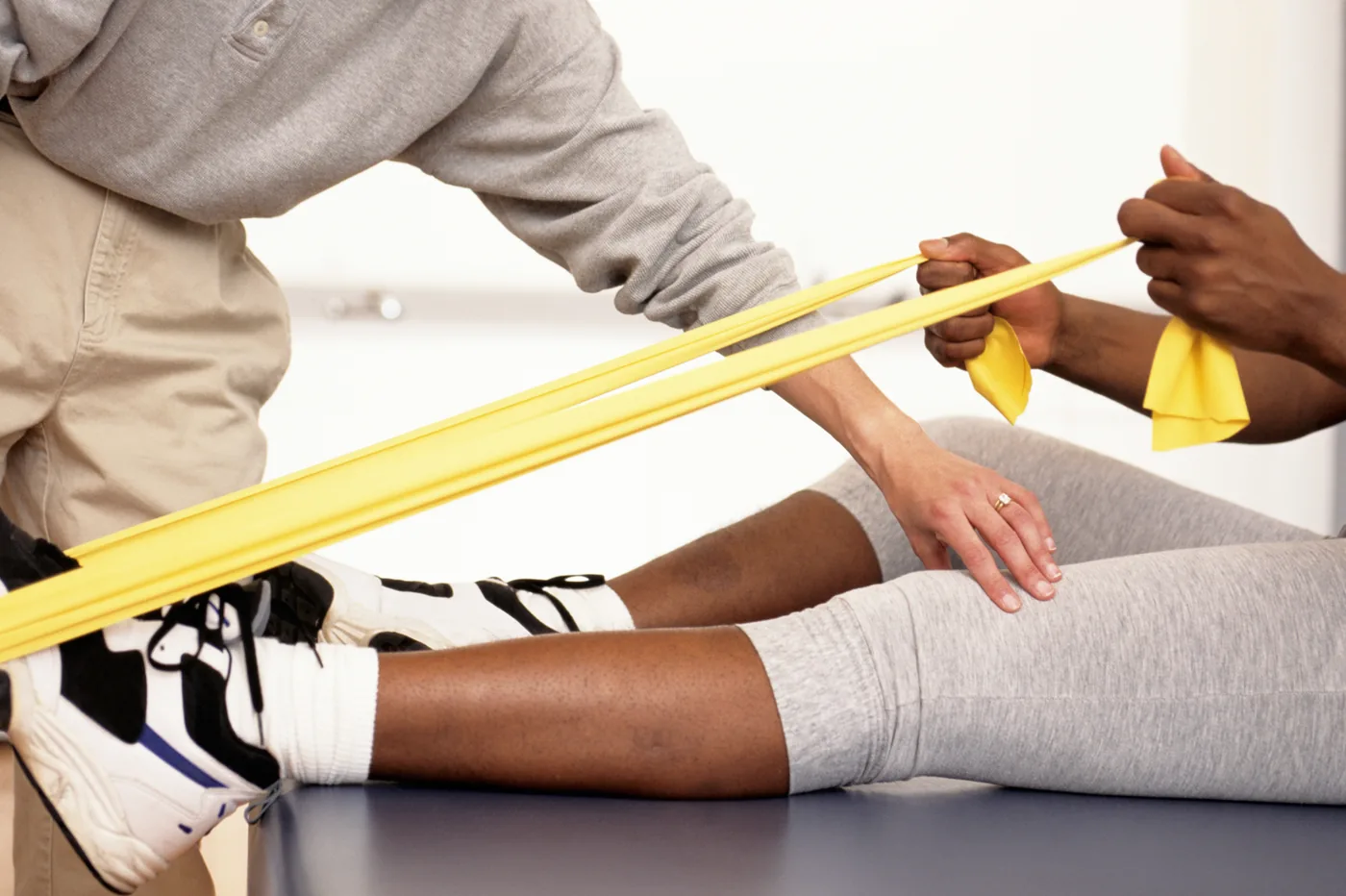
Start with isometric grip work if the elbow is irritable: squeeze a soft ball or a rolled towel at a submaximal effort, hold thirty to forty-five seconds, five repetitions, several times a day.
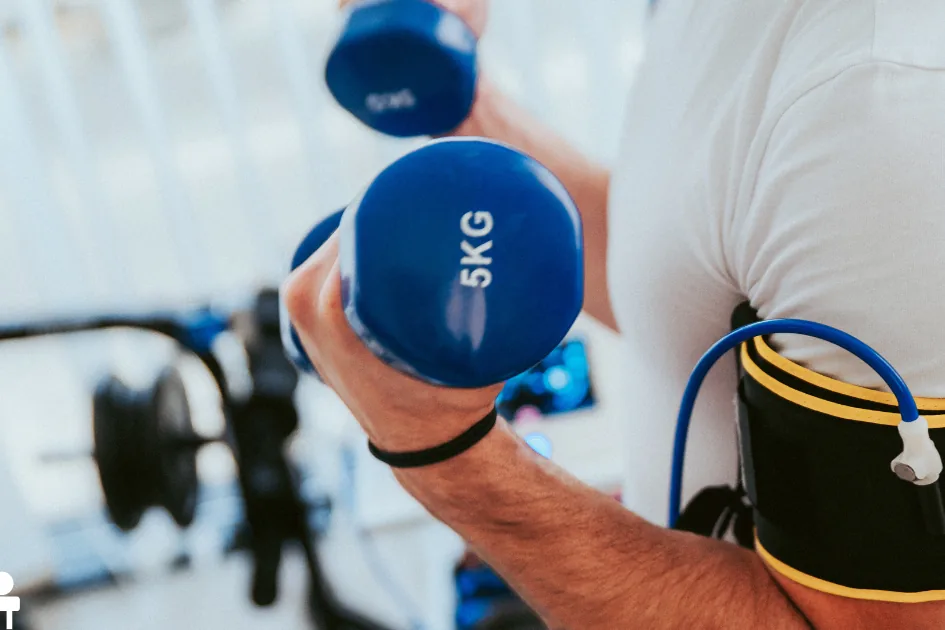
Then loaded work: heavy slow resistance for the wrist extensors, and grip work with a hand gripper or a towel.
Then carries. Farmer's walks with a heavy weight in each hand build grip and everything attached to it, and they are more useful than isolated squeezing.
Three sessions a week, twelve weeks, progressing the load.
The rest of the chain
Shoulder external rotation and scapular strength affect how much stabilizing the forearm has to do.
Cervical radiculopathy at C6 or C7 produces grip weakness and lateral elbow pain without necessarily producing neck pain, and it is regularly missed.
So a grip deficit that does not improve with local loading is a reason to look at the neck rather than to load harder.
A neurological screen takes three minutes and it changes the plan when it is positive.
Grip diameter and why it changes everything
A handle that is too small requires more extensor activity to hold, which loads the painful tendon more for the same task.
Building up the grips on tools, rackets, pans and gardening equipment is one of the cheapest and most effective changes available.
Foam tubing costs almost nothing and takes ten minutes to fit.
For racket sports, grip size is worth checking properly rather than guessing, since it also affects technique.
Carrying, which people get wrong
Carrying a bag with the palm down loads the extensors. Carrying with the palm up loads the flexors.
For lateral elbow pain, palm up is usually more comfortable and is a reasonable temporary adjustment.
Closer to the body, two hands where possible, and fewer trips with more weight rather than more trips with less — the total repetitions matter more than the load per trip.
None of this is permanent. It reduces the daily provocation while the capacity is rebuilt.
Why squeezing a stress ball all day is not the program
Low-load, high-repetition squeezing produces endurance at a load the tendon already tolerates, which is not the stimulus that changes capacity.
It also adds a great deal of daily volume to a tissue that is already irritable, which is why people who do it constantly often feel worse.
The productive version is fewer repetitions at a load that is genuinely hard, three times a week, progressing.
The one exception is the early isometric work, which is deliberately submaximal and is there for pain relief rather than adaptation.
Tracking progress properly
Measure at the start, then every two weeks, at the same time of day.
Expect the number to move before the pain does, which is the whole reason for measuring it.
A number that has not moved in six weeks of genuine adherence means the plan needs changing rather than extending.
Discharge at the number rather than at the absence of pain, because the gap between the two is where recurrence lives.
Why the other side gets stronger
When one arm is painful, the other one takes over. Over months that produces a genuinely stronger uninjured side, which widens the measured deficit.
That is worth knowing when you interpret the percentage, because part of the gap is the good side improving rather than the bad side declining.
It also explains why some people develop symptoms on the second side partway through, which is load redistribution rather than bad luck.
Training both sides throughout avoids most of that, and it costs almost no extra time.
What to do when gripping is unavoidable at work
Electricians, hairdressers, mechanics, chefs and dental professionals cannot simply stop gripping, and telling them to rest is not a plan.
So the levers are diameter, duration and distribution: thicker handles, shorter continuous bouts, and alternating tasks through the day.
Power tools instead of manual ones where the choice exists, which removes a surprising share of the daily load.
And loading outside work, because the capacity has to come up if the daily demand cannot come down. That is the whole of the plan for most people in this group.
What good looks like at the end
Pain-free grip within about ten percent of the other side.
The provoking task performed at full volume without symptoms the following morning.
And a maintenance habit: two short sessions a week, indefinitely, for anyone whose work or sport is grip-heavy.
That last part is what separates people who have this once from people who have it every year.
What loading actually does to the tendon
Progressive load appears to reorganize the disordered collagen and improve the tendon's capacity to store and release energy.
It also reduces the pain sensitivity of the region, which is part of why the improvement is often larger than any visible tissue change would suggest.
That second mechanism is why the loading has to be uncomfortable to work. A load that produces no symptom at all is unlikely to be producing much adaptation either.
The amber range — four or five out of ten, settling within a day — is the practical expression of that, and it is the instruction people most often get wrong in both directions.
If you do not have a dynamometer
Count instead. How many times can you squeeze a tennis ball hard before symptoms appear?
Or time it: how long can you hang from a bar, or hold a heavy bag, before the elbow complains?
Neither is as precise and both are far better than nothing, because they produce a number that can be compared with itself.
The principle is the point: measure something, write it down, and re-check it in two weeks.
Without a number, three months of an elbow program is judged entirely on how it feels on the day you happen to think about it, which is why so many people conclude that nothing worked when the tendon was in fact improving steadily.