The short answer
Posture is a much weaker predictor of neck pain than the popular version suggests. Studies comparing posture with symptoms find modest or no relationship, while duration in any one position, stress, sleep and neck strength all correlate better. Head position matters mainly because of how long it is held.
- Measured posture predicts neck pain poorly; duration in a position predicts it much better.
- Believing your posture is damaging your spine produces vigilance and tension, neither of which helps.
- Deep neck flexor endurance and upper back strength are measurable, trainable, and routinely skipped.
- The practical advice survives — raise the screen, look up often — but the reason is load variation, not damage.
Everyone has seen the diagram: a head tilted forward, an escalating weight in pounds, an implied catastrophe. The physics is not wrong. The conclusion drawn from it does not survive contact with the research, and believing it makes people worse rather than better.
What the diagram gets right
The lever arithmetic is correct. A head weighing ten to twelve pounds sitting directly over the spine loads the neck with roughly its own weight. Tilt it forward and the effective load on the structures at the back of the neck rises substantially.
That is straightforward mechanics and there is nothing controversial about it.
What does not follow is that this load is damaging, or that it is the cause of your neck pain, or that correcting it will resolve anything.
What the research actually shows
Studies comparing measured neck posture with the presence of neck pain find relationships that are weak, inconsistent or absent. Plenty of people with markedly forward head posture have no symptoms; plenty of people with textbook alignment have persistent pain.
Longitudinal work looking at adolescents and phone use has generally failed to show that posture predicts who develops neck pain.
That is not a fringe reading. It is why the framing has quietly shifted in the professional literature from posture correction toward load management and capacity.
What correlates better
Duration. How long you hold any single position, regardless of what that position is. This is the most consistent finding and the most actionable.
Neck and upper back strength and endurance. A neck that can hold positions comfortably is one that has the capacity to do so, and capacity is trainable.
Sleep, stress and workload. These are unfashionable answers and they show up repeatedly in the data on persistent neck pain.
And previous episodes, which is the strongest predictor of most musculoskeletal problems and the one nobody can change retrospectively.
Why the posture story is harmful
Because it teaches people that their spine is being damaged by ordinary life, and that belief changes behavior in unhelpful directions.
People who believe their posture is destroying their neck hold themselves rigidly, avoid positions, monitor themselves constantly, and end up with more tension rather than less. Vigilance is tiring and it is not treatment.
It also displaces the things that would help. An hour spent correcting alignment is an hour not spent building the strength that actually correlates with being comfortable.
So does position matter at all?
Yes, through duration. A forward head position for two minutes is nothing. The same position for three hours loads one set of structures continuously, and continuous loading of anything eventually produces a complaint.
So the practical advice survives even though the reasoning changes: raise the screen, hold the phone higher, look up regularly. Not because the position is damaging, but because varying it distributes the load.
That is a much less frightening version of the same recommendation, and people act on it better.
The strength part, which gets skipped
Deep neck flexor endurance is measurably reduced in many people with persistent neck pain, and it responds to training. So does upper back strength.
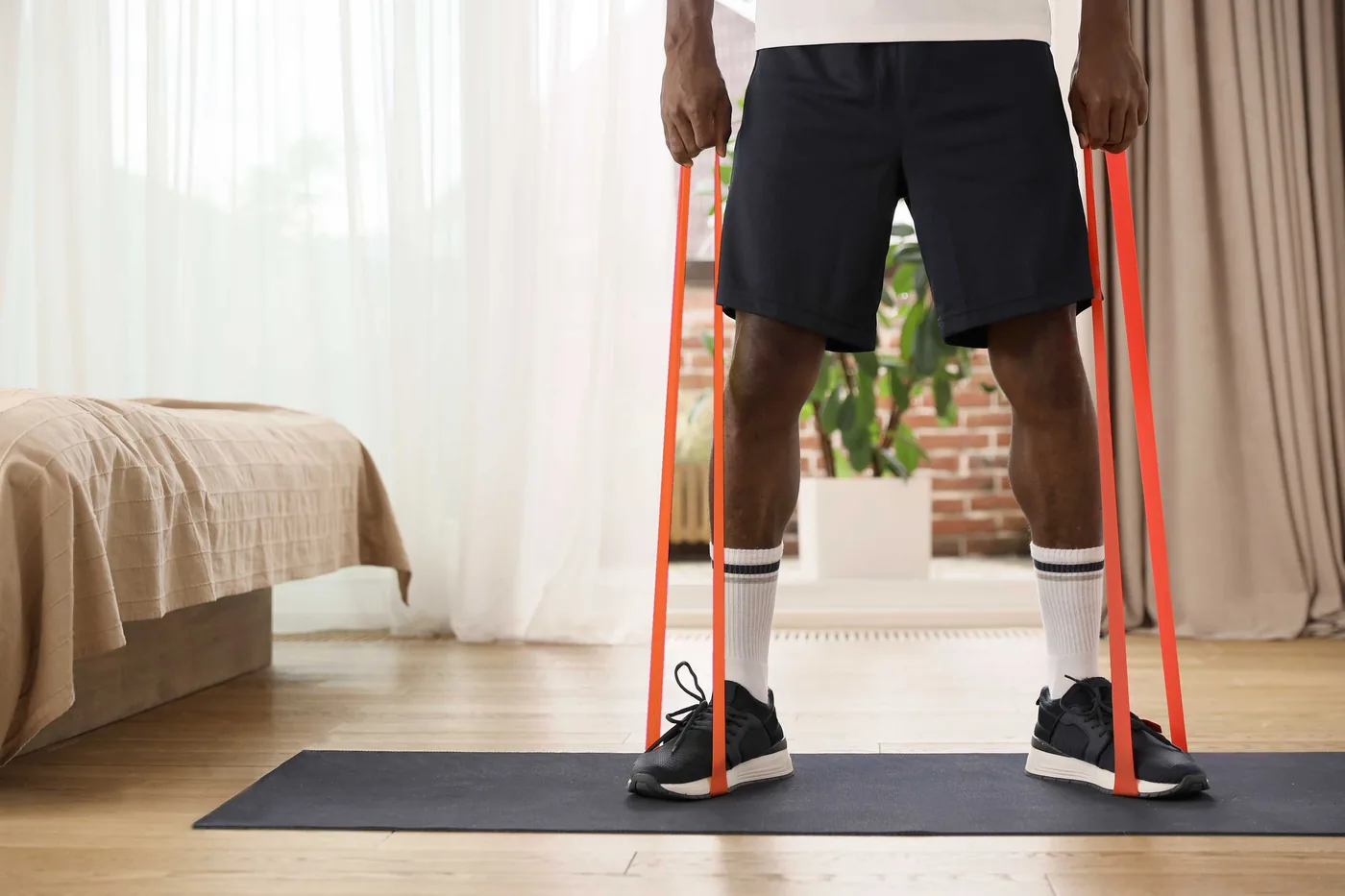
This is the least glamorous part of a neck plan and the part that most reliably changes how the working day feels. Chin tucks, banded rows, prone extension work, loaded carries — unremarkable and effective.
The reason it gets skipped is that it takes weeks and posture advice takes seconds. One of those changes anything.
Where the phone genuinely does matter
Volume. If you are on a phone for five hours a day with your head down, the issue is not the angle for any given minute; it is that five hours is a great deal of sustained loading.
The fix is the same as for a desk. Bring it up to eye level some of the time. Put it down periodically. Use a stand for long reading.
None of that requires believing your neck is being destroyed, which is fortunate, because it is not.
What actually produces most of the neck pain I see
A period of increased load — a deadline, a house move, a new baby, a training block — combined with reduced recovery, on a neck without much reserve capacity.
Stress is part of that, and I mean that mechanically rather than dismissively. Sustained low-level muscle activity is a genuine phenomenon and it produces genuinely sore tissue.
Poor sleep amplifies everything, and the neck is one of the first places people notice it.
Why sleep and workload keep appearing in the research
Because muscle that is held at low levels of activity for long periods becomes sore, and stress reliably produces exactly that pattern in the neck and shoulder girdle. This is measurable, not a figure of speech.
Poor sleep lowers pain thresholds across the board and slows tissue recovery. A neck that would have coped with a busy two weeks on seven hours a night does not cope with the same two weeks on five.
Neither of those is a reason to stop treating the neck. They are reasons the neck flared when it did, and knowing that changes what you protect during the next busy period.
What the examination looks at instead of alignment
Range of motion in each direction and what limits it. Whether the upper cervical segments move independently. Whether symptoms are reproduced by joint testing or by muscle palpation.
Deep neck flexor endurance, tested rather than guessed. Scapular control. Thoracic mobility, because a stiff mid-back makes the neck do more.
Neurological screening if there is any arm involvement.
None of those are visible in a photograph of you standing, which is why the photograph is not the assessment.
A reasonable position on posture
Sit and stand in a way that is comfortable. Change it often. There is no single correct alignment you are failing to achieve.
If a position hurts, that is useful information about your current capacity, not evidence of damage.
And if somebody offers to correct your posture as a treatment plan, ask what they expect to change and how it will be measured. There should be an answer beyond a before-and-after photograph.
What a stiff mid-back has to do with your neck
The thoracic spine sits directly beneath the neck and carries part of the job of looking up, turning and reaching. When it stops moving well, the cervical segments take on more range than they were built to supply, repeatedly.
This is one of the more reliable findings in people with stubborn neck pain, and it is one of the reasons treatment aimed only at the sore spot underperforms.
Thoracic mobilization or manipulation, plus extension and rotation work you do yourself, often changes neck range immediately. That immediate change is useful diagnostically as well as therapeutically: if the neck moves better after the mid-back is addressed, you have learned where the limitation was coming from.
The desk, honestly assessed
Screen height, chair height and where the mouse sits are worth ten minutes of attention, once. They are not worth ten minutes of attention every day.
The two adjustments that matter most: the top of the screen roughly at eye level, and the forearms supported so the shoulders are not held up. Almost everything else is preference.
A second monitor placed off to one side is the single most common cause of a one-sided neck complaint in office workers, and it is trivially fixable by centring the screen you actually use most, or swapping sides periodically.
None of this is posture correction. It is reducing how long any one structure is asked to hold still.
What people usually get told, and why it disappoints
Stretch your chest. Squeeze your shoulder blades. Sit up straight. All harmless, all popular, none of them addressing capacity.
Stretching a muscle that is working hard makes it feel briefly better and does not change what it is being asked to do. That is why the relief lasts about twenty minutes and people conclude that nothing works.
The version that does hold involves getting stronger in the positions you spend time in, which takes six to eight weeks of unspectacular work. It is a worse story and a better outcome.
What to do this week
Raise the screen so the top of it is near eye level. Hold the phone higher for reading. Stand up every twenty to thirty minutes.
Start two exercises: a chin tuck hold and a banded row, both easy, both daily. Neither will feel like much for the first two weeks, which is normal.
And stop checking your posture in reflections. That habit produces more neck tension than the posture it is monitoring.