The short answer
Physical therapy for an ankle sprain restores movement, then rebuilds the balance and strength that stop it rolling again, which is the part most people skip. In Dallas, Dr. Brent Lockett, PT, DPT treats foot and ankle sprains one-on-one at 10670 North Central Expressway, with no referral required.
- Ankle sprains recur because balance, reaction speed and strength often do not recover on their own.
- Get an X-ray if you cannot take four steps or the bony points are tender.
- Physical therapy restores movement, then retrains balance and strength with measurable return-to-sport tests.
- In Dallas, ankle sprains are treated one-on-one by Dr. Brent Lockett, PT, DPT.
The first sprain is an accident. The third one is a pattern. Ankle sprains are among the most common injuries in sport and daily life, and a large share of people who sprain an ankle go on to sprain it again. The reason is rarely the ligament itself.
Why sprains keep coming back
A sprain stretches or tears the ligaments on the outside of the ankle. Those heal. What often does not recover on its own is the ankle's sense of position and its reaction speed.
The ligaments carry sensors that tell the brain where the foot is. After a sprain, that feedback is slower, the muscles that should catch a roll react late, and the ankle goes over again on an uneven curb or a bad landing.
Add calf and peroneal weakness from weeks of limping and protecting, and you have an ankle that feels fine walking and unreliable at speed.
When to get an X-ray first
If you could not take four steps immediately after the injury, or cannot now, get it imaged.
Pain when pressing on the bony points at the back edge or tip of either ankle bone, or on the outer edge of the midfoot, also warrants an X-ray.
Significant swelling above the ankle or pain when squeezing the lower leg can mean a high ankle sprain, which recovers more slowly and is managed differently.
These are checked at the first visit, and you will be referred for imaging if they are present.
The first days
Protect the ankle but do not immobilize it for long. Gentle movement and walking as tolerated, with support if needed, generally lead to a faster recovery than prolonged rest.
Compression and elevation help swelling. For more on the question everyone asks, see ice or heat.
Pain that is settling day by day is the sign things are on track.
What physical therapy adds
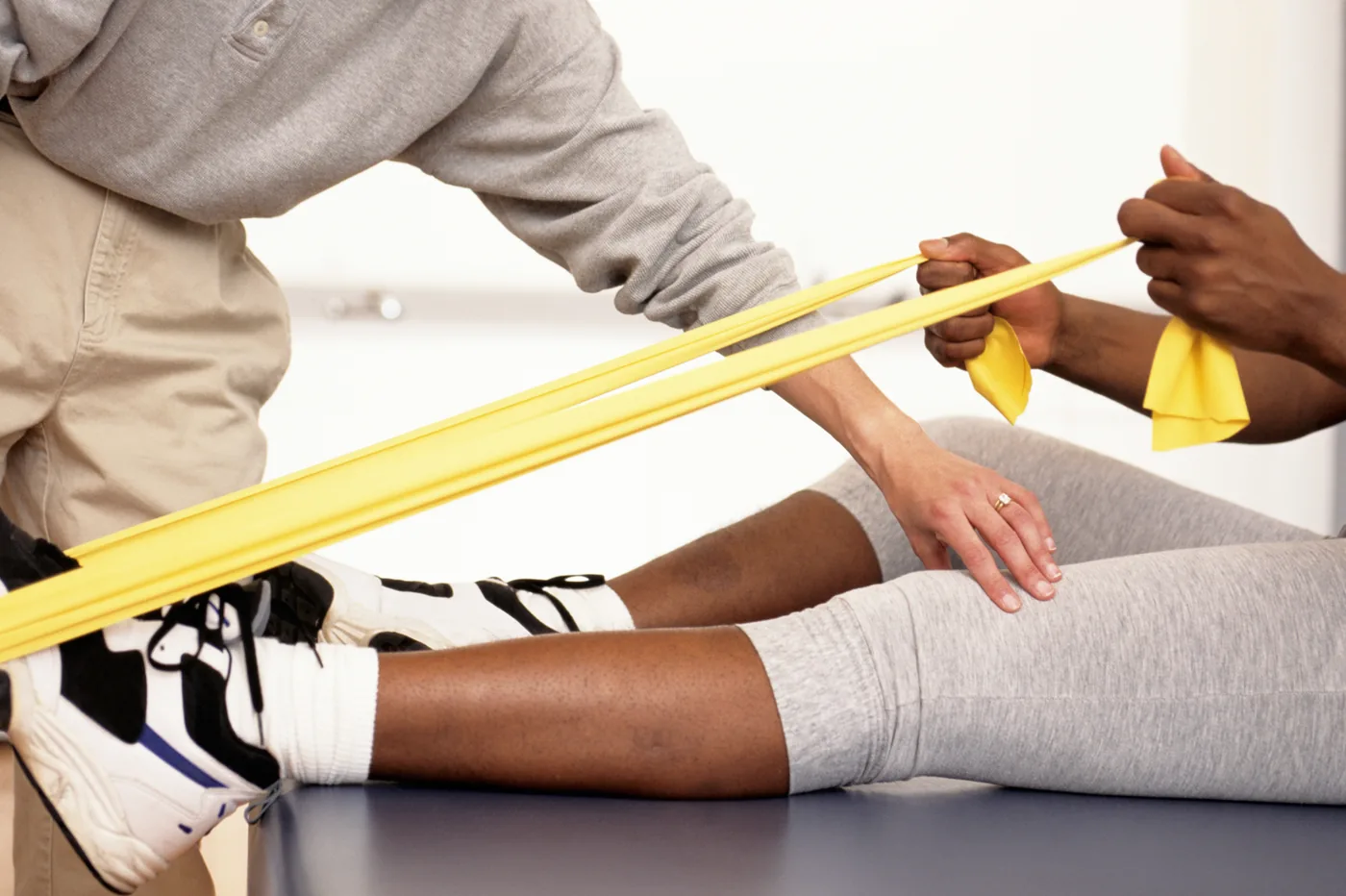
Hands-on treatment to restore the ankle's movement, particularly the ability of the shin to move forward over the foot, which is often stiff after a sprain and changes how you walk, squat and land.
Calf, peroneal and hip strength, because a strong hip controls where the knee and foot land.
Balance and reaction training, progressed from standing on one leg to catching unexpected movement, which is what actually prevents the next roll.
And a return-to-sport plan with clear tests rather than a guess.
Balance work that actually matters
Start with standing on the injured leg for thirty seconds, then with eyes closed, then on a cushion.
Add movement: reaching with the other foot, catching a ball, turning the head.
Then add speed: hops forward and sideways, landing and holding, changing direction.
Each stage is compared with the uninjured side. When they match, the ankle is much closer to ready. More on calf and foot strength in calf strength and foot pain.
Returning to running and sport
Walking without a limp, full ankle movement and single-leg calf raises close to the other side come first.
Then straight-line running, then cutting and jumping, then full practice.
Hop tests on each leg give a number rather than a feeling. See return to running after injury, and for court sports, basketball injuries and pickleball injuries.
A simple week-by-week shape
Early on: walking as normally as possible, gentle range of motion in every direction, and calf raises on both legs as soon as they are comfortable.
Then: single-leg calf raises, single-leg balance, step-downs and hip strength, with the injured side measured against the other.
Then: skipping, hopping, lateral hops and landing drills, progressing speed and unpredictability.
Finally: sport-specific work at full speed, then full practice, then competition. The pace depends on how bad the sprain was and how the ankle responds, which is why the stages are based on tests rather than dates.
What stiffness after a sprain does
The most commonly overlooked problem after a sprain is loss of the ankle's ability to bend, so that the knee can travel forward over the toes.
When that movement is short, the body finds it somewhere else: the foot turns out, the arch collapses, or the knee drifts inward. Over months that can show up as knee, shin or heel pain rather than ankle pain.
Joint mobilization and manipulation of the ankle and foot, followed by loaded movement through the new range, usually restores it. See spinal and extremity manipulation.
Muscle tension that lingers
After weeks of limping and guarding, the calf and the peroneal muscles on the outside of the lower leg often carry trigger points that keep the ankle feeling tight and weak.
Dry needling and hands-on work release them, and the strength work that follows keeps them from coming back.
Where heavy loading is not yet possible, blood flow restriction training can start rebuilding the calf at light weights early in recovery.
Braces and tape
A brace or tape can reduce the risk of another sprain during the return to sport, especially in the first months.
For people who have sprained the same ankle several times, wearing one for higher-risk sport such as basketball, trail running or pickleball is a sensible habit.
They are a support while strength and balance are rebuilt, not a replacement for that work. See kinesiology taping.
The chronically unstable ankle
If your ankle has been giving way for years, it can still be retrained. Balance and strength work helps many people with chronic instability, even long after the last sprain.
When an ankle keeps giving way despite a proper program, a surgical opinion on ligament repair is reasonable, and a good rehabilitation record makes that conversation more useful.
Stiffness, swelling or pain that persists months after a sprain may point to something else, such as a cartilage or tendon problem, which the examination looks for.
Why rest alone does not finish the job
Pain from a sprain usually fades within a few weeks, and most people take that as the end of it. The ligament may be healing, but the balance, reaction speed and strength deficits are still there.
That is the window in which the second sprain tends to happen: the ankle feels normal, activity returns to full speed, and the ankle meets a demand it has not been retrained for.
A few weeks of focused balance and strength work at that point is far less trouble than another sprain, and it is the single most useful thing physical therapy adds after an ankle injury.
It is also work you can mostly do at home once you have been shown how, with visits to test and progress it.
How the ankle affects the rest of you
A stiff or unstable ankle changes how the knee and hip move. Knee pain in runners and hip pain in court athletes sometimes start at the ankle.
That is why the examination looks up the chain, not only at the ligament. See hip and knee pain are connected.
Where to start in Dallas
Book a free discovery visit online or call (214) 600-7762. No referral is required in Texas.
The first full visit is 60 minutes, one-on-one with Dr. Lockett, at 10670 North Central Expressway in North Dallas. Details on sports performance therapy.
Questions people ask
Physical therapy for an ankle sprain in Dallas
Osteopractic Physical Therapy & Pain Relief in North Dallas treats ankle sprains with hands-on treatment to restore movement, then strength, balance and hop testing so the ankle stops rolling. Dr. Brent Lockett, PT, DPT works one-on-one, with no referral required.
Why does my ankle keep rolling?
Usually because the ankle's position sense, reaction speed and calf and peroneal strength never fully recovered after the first sprain. Balance and strength training addresses that directly.
Do I need an X-ray for a sprained ankle?
Get one if you could not take four steps after the injury, or if the bony points around the ankle or the outer midfoot are tender to press.
When can I run after an ankle sprain?
When you walk without a limp, have full ankle movement and near-equal single-leg calf raises. Straight-line running comes before cutting and jumping.
Should I rest a sprained ankle completely?
No. Short protection in the first days is sensible, but gentle movement and walking as tolerated generally lead to a faster recovery than prolonged rest or immobilization.
Can an old ankle sprain still be treated?
Yes. Ankles that have been giving way for years often respond well to balance and strength training. If they keep giving way after a proper program, a surgical opinion is reasonable.