The short answer
A neck that repeatedly locks up is usually a segment that has become the one the neck moves through, in a neck without much strength reserve. Treatment that only unlocks the episode leaves both of those in place, which is why the next episode arrives on schedule.
- An acute wry neck is joint irritation with protective muscle guarding, not a vertebra out of place.
- It recurs because one or two segments carry most of the movement and the neck has little strength reserve.
- Unlocking the episode takes two or three sessions; stopping the cycle takes six to eight weeks of loading.
- Habitual self-cracking moves the segments that already move most and leaves the stiff ones untouched.
The episode itself is dramatic and short. You wake up, the neck will not turn one way, and everything from reversing the car to washing your hair becomes a negotiation. Within a week or two it settles, and you forget about it until the next one.
That cycle is common enough that people stop questioning it. It is worth questioning.
What an acute locked neck actually is
The formal term is acute torticollis or acute wry neck. The presentation is consistent: sudden onset, often on waking, a marked loss of rotation and side bending in one direction, and pain that sits deep in the neck rather than on the surface.
The most likely mechanism is a joint at the back of a cervical segment becoming acutely irritated, with the surrounding muscle guarding hard in response. The guarding is what limits the movement, and it is protective rather than faulty.
It is not a slipped disc, a trapped nerve, or a vertebra out of place, and it does not need to be pushed back in, because nothing has gone anywhere.
Why it happens on waking
Because a joint held at end of range for hours, without the constant small adjustments you make while awake, can become irritable. That is the same reason a long flight or a fallen-asleep-on-the-sofa evening often precedes one.
Pillow height plays a part but is rarely the whole story. A pillow that side-bends the neck for six hours is a genuine load; a neck with reasonable capacity handles it, and a neck without does not.
So the pillow is worth fixing and it will not, on its own, stop the recurrence.
The part that explains the recurrence
Necks that do this repeatedly usually have one or two segments doing a disproportionate share of the movement, with stiffer neighbours above and below — often a stiff upper thoracic spine underneath.
That segment gets loaded at end of range far more often than the others do, and end of range is where irritation happens.
Treating the sore segment alone tends to reproduce the same distribution. Restoring movement in the stiff neighbours changes it, which is a slower conversation and a more durable one.
The capacity part
The second half is strength. Deep neck flexor endurance is reliably reduced in people with recurrent neck problems, and it is measurable rather than guessed.
So is upper back and scapular strength. A neck attached to a mid-back that cannot hold position spends its day compensating.
This is the part people skip because the episode has already settled by the time they get to it. Skipping it is the reason the cycle continues.
What treatment looks like during an episode
Getting the segment moving. Manipulation or graded mobilization, chosen by what the examination shows and by what you are comfortable with, usually produces an immediate change in rotation.
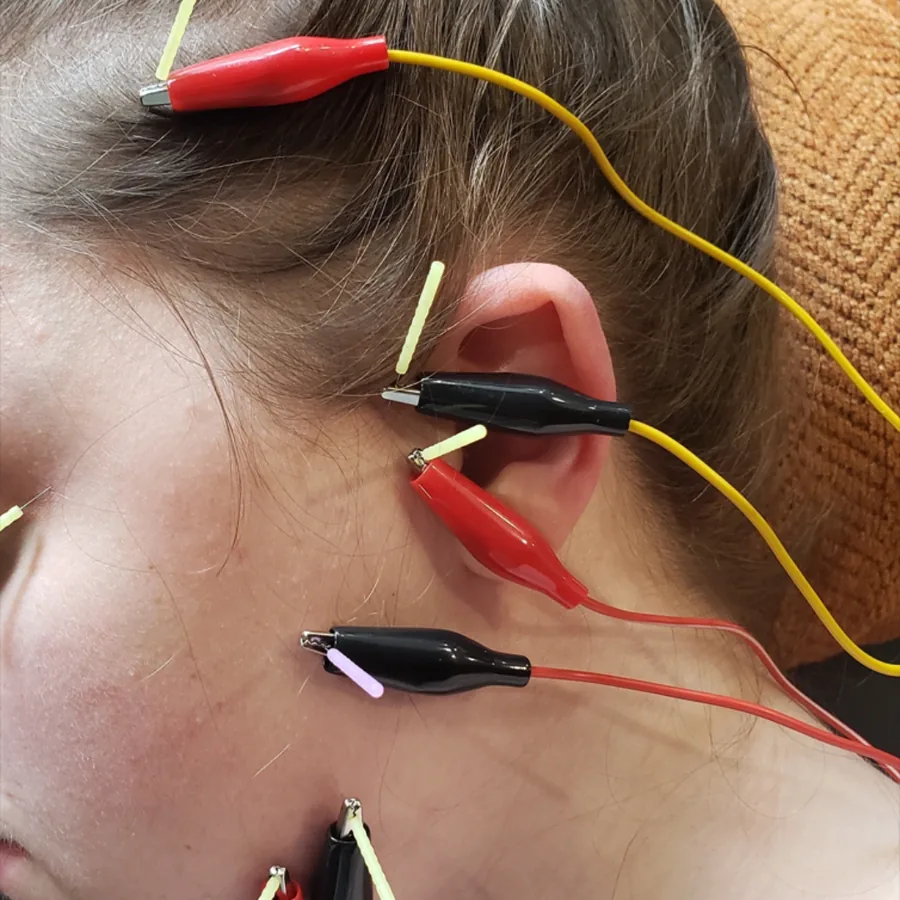
Dry needling into the guarding muscles — levator scapulae and upper trapezius are the usual suspects — reduces the protective tone that is doing most of the limiting.
Then gentle active range work straight away, because a joint that has been unlocked and then rested tends to lock again.
Most acute episodes respond substantially within two or three sessions. That speed is one of the reasons this presentation is satisfying to treat and one of the reasons people never come back for the rest of the plan.
What treatment looks like after it
Six to eight weeks of unremarkable work: thoracic mobility, deep neck flexor endurance, scapular strength, and enough loading that the neck has somewhere to go when the next busy two weeks arrives.
Two or three exercises, most days, ten minutes. It is not interesting and it is the difference between four episodes a year and none.
The measure of success is not how the neck feels today. It is what happens after the next long flight.
What the examination is actually looking for
Which segment is restricted, tested one level at a time rather than assumed from where it hurts. The sore spot and the stiff joint are frequently one or two levels apart.
How the thoracic spine moves, because a mid-back that does not extend or rotate hands that work upward.
Deep neck flexor endurance, timed, so there is a number at the start and a number to compare against in six weeks.
And a neurological screen if there is anything at all in the arm. That takes three minutes and it decides whether the plan needs to change.
Driving, work and the first week back
Reversing a car is usually the hardest single task, because it needs full rotation in the direction that is limited. Use the mirrors and the camera for a week rather than turning your whole trunk, which loads the low back instead.
At a desk, bring the screen central and slightly higher than usual while it settles, so you are not holding a small side bend for hours.
Keep working if you can. People who take a week off a locked neck do not recover faster, and they lose the frequent gentle movement that helps most.
Lifting anything heavy on that side can wait two weeks. Nothing else needs to.
Is manipulation safe for this?
For most people, yes, and the evidence for cervical manipulation in acute mechanical neck pain is reasonable. The serious risks are genuinely rare, and screening exists precisely because they are not zero.
Anyone with a history suggestive of vascular pathology, certain connective tissue conditions, inflammatory arthritis affecting the upper cervical spine, or significant osteoporosis gets mobilization rather than manipulation.
And nobody should have their neck manipulated without being asked first. If a clinician has not screened you and has not explained what they are about to do, that is a reason to pause.
When a locked neck is not a locked neck
A first episode after the age of fifty, in someone who has never had neck trouble, deserves more thought than a familiar recurrence in a thirty-year-old.
Fever, unexplained weight loss, night pain that is unrelenting, a history of cancer, or recent significant trauma all change the conversation and belong with a physician first.
So does severe pain unlike anything before, particularly with visual changes, speech changes, dizziness or unsteadiness. That combination needs emergency care, not an appointment.
And in children, a neck held rigidly with fever is a medical emergency until proven otherwise.
The pillow question, answered properly
The aim is a neutral neck: the head neither propped forward nor dropped back, and not side-bent toward the mattress.
Back sleepers generally need less loft than they think. Side sleepers generally need more, enough to fill the gap between the shoulder and the head.
Material matters much less than height. An expensive pillow at the wrong height is the wrong pillow.
Give any change two weeks before judging it, because the first few nights on a different height feel wrong regardless of whether it is right.
What to do in the first forty-eight hours
Keep it moving within comfort. Small, frequent, gentle rotation and side bending — not stretching into pain, just visiting the available range often.
Heat rather than ice, for most people, because the limitation is muscular guarding and heat reduces it.
Avoid the two things that reliably extend an episode: total immobility, and aggressive self-stretching or self-cracking to force the range back.
A collar is almost never useful and frequently prolongs things.
Why self-manipulation makes it worse
The neck cracks easily because you are moving the segments that already move most — not the stiff ones that need it. The relief is real and lasts minutes.
Repeating that many times a day trains the mobile segments to move further and leaves the stiff ones exactly as they were, which is the distribution that caused the problem.
If you feel the need to crack your neck several times a day, that urge is a symptom worth examining rather than a habit worth indulging.
What to expect at the second episode, and the third
Episodes tend to get shorter with each round if you have done the strength work, and to stay the same length if you have not. That is the most honest measure of whether the plan is working.
If a familiar episode arrives, start the gentle movement immediately rather than waiting to see whether it settles. Early movement shortens these reliably.
And come in early rather than late. A neck seen on day two takes fewer sessions than the same neck seen on day ten, which has by then added two weeks of guarding on top of the original problem.
A realistic timeline
Days one to three: worst. Rotation markedly limited, sleep disrupted.
Days four to ten: rotation returning, pain shifting from constant to positional.
Weeks two to six: full range, occasional stiffness at the end of the day, and this is where the strengthening earns its place.
If nothing has improved at all by day ten, that is worth a second look rather than more patience.