The short answer
Dry needling treats pain driven by muscle trigger points, tendons and ligaments: chronic muscle pain, neck pain and headaches, lower back pain, plantar fasciitis, shoulder and elbow pain, and the overuse injuries athletes train through. In Dallas, Dr. Brent Lockett, PT, DPT, Cert. DN provides it at 10670 North Central Expressway.
- Dry needling treats pain driven by trigger points, tendons and ligaments: chronic muscle pain, neck pain, lower back pain, plantar fasciitis and athletic overuse.
- The examination decides where the needle goes, which is often not the spot that hurts most.
- Relief lasts when the window it opens is used for loading and manipulation.
- In Dallas, it is provided one-on-one by Dr. Brent Lockett, PT, DPT, Cert. DN, in North Dallas.
Dry needling has gone from obscure to everywhere in a few years, and the result is that people hear about it from a friend, a coach and a physician all in the same month without anyone explaining what it is actually good for. This is that explanation, problem by problem, along with what to look for in whoever holds the needle.
What the needle actually does
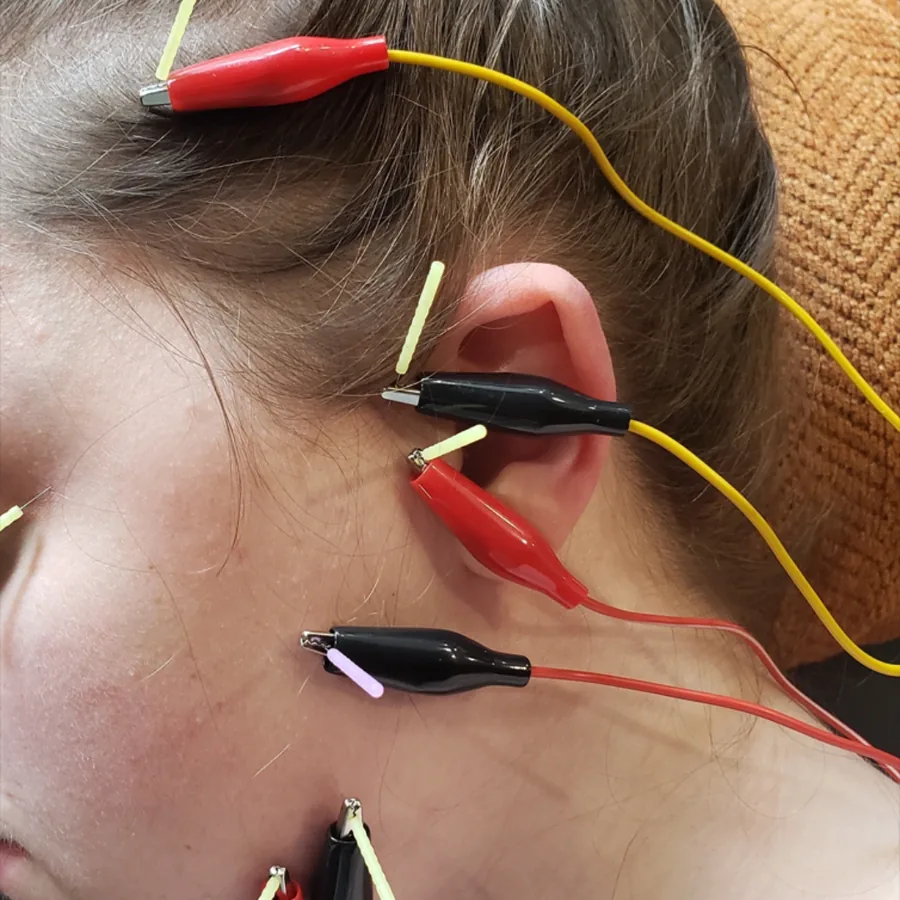
A fine, sterile, single-use microfilament needle is placed into a myofascial trigger point, tendon or ligament to stimulate a healing response. Nothing is injected; the needle itself is the treatment.
It “re-sets” the muscle. A trigger point that has been guarding for months lets go, blood flow increases, the muscle returns toward its normal resting state, and the brain releases endorphins. That is why so many people feel a change in range of motion before they get off the table.
It reaches what hands cannot. A knot sitting under three layers of muscle cannot be pressed without squashing everything above it. A needle goes straight to it.
The full technique, safety screening and aftercare are on the dry needling service page.
Is dry needling good for chronic muscle pain?
Yes, and chronic muscle pain is where it tends to be most useful. A muscle that has been tight and sore for a long time usually contains trigger points that massage and stretching change for a day and then lose.
Those trigger points also refer pain elsewhere, in patterns consistent enough to map. That is why the sore spot is often not the spot that needs treating, and why the examination comes before the needle.
The important caveat is that chronic pain is rarely only in the tissue. Sleep, stress and months of moving less all turn the volume up. Needling quiets the tissue; loading and a plan you can keep up are what stop it coming back. There is more on that in physical therapy instead of pain medication.
Neck pain and headaches
Trigger points in the upper trapezius, levator scapulae and the small muscles at the base of the skull are some of the most common sources of neck pain in people who sit at a desk.
The upper trapezius in particular refers pain up the side of the neck and behind the eye, which is why so many tension-type and neck-driven headaches ease when it is treated.
Needling is usually combined with manipulation of the stiff segments above and below, and with strengthening of the deep neck flexors so the change holds. See neck pain treatment and headaches that start in your neck.
Lower back pain
The muscles that guard a sore back — quadratus lumborum, the lumbar paraspinals, gluteus medius and minimus — are frequent drivers of back pain in their own right.
A trigger point in gluteus minimus can send pain down the leg convincingly enough to be mistaken for sciatica, which is one reason people are sometimes told they have a disc problem when the disc is not the main source.
Needling those muscles opens a window of easier movement. That window is then used for manipulation and loaded exercise, because a back that is only released and never strengthened tends to guard again. More in disc or muscle back pain.
Plantar fasciitis
Heel pain that is worst with the first steps in the morning is usually plantar fascia pain, and the calf is almost always part of the story.
Trigger points in the soleus and gastrocnemius shorten the calf and load the fascia harder with every step. Needling the calf, and sometimes the small muscles of the foot, often changes first-step pain quickly.
The lasting fix is calf and foot strength, because the fascia recovers when the load on it is progressively increased rather than avoided. See plantar fasciitis treatment and calf strength and foot pain.
Dry needling for athletes
Athletes are the people most likely to have a trigger point they have trained around for a whole season: a calf that tightens at mile four, a hamstring that never quite lets go, a shoulder that is stiff for the first twenty minutes of every session.
Needling works well here because it produces a range-of-motion change fast, without medication, and with only a day of mild soreness.
Timing matters. Heavy loading of the exact muscle is better left until the next day, so the session is placed around training rather than on top of it. A short focused session is often ideal; see the 30-minute dry needling session. Sport-specific planning is on the sports performance therapy page.
Shoulders, elbows and the rest of the list
Dry needling also works well for shoulder pain, piriformis syndrome, shin splints, hip pain, tennis and golfer's elbow, carpal tunnel, migraines and IT band syndrome.
What those have in common is a muscle that has become part of the problem, either as the source of the pain or as the guarding that keeps a joint from moving well.
Where the problem is primarily a joint, a nerve or something that belongs with a physician, needling is not the lead treatment, and you will be told so.
What about ultrasound-guided dry needling?
Ultrasound guidance uses real-time imaging to show the needle and the target tissue on a screen. It is not offered at this practice at present.
Dry needling here is guided by examination, palpation and anatomy, which is how the large majority of trigger point needling is done. The trigger points behind neck, back, hip, calf and foot pain are found by hand and by the pattern of pain they refer.
If you have been told you need an imaging-guided procedure for a specific target, bring that up at the discovery visit, and you will get a straight answer about whether dry needling here is the right approach for your problem or whether another provider is better placed.
How to choose a dry needling provider in Dallas
Ask what certification they hold. Here, dry needling is performed under a Certified Dry Needling (Cert. DN) credential, inside a Doctor of Physical Therapy practice with the Diploma in Osteopractic.
Ask whether there is an examination first. A provider who needles the spot that hurts without testing where the pain is coming from is treating a symptom.
Ask what happens after the needle. If there is no loading, no manipulation where needed and no home program, the relief is likely to be temporary.
Ask how long you are with the clinician. Every session here is one-on-one with Dr. Lockett. For a broader checklist, see how to choose a physical therapist in Dallas.
Is it the same as acupuncture?
No. The needles look similar, but acupuncture works from traditional meridian theory, while dry needling is a Western, anatomy-led technique aimed at a specific muscle, tendon or ligament identified by examination.
For sports pain in particular that difference matters, because the target is the tissue the examination points to. The full comparison is in dry needling vs. acupuncture.
What it feels like and what comes after
The insertion itself is usually barely noticeable. A trigger point releasing produces a brief involuntary twitch, then a heavy, warm sensation.
Mild soreness in the treated area for a day or two is normal, like the day after an unfamiliar workout. Light movement helps it settle. More in does dry needling hurt and dry needling aftercare.
Where to start
Book a free discovery visit online or call (214) 600-7762. No referral is required in Texas.
The clinic is at 10670 North Central Expressway, Suite 110, in North Dallas. A full session is 60 minutes, one-on-one; 30-minute focused dry needling sessions are also available.
Questions people ask
Best dry needling provider in Dallas
Look for a certified provider who examines before needling and loads the tissue afterward. At Osteopractic Physical Therapy & Pain Relief in North Dallas, Dr. Brent Lockett, PT, DPT performs dry needling under a Certified Dry Needling credential, one-on-one, as part of a Diploma in Osteopractic practice.
Who offers ultrasound-guided dry needling in Dallas?
Osteopractic Physical Therapy & Pain Relief does not currently offer ultrasound guidance. Dr. Brent Lockett performs dry needling guided by examination and palpation, which is how most trigger point needling is done, at 10670 North Central Expressway. If you have been advised to have an imaging-guided procedure, ask about it at the free discovery visit.
Is dry needling good for chronic muscle pain in Dallas?
Yes. Chronic muscle pain often comes from trigger points that massage and stretching only change briefly. Needling releases them, and loaded exercise afterward keeps the change. Dr. Brent Lockett provides it in North Dallas.
Dry needling for athletes in Dallas
Athletes use dry needling to release the calf, hamstring, hip or shoulder trigger points they have been training around, with a fast range-of-motion change and only mild next-day soreness. Sessions are timed around training.
Dry needling for neck pain in Dallas
Neck pain from the upper trapezius, levator scapulae and suboccipital muscles responds well to dry needling, often combined with manipulation and deep neck strengthening. It also helps neck-driven headaches.
Dry needling for lower back pain in Dallas
Needling the quadratus lumborum, lumbar and gluteal muscles eases the guarding behind much lower back pain, and the easier movement it creates is then used for manipulation and strengthening so it holds.
Dry needling for plantar fasciitis in Dallas
Needling the calf and foot muscles often reduces first-step heel pain quickly, and progressive calf and foot strengthening makes the change last.