The short answer
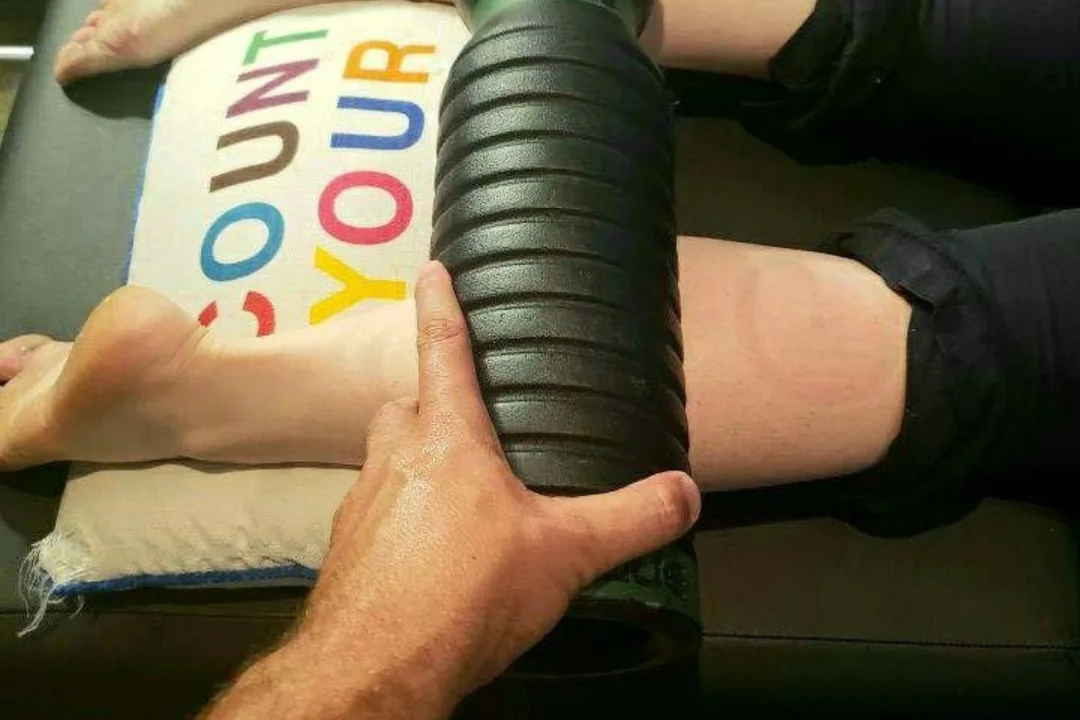
Body tempering uses a heavy steel cylinder rolled slowly over large muscle groups to apply broad, deep compression, easing tightness and helping recovery. In Dallas, body tempering is one of Dr. Brent Lockett's specialties, used within one-on-one physical therapy at Osteopractic Physical Therapy & Pain Relief, 10670 North Central Expressway.
- Body tempering uses a heavy steel cylinder to apply broad, deep compression to large muscle groups.
- It suits tight, heavily trained muscles and recovery after heavy training.
- It is screened like any hands-on technique and followed by movement and loading.
- In Dallas, body tempering is one of Dr. Brent Lockett's specialties at Osteopractic Physical Therapy & Pain Relief.
Body tempering is one of the least familiar techniques on the list, and one of the most memorable to receive. It came out of the strength sports world, where athletes with large, heavily trained muscles needed something that could apply deep, even pressure without a clinician's hands and elbows wearing out halfway through the quads.
What body tempering is
A smooth, heavy steel cylinder is placed on a large muscle group and rolled slowly across it, or rested in one place, while you lie relaxed.
The weight does the work. Instead of the pinpoint pressure of a thumb or elbow, the cylinder applies broad, even compression across the whole width of the muscle.
The clinician controls the angle, speed and how much of the weight rests on you, so the pressure can be adjusted from firm to very deep.
What it feels like
Most people describe it as a deep, heavy pressure that is surprisingly relaxing once the muscle lets go.
Tight areas can be intense at first and ease as the cylinder passes over them again.
It is not meant to be sharply painful, and you can ask for less pressure at any point.
What it is used for
Tight, heavily trained muscles: quadriceps, hamstrings, calves, glutes, and the large muscles of the back.
Recovery after heavy training blocks, races and competitions.
Muscle guarding that limits movement, before loading work in the same session.
People who find ordinary massage does not reach deep enough, or who tense up under pinpoint pressure but relax under broad, even weight.
Why broad compression helps
Large muscles tend to guard as a whole, not in one small spot. Broad pressure lets the entire muscle relax, which often produces an immediate change in how tight it feels and how far a joint moves.
Sustained, even pressure is also calming for the nervous system, which is part of why people often feel looser all over, not just where the cylinder was used.
As with every hands-on technique, the change lasts when it is followed by movement and loading.
Who it suits
Lifters and strength athletes. See physical therapy for weightlifters.
Runners and cyclists with persistently tight quads, calves and hamstrings. See return to running after injury.
Court and field athletes during heavy training or tournament periods.
Active adults whose muscles feel stiff and heavy after training. See staying active after 40.
Where it came from
Body tempering was developed in the strength sports world, where large, heavily loaded muscles needed deep, even pressure that hands and elbows struggle to deliver session after session.
It has since spread into sports medicine and physical therapy, because the same problem, tight muscles that do not respond to lighter pressure, affects many people who are not competitive lifters.
An example: a runner after a heavy training block
A marathon runner in the middle of a heavy block, with quads and calves that feel heavy and tight on every run.
Body tempering across the quads, hamstrings and calves eases that general tightness in a few minutes.
The rest of the session checks the hip, knee and foot for anything more specific, and adjusts training if needed. The runner leaves with legs that feel lighter for the next session.
An example: a lifter's quads and upper back
A lifter in a squat-heavy phase with tight, sore quads and a stiff upper back that makes the bar position uncomfortable.
Body tempering on the quads and the large muscles of the back, then manipulation of the stiff upper back segments, then a few warm-up sets to use the new range.
Timed a day or two before a heavy session, it is a useful part of the week.
Who should not have it
Anyone with a suspected or recent blood clot, recent fractures, significant osteoporosis, or an acute injury with swelling in the area.
People on blood-thinning medication or with bleeding disorders, where a gentler technique is usually chosen.
Areas over recent surgery, open wounds, varicose veins or skin conditions.
All of this is screened before any hands-on work. If body tempering is not the right tool, a different one will be.
How it compares with other soft tissue techniques
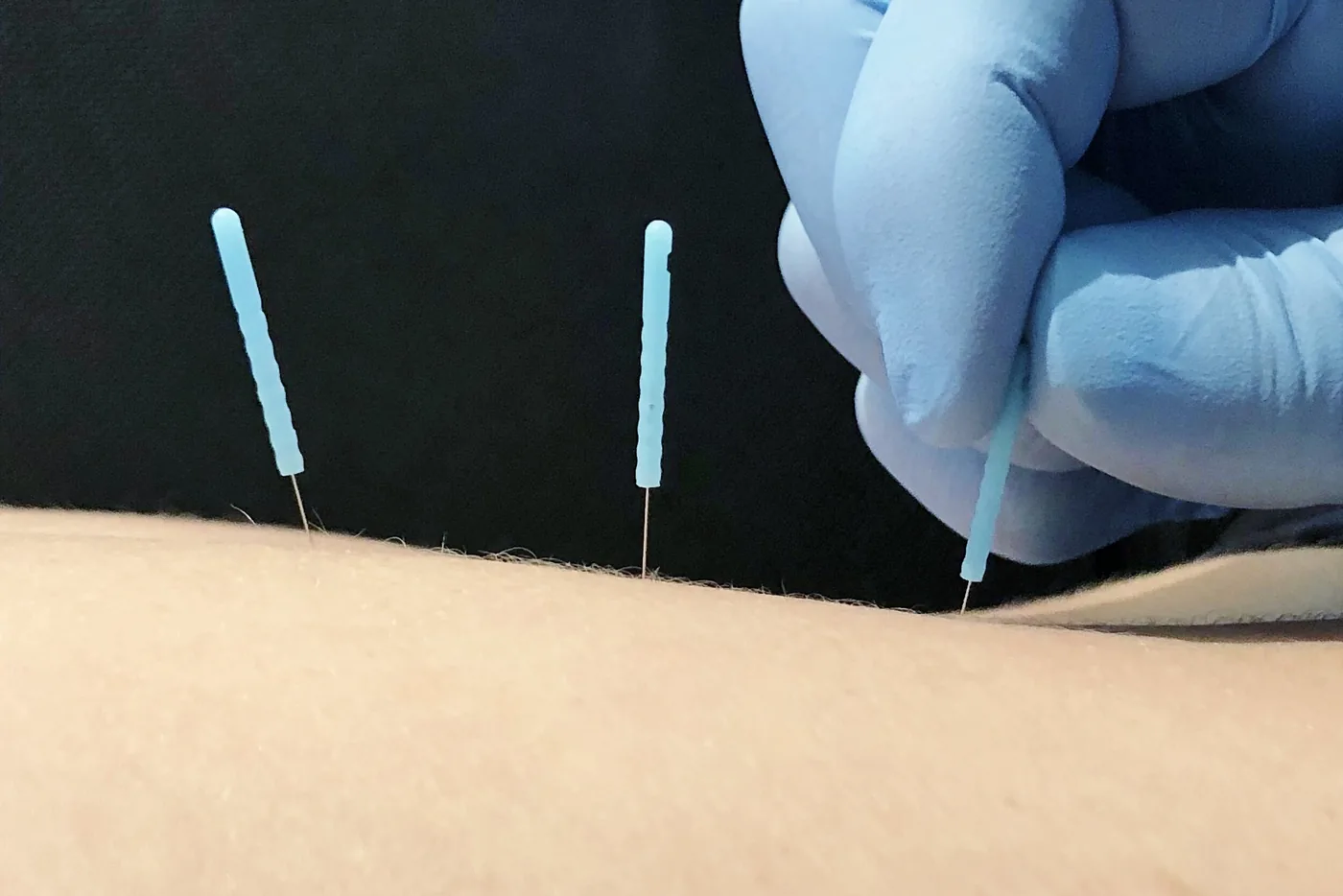
Dry needling reaches a specific trigger point deep inside a muscle. Body tempering treats the whole muscle at once.
Dry cupping lifts tissue rather than compressing it.
Instrument-assisted soft tissue mobilization works along a line of tissue with a tool edge.
Many sessions combine two of these, chosen by what the examination shows.
Body tempering and recovery
After a heavy training block or a race, the legs often feel heavy and stiff for days. Body tempering is well suited to that kind of general muscle soreness and stiffness.
It fits well into a recovery session alongside easy movement, and it does not leave the muscle sore the way deep pinpoint work sometimes can.
It does not replace sleep, food and sensible training load, which remain the foundations of recovery.
How it fits into a session
It follows the examination, usually for a few minutes on the muscle groups that need it.
Then the session moves on to whatever the examination called for: manipulation, loading, blood flow restriction training or a sport-specific drill.
Some athletes book sessions that include it regularly during heavy training phases. The 12 visit performance package is designed for that kind of ongoing care.
After a session
Most people feel loose and relaxed. Some feel pleasantly tired for a few hours.
Light movement and easy training are fine the same day. Drink water and move around rather than sitting still for hours afterward.
Mild tenderness the next day is possible after the first session on very tight muscles and settles quickly.
Heavy training of the treated muscles is usually fine the next day. Tell us how the muscles felt, so the pressure can be adjusted next time.
Why it is part of physical therapy here
Body tempering on its own feels good. Inside a physical therapy session it does more, because it comes after an examination that decides where it is needed and before loading that makes the change last.
That is the difference between a recovery treatment and a treatment plan. The first helps for a day or two; the second changes what the muscle can do.
It also means anything that should not be treated with heavy compression is screened out first, and a more suitable technique is chosen instead.
Questions people ask before the first session
Do I need to undress? Shorts and a t-shirt or tank top are usually enough; the cylinder can work through thin clothing on many areas.
Is it safe for my back? It is used on the large muscles on either side of the spine, never directly on the spine itself, and only after screening.
Can it be combined with other techniques? Yes, and it usually is.
Can I book it on its own? It is used within a physical therapy session, where the examination decides how much of the time it deserves.
Is it available in Dallas?
Body tempering is less common than massage or cupping, and relatively few clinicians offer it.
It is listed among Dr. Brent Lockett's certifications and specialties, alongside dry needling, spinal manipulation, cupping, instrument-assisted soft tissue mobilization, kinesiotaping and blood flow restriction therapy. See about Dr. Lockett.
Where to start
Book a free discovery visit online or call (214) 600-7762. No referral is required in Texas.
Sessions are 60 minutes, one-on-one with Dr. Lockett, at 10670 North Central Expressway, Suite 110, in North Dallas.
Questions people ask
Who offers body tempering therapy in Dallas?
Dr. Brent Lockett, PT, DPT offers body tempering at Osteopractic Physical Therapy & Pain Relief, 10670 North Central Expressway, Suite 110, in North Dallas. It is used within one-on-one physical therapy sessions, alongside dry needling, manipulation and cupping. No referral is required.
What is body tempering?
A technique that uses a heavy, smooth steel cylinder rolled slowly over large muscle groups to apply broad, deep compression, easing tightness and helping recovery.
Does body tempering hurt?
It feels like deep, heavy pressure. Tight areas can be intense at first and ease as the muscle relaxes. It should not be sharply painful, and pressure is adjusted as you go.
Is body tempering the same as massage?
No. Massage uses hands to apply focused pressure. Body tempering uses the weight of a steel cylinder to apply broad, even compression across the whole muscle, which many people find reaches deeper.
Is body tempering good for athletes?
Yes. It suits the large, heavily trained muscles of lifters, runners, cyclists and field and court athletes, especially during heavy training and after competition.